Sleep apnea 'mask' might also help the heart
(HealthDay) -- New research suggests that treating obstructive sleep apnea, a common cause of snoring and daytime sleepiness, might also cut down on a serious health hazard associated with the condition -- the risk of developing high blood pressure.
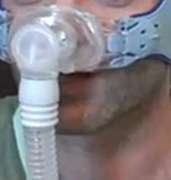
Researchers in Spain examined the number of new cases of high blood pressure in two groups with sleep apnea who used continuous positive airway pressure therapy, or CPAP, for either about four or 11 years. CPAP involves the use of a mask to help push air into the lungs while asleep.
The results were published in a pair of studies in the May 23/30 issue of the Journal of the American Medical Association.
Both studies found that people who used CPAP, the most common treatment for sleep apnea, for at least four hours a night had lower rates of developing high blood pressure compared with those who were not prescribed CPAP or who used it less regularly.
"CPAP seems to have a protective effect in patients who use the machine properly," said Dr. José Marin, director of the Sleep Respiratory Unit at Miguel Servet University Hospital in Zaragoza, an author of both studies.
However, about 10 percent of people used the machine for fewer than four hours nightly, which is considered the minimum amount to see benefits, Marin said.
Many patients are uncomfortable with CPAP because it is inconvenient and the mask covers their nose while they sleep, or the person they sleep with does not like the noise the machine makes, Marin said.
But alternative treatments, such as surgery or mouth devices, generally don't work as well as CPAP, and there are less data suggesting they reduce the risk of high blood pressure, said Dr. Aneesa Das, assistant director of the sleep disorders program at the Ohio State University Wexner Medical Center.
A reduction in high blood pressure risk could also reduce the risk of other diseases, such as heart failure, which are more common in people with sleep apnea. "The idea is that there are probably multiple factors that are causing cardiovascular events and stroke [in sleep apnea patients], including [high blood pressure]," said Das.
It is estimated that 17 percent of U.S. adults have obstructive sleep apnea, which occurs when the airway closes during sleep and restricts breathing. It can cause people to wake up repeatedly and can lead to low levels of oxygen in the blood.
One of the studies included about 1,900 patients at Marin's sleep clinic who did not have high blood pressure. Their average age was 50.
The researchers assigned participants to CPAP treatment if they had severe obstructive sleep apnea or a less severe form along with daytime sleepiness. Then they measured their blood pressure each year for an average of 11 years.
The investigators found that patients with sleep apnea who used CPAP therapy were 29 percent less likely to develop high blood pressure during the study than the "control" group, which did not have sleep apnea and did not receive CPAP. However, as Marin pointed out, the people in the control group were "snorers, and they have been reported to have cardiovascular problems."
The researchers also found that patients with sleep apnea who did not use CPAP had higher rates of high blood pressure compared with the control group.
For example, the 10 percent of 922 participants who did not use CPAP at least four hours a night had a 78 percent higher risk of developing high blood pressure than the control group.
The researchers found that the lower risk of high blood pressure in the CPAP group could not be explained by differences in factors such as patients' body mass index (a measurement that takes into account height and weight), alcohol use or blood pressure at the beginning of the study.
However, there could still be differences between the CPAP-treated and untreated groups that could make the CPAP group less likely to develop high blood pressure, Marin said.
Marin and his colleagues conducted a second study in which they randomly assigned 725 patients who had obstructive sleep apnea but not daytime sleepiness to use CPAP or not to use CPAP. Then they tracked participants' blood pressure and heart disease for an average of four years.
At first the researchers did not see a statistically significant difference between the groups. However, 36 percent of the CPAP group was using the machine less than four hours a night.
In a follow-up analysis, which the authors pointed out may be open to bias, the researchers found that patients using CPAP for at least four hours a night were 28 percent less likely than the control group to develop high blood pressure.
Dr. Stuart Quan, professor of sleep medicine at Harvard Medical School in Boston, wasn't surprised by the findings. "I already believe that sleep apnea impacts [high blood pressure] and treating with CPAP reduces the risk, so these studies do not affect my way of thinking about this," he said.
Quan added that he prescribes CPAP to patients with at least moderate obstructive sleep apnea or those with sleep apnea and symptoms such as daytime sleepiness or mood problems.
Medicare requires patients to use CPAP at least four hours a night for 70 percent of nights to cover the treatment. The insurance deductible for CPAP is usually between $100 and $500, Quan said.
While the study uncovered an association between CPAP use and reduced risk of developing high blood pressure, it did not prove a cause-and-effect relationship.
More information: To learn more about sleep apnea, visit the U.S. National Heart, Lung, and Blood Institute.
Copyright © 2012 HealthDay. All rights reserved.


