Flesh-Eating bacteria no cause for panic, experts say
May 25, 2012 By Amanda Gardner, HealthDay Reporter in Diseases, Conditions, Syndromes

Flesh-Eating bacteria no cause for panic, experts say

Cases of illness are relatively rare and treatable with antibiotics if caught early, they stress.

(HealthDay) -- Despite scary headlines by the score, most people don't have to fear that they'll be the next victim of the so-called flesh-eating bacteria disease, experts say.

"Only about 10,000 to 12,000 cases are reported a year in the U.S.," said Dr. Pascal James Imperato, dean of the School of Public Health at State University of New York Downstate Medical Center. "It's relatively rare."

, known scientifically as necrotizing fasciitis, occurs when certain types of bacteria penetrate the skin and then invade the , eventually eating away at muscle and fat tissue.

People who have weakened immune systems, such as the elderly, people with diabetes and people taking immune-suppressing drugs are more at risk for the condition. Sports teams or people who congregate in close vicinity could also be at higher risk, said Dr. Kenneth Bromberg, director of the Vaccine Research Center at The Brooklyn Hospital Center in New York City.

"But," added Imperato, "there are also instances where there is no apparent disposing factor, and it can occur in people [who are] relatively young and healthy, so it has a certain unpredictability to it."

So it has been with three relatively young people in the southeastern United States who became infected recently.

The first was a 24-year-old graduate student in Georgia who has been on a ventilator and, so far, has had both hands, a leg and the other foot amputated. The infection took hold after she cut her leg falling from a homemade zip line.

Another victim, who is 33 and also lives in Georgia, has already undergone five operations, had two pounds of dying tissue from his groin area removed and will still have to endure and reconstructive surgery, according to USA Today.

The third patient is a 36-year-old mother of newborn twins in South Carolina who has had seven surgeries and remains in critical condition, according to CNN.

Necrotizing fasciitis can be caused by any one of a number of bacterium, said Bromberg.

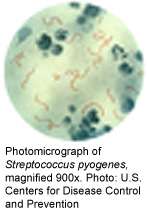
The major culprits can be quite common in the environment and include Streptococcus, which can also cause strep throat, and Staphylococcus aureus, although sometimes more than one bacteria can be contributing to the problem, Imperato said.

But even infection with the chicken pox virus can result -- albeit rarely -- in necrotizing fasciitis.

Most of the time, an infection "will begin and abort very quickly as the body's immune system is sufficient to terminate it before it progresses to a stage where a limb or an arm becomes severely swollen and undergoes necrosis," Imperato said.

But it can result in amputations, and even death, 10 percent to 20 percent of the time.

As with the graduate student in Georgia, infections usually start with an innocuous-seeming cut or scrape or crush injury, which progresses to swelling and worse.

The good news is that these infections tend to respond well to a variety of antibiotics if they're given early enough. If drugs don't work, doctors will go in and remove the dead tissue, Imperato said.

If you're on a sports team, using alcohol-based gels and other hygiene precautions such as diligent hand-washing and not sharing towels will reduce the risk of necrotizing fasciitis, Bromberg said.

Any infection, however minor, which progresses and becomes red and swollen, especially if it's accompanied by diarrhea and vomiting, should be brought to a doctor's attention, Imperato advised.

More information: To learn more, visit the National Necrotizing Fasciitis Foundation.

Copyright © 2012 HealthDay. All rights reserved.

not rated yet  

Rank not rated yet
Related Stories
Relevant PhysicsForums posts

More news stories

Study finds COPD is over-diagnosed among uninsured patients

More than 40 percent of patients being treated for COPD at a federally funded clinic did not have the disease, researchers found after evaluating the patients with spirometry, the diagnostic "gold standard" for chronic obstructive ...

Diseases, Conditions, Syndromes created 23 minutes ago | popularity not rated yet | comments 0

Mysterious illness kills two in southeast Alabama

(AP)—Alabama health officials say a mysterious respiratory illness has left five people hospitalized and two dead in the southeastern part of the state.

Diseases, Conditions, Syndromes created 2 hours ago | popularity not rated yet | comments 0

Researchers find genetic risk factor for pulmonary fibrosis

A paper recently published in the New England Journal of Medicine and co-written by physicians and scientists at the University of Colorado School of Medicine finds that an important genetic risk factor for pulmonary fibros ...

Diseases, Conditions, Syndromes created 16 hours ago | popularity not rated yet | comments 0

Biomarkers discovered for inflammatory bowel disease

Using the Department of Defense Serum Repository (DoDSR), University of Cincinnati (UC) researchers have identified a number of biomarkers for inflammatory bowel disease (IBD), which could help with earlier diagnosis and ...

Diseases, Conditions, Syndromes created 16 hours ago | popularity 5 / 5 (1) | comments 0

CDC says high number of public pools contain microbes

(HealthDay)—Three-quarters of public schools in the metro Atlanta area contain microbes, including bacteria indicating the presence of fecal matter, according to research published in the May 17 issue of ...

Diseases, Conditions, Syndromes created 17 hours ago | popularity not rated yet | comments 0


Alcohol sales fall due to ban on multi-buy promotions

(Medical Xpress)—A report published today shows a 2.6% decrease in the amount of alcohol sold per adult in Scotland in the year following the introduction of the Alcohol etc. (Scotland) Act in October 2011.

Facing the chill wind of blood pressure

(Medical Xpress)—High blood pressure is something that has traditionally been a problem in Scotland, but might there be a link to our climate?

US health care: Does more spending yield better health?

(Medical Xpress)—Health care spending is much higher for older Americans than for younger adults and children, on average, and analysts have said that increasing spending leads to longer life expectancy.

Study shows low rate of late lumen loss with bioresorbable DESolve device

The DESolve bioresorbable coronary scaffold system achieves good efficacy and safety with low rates of late lumen loss and major coronary adverse events at six months, show first results from the pivotal DESolve Nx trial ...

Registry questions superiority of bivalirudin over heparin

Results from a large observational study reported at EuroPCR 2013 today question whether bivalirudin is superior to heparin in the absence of GPIIb/IIIa blockade, showing similar 30-day mortality in patients with non-ST segment ...

New blood-thinner measures may cut medication errors

Blood thinners are the preferred treatment option to prevent heart attacks, blood clots and stroke, but they are not without risk, and not just because of their side effects. These high-risk drugs, known as anticoagulants, ...