Student co-authors radiology study
May 16, 2012 in Other

Student co-authors radiology study

Enlarge

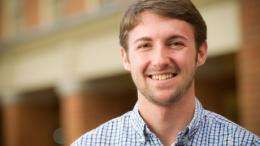
Roman Nelson plans to pursue a career in health research or health politics.

“I believe that out of anxiety, patients want to know their test results as quickly as possible,” Roman Nelson (’12) said. “Having a medical scan done often comes with profound news, either good or bad, so patients want to know what’s happening in their lives as soon as they can.”

Nelson, who plans to pursue a master’s degree in public health, was one of the co-authors of a study about imaging test results at Wake Forest Baptist Medical Center. Published in the April issue of the Journal of American College of , the study was designed to determine if wanted online access to radiology , and if so, how quickly.

As the student research coordinator, Nelson recruited patients and administered the online questionnaire. That survey simulated a patient portal where an individual could log on to a computer to view their results, and Nelson also worked with doctors at the medical school to create it.

The pilot study showed that about half the participants preferred immediate access to their results and about a third preferred access within three days, even in the face of very serious findings, written in complex medical language and with the knowledge that their doctor might not be available to discuss the results.

“I found it very interesting that the majority of participants wanted to see their results even before a doctor reviewed them,” Nelson said. “News like this often comes with many questions and clarification of medical terminology, but patients wanted to see those results even without counseling or clarification.”

Very few hospitals in the United States currently offer patients online access to radiology reports, and the wait time is usually a week or more, according to the study’s principal investigator Annette Johnson, M.D., associate professor of radiology at Wake Forest Baptist. The hospital is in the process of developing a secure patient-access Web portal that will have a three-day turnaround when it launches this fall.

Nelson conducted this research while also co-chairing the 2011 Hit the Bricks fundraising event for the Brian Piccolo Cancer Fund. He said raising money for cancer research and improving patient access to medical records are big components of his interest in a healthcare career.

“I felt the same sense of accomplishment and pride when I got to announce the money raised for the Brian Piccolo Cancer Fund as when I received notice of this publication,” Nelson said. “As an undergraduate student, I felt fully engaged, never just observing as I worked with professors both on the Reynolda and Bowman Gray campuses. My professors, advisors and mentors have genuinely cared about my experiences which has made an immense impact on my education.”

Provided by Wake Forest University search and more info website

not rated yet  

Rank not rated yet
Relevant PhysicsForums posts

More news stories

Early use of tracheostomy for mechanically ventilated patients not associated with improved survival

For critically ill patients receiving mechanical ventilation, early tracheostomy (within the first 4 days after admission) was not associated with an improvement in the risk of death within 30 days compared to patients who ...

Other created 14 hours ago | popularity not rated yet | comments 0

Decisions to forgo life support may depend heavily on the ICU where patients are treated

The decision to limit life support in patients in the intensive care unit (ICU) appears to be significantly influenced by physician practices and/or the culture of the hospital, suggests new findings from researchers at the ...

Other created 16 hours ago | popularity not rated yet | comments 0

People on higher incomes are happier with new knees

Knee replacement surgery is a very common procedure. However, it does not always resolve function or pain in all the recipients of new knees. A study by Robert Barrack, MD and his colleagues from the Washington University ...

Other created 18 hours ago | popularity not rated yet | comments 0

New search engine finds rare diagnoses

Doctors are trained to think "common disease" when they meet patients in their practices, and as they rarely or never meet a rare disease, it often takes many years to reach the right diagnosis. A new search tool called FindZebra ...

Other created 19 hours ago | popularity not rated yet | comments 0

Delayed transfer to the ICU increases risk of death in hospital patients

Delayed transfer to the intensive care unit (ICU) in hospitalized patients significantly increases the risk of dying in the hospital, according to a new study from researchers in Chicago.

Other created 20 hours ago | popularity not rated yet | comments 0


Study says empathy plays a key role in moral judgments

Is it permissible to harm one to save many? Those who tend to say "yes" when faced with this classic dilemma are likely to be deficient in a specific kind of empathy, according to a report published in the scientific journal ...

Phthalates: Study links chemicals widely found in plastics, processed food to elevated blood pressure in children, teens

Plastic additives known as phthalates (pronounced THAL-ates) are odorless, colorless and just about everywhere: They turn up in flooring, plastic cups, beach balls, plastic wrap, intravenous tubing and—according to the ...

If you can remember it, you can remember it wrong

(Medical Xpress)—Native peoples in regions where cameras are uncommon sometimes react with caution when their picture is taken. The fear that something must have been stolen from them to create the photo ...

B vitamins could delay dementia

(Medical Xpress)—Despite spending billions of dollars on research and development, drug companies have been unable to come up with effective treatments for dementia and Alzheimer's Disease (AD). Now, A. ...

Insight into the dazzling impact of insulin in cells

Australian scientists have charted the path of insulin action in cells in precise detail like never before. This provides a comprehensive blueprint for understanding what goes wrong in diabetes.

Reducing caloric intake delays nerve cell loss

Activating an enzyme known to play a role in the anti-aging benefits of calorie restriction delays the loss of brain cells and preserves cognitive function in mice, according to a study published in the May ...