Let's get moving: Unravelling how locomotion starts
May 16, 2012 in Neuroscience

Let's get moving:  Unravelling how locomotion starts

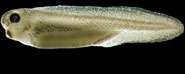
The Xenopus frog tadpole is a small, simple vertebrate

(Medical Xpress) -- Scientists at the University of Bristol have shed new light on one of the great unanswered questions of neuroscience: how the brain initiates rhythmic movements like walking, running and swimming.

While experiments in the 1970s using electrical brain stimulation identified areas of the brain responsible for starting locomotion, the precise neuron-by-neuron pathway has not been described in any vertebrate – until now. 

To find this pathway, Dr. Edgar Buhl and colleagues in Bristol’s School of Biological Sciences studied a small, simple vertebrate: the Xenopus frog tadpole.

They found that the pathway to initiate swimming consists of just four types of .  By touching skin on the head of the tadpole and applying cellular neurophysiology and anatomy techniques, the scientists identified nerve cells that detect the touch on the skin, two types of brain nerve cells which pass on the signal, and the motor that control the swimming muscles. 

Dr. Buhl said: “These findings address the longstanding question of how locomotion is initiated following sensory stimulation and, for the first time in any vertebrate, define in detail a direct responsible.  They could thus be of great evolutionary interest and could also open the path to understanding initiation of locomotion in other vertebrates.”

When mechanisms in the brain that initiate locomotion break down – for example, in people with Parkinson’s disease – starting to walk becomes a real problem.  Therefore, understanding the initiation of swimming in tadpoles could be a first step towards understanding the initiation of locomotion in more complex vertebrates, including people, and may eventually have implications for treating movement disorders such as Parkinson's.

The research is published today in the Journal of Physiology.

More information: ‘The role of a trigeminal sensory nucleus in the initiation of locomotion’ by Edgar Buhl, et al. Journal of Physiology

Journal reference: Journal of Physiology search and more info website

Provided by University of Bristol search and more info website

not rated yet  

Rank not rated yet
Relevant PhysicsForums posts

More news stories

Researchers find far-reaching, microvascular damage in uninjured side of brain after stroke

While the effects of acute stroke have been widely studied, brain damage during the subacute phase of stroke has been a neglected area of research. Now, a new study by the University of South Florida reports that within a ...

Neuroscience created 1 hour ago | popularity not rated yet | comments 0 | with audio podcast

Neurons that can multitask greatly enhance the brain's computational power, study finds

Over the past few decades, neuroscientists have made much progress in mapping the brain by deciphering the functions of individual neurons that perform very specific tasks, such as recognizing the location ...

Neuroscience created 4 hours ago | popularity 5 / 5 (5) | comments 0 | with audio podcast

For combat veterans suffering from post-traumatic stress disorder, 'fear circuitry' in the brain never rests

Chronic trauma can inflict lasting damage to brain regions associated with fear and anxiety. Previous imaging studies of people with post-traumatic stress disorder, or PTSD, have shown that these brain regions can over-or ...

Neuroscience created May 18, 2013 | popularity 5 / 5 (1) | comments 0 | with audio podcast

Temporal processing in the olfactory system

The neural machinery underlying our olfactory sense continues to be an enigma for neuroscience. A recent review in Neuron seeks to expand traditional ideas about how neurons in the olfactory bulb might encode information about ...

Neuroscience created May 17, 2013 | popularity 4 / 5 (1) | comments 0 | with audio podcast report

Melon focus headband turns to Kickstarter for rollout plans

(Medical Xpress)—What if the quality of your work depends more on your focus on the piano keys or canvas or laptop than your musical or painting or computing skills? If target users can be convinced, they ...

Neuroscience created May 17, 2013 | popularity 3.7 / 5 (3) | comments 0 | with audio podcast weblog


Extra vitamin D may ease Crohn's symptoms, study finds

(HealthDay)—Vitamin D supplements may help those with Crohn's disease overcome the fatigue and decreased muscle strength associated with the inflammatory bowel disease, according to new research.

Digital divide exists with physician EHR adoption

(HealthDay)—The majority of physicians remain reluctant to adopt health information technology (HIT), according to a report by Deloitte Touche Tohmatsu.

One in ten teens using 'study drugs,' but parents aren't paying attention

As high schoolers prepare for final exams, teens nationwide may be tempted to use a "study drug"—a prescription stimulant or amphetamine—to gain an academic edge. But a new University of Michigan poll shows only one in ...

Food laboratory accuracy remains a concern

Food microbiology laboratories continue to submit false negative results and false positive results on a routine basis. A retrospective study of nearly 40,000 proficiency test results over the past 14 years, presented today ...

Study supports 'aggressive' treatment for posterior fossa hematoma in newborns

Posterior fossa subdural hematoma (PFSDH) is a serious and rare condition in newborns, generally occurring after difficult deliveries. But with appropriate treatment, there's an excellent chance of good long-term outcomes ...

Hospital emergency departments gaining in importance, study finds

Hospital emergency departments play a growing role in the U.S. health care system, accounting for a rising proportion of hospital admissions and serving increasingly as an advanced diagnostic center for primary care physicians, ...