Electronic devices with reminders make sticking to diets easier
June 5, 2012 By Glenda Fauntleroy in Health

Electronic devices with reminders make sticking to diets easier

Enlarge

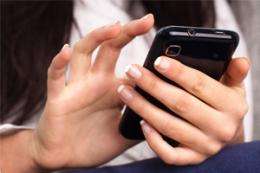
There’s some good news for those trying to lose weight with the help of new apps on their mobile devices. They may actually work, says a new research study in the American Journal of Preventive Medicine.

“Our study provides evidence that ongoing contact through hand-held devices can be beneficial to individuals who are trying to lose weight,” said study author Mindi Styn, Ph.D., a research assistant professor of nursing and epidemiology at the University of Pittsburgh.

Past research has shown that self-monitoring one’s daily calorie intake and exercise may be the best way to make the necessary behavior changes to follow a regimen. The old method of writing it down in a paper diary can be tedious, however, so the new study looked at whether the technological advances of electronic devices have made it easier to stick with self-monitoring.

The researchers recruited 210 overweight or obese adults with body mass indexes between 27 and 43 who were randomly assigned to three different groups: self-monitoring with an electronic diary, self-monitoring with a device that provided feedback via a daily message, or self-monitoring with a paper diary. All participants had group counseling sessions on weight loss and set daily calorie intake and physical activity goals.

After 24 months, people who stuck to their diaries, be they electronic or paper, more than 60 percent of the time, lost more weight than those who self-monitored less than 30 percent of the time. But those using the device with feedback were more likely to stick to the daily self-monitoring and had the greatest weight loss, with an average of 2.3 percent.

Lawrence Cheskin, M.D., director of the Johns Hopkins Weight Management Center at Johns Hopkins’ Bloomberg School of Public Health in Baltimore said he encourages patients trying to to take advantage of tools that facilitate self-monitoring since it’s been shown to increase the likelihood of success.

“Applications that remind people of what they are trying to do and how to do it are potentially very helpful,” he added.

Though the researchers had anticipated a greater weight loss overall and greater differences between groups, they found the average weight loss among the three groups was about the same. Styn suggested that the self-monitoring software on the device they used was not as user-friendly as current apps on the market, which may have discouraged some participants.

More information: Burke LE, Styn MA, et al. Using mHealth technology to enhance self-monitoring for weight loss. American Journal of Preventive Medicine, June 2012.

Journal reference: American Journal of Preventive Medicine search and more info website

Provided by Health Behavior News Service search and more info website

not rated yet  

Rank not rated yet
Relevant PhysicsForums posts

More news stories

Consumers largely underestimating calorie content of fast food

People eating at fast food restaurants largely underestimate the calorie content of meals, especially large ones, according to a paper published today in BMJ.

Health created 1 hour ago | popularity not rated yet | comments 0

It's not your imagination: Memory gets muddled at menopause

Don't doubt it when a woman harried by hot flashes says she's having a hard time remembering things. A new study published online in Menopause, the journal of The North American Menopause Society (NAMS), helps confirm with o ...

Health created 2 hours ago | popularity not rated yet | comments 0

Farm bill: Senate rejects GMO labeling amendment

The Senate has overwhelmingly rejected an amendment allowing states to require labeling of genetically modified foods.

Health created 3 hours ago | popularity not rated yet | comments 1

McDonald's can't shake criticism about nutrition

(AP)—McDonald's once again faced criticism that it's a purveyor of junk food that markets to children at its annual shareholder meeting Thursday.

Health created 4 hours ago | popularity not rated yet | comments 0

Economic incentives increase blood donation without negative consequences

Can economic incentives such as gift cards, T-shirts, and time off from work motivate members of the public to increase their donations of blood?

Health created 6 hours ago | popularity not rated yet | comments 0 | with audio podcast


Glucosamine supplements tied to risk of eye condition

(HealthDay)—Glucosamine supplements that millions of Americans take to help treat hip and knee osteoarthritis may have an unexpected side effect: They may increase risk for developing glaucoma, a small ...

Controlling mood through the motions of mitochondria

(Medical Xpress)—Regulating the distribution of power in neurons is done by a system that makes the national electric grid look simple by comparison. Each neuron has several thousand mitochondria confined ...

Scientists discover molecule triggers sensation of itch

Scientists at the National Institutes of Health report they have discovered in mouse studies that a small molecule released in the spinal cord triggers a process that is later experienced in the brain as ...

Multiple research teams unable to confirm high-profile Alzheimer's study

Teams of highly respected Alzheimer's researchers failed to replicate what appeared to be breakthrough results for the treatment of this brain disease when they were published last year in the journal Science.

Researchers find common childhood asthma unconnected to allergens or inflammation

Little is known about why asthma develops, how it constricts the airway or why response to treatments varies between patients. Now, a team of researchers at Weill Cornell Medical College, Columbia University Medical Center ...

Motion quotient: IQ predicted by ability to filter motion (w/ video)

A brief visual task can predict IQ, according to a new study. This surprisingly simple exercise measures the brain's unconscious ability to filter out visual movement. The study shows that individuals whose ...