Gamma rays in background radiation linked to childhood leukaemia
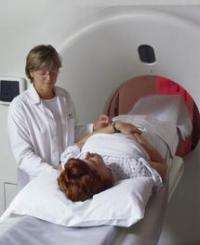
(Medical Xpress) -- A small but statistically significant link between risk of childhood leukaemia and the gamma rays we are all exposed to from our natural environment has been detected in a very large study led by Oxford University researchers.
Exposure to gamma rays from natural sources in the environment isn't something that can readily be altered, but the study adds to our understanding of the small cancer risks associated with other low doses of radiation, such as from medical X-rays and CT scans. The findings demonstrate that there are small effects of radiation at very low doses.
Guidelines on exposure to low doses of radiation have largely been based on estimated risks from models using data from Japanese survivors of the atomic bombs, where radiation exposures were brief and very much higher. As a result, there have been some long-standing uncertainties about the extrapolation of these risks to low radiation doses.
The researchers conclude that the size of the increased risk of childhood leukaemia with natural gamma-ray exposure is consistent with these models and supports their continued use in radiation protection. The results of the study contradict the idea that there are no adverse radiation effects, or might even be beneficial effects, at these very low doses and dose rates.
The Oxford University researchers, along with colleagues from the US National Cancer Institute, The University of Manchester and the Health Protection Agency, have published their findings in the journal Leukemia.
The case-control study, based on tens of thousands of records from a UK national cancer registry, is the largest such study ever conducted on links between childhood cancers and natural background radiation levels.
It has needed a study of this very large size to be able to reliably identify the small effect of background radiation on childhood leukaemia. Previous studies have lacked the size and statistical power to be able to detect any link.
"We found a statistically significant correlation between natural gamma-rays and childhood leukaemia," says lead researcher Dr. Gerald Kendall of the Childhood Cancer Research Group at Oxford University. "What is new in our findings is the direct demonstration that there are radiation effects at these very low doses and dose-rates."
The researchers believe that the association between natural gamma-rays and childhood leukaemia is likely to be causal.
Gamma rays in background radiation come largely from naturally occurring radioactive isotopes of uranium, thorium and potassium in the environment. In the UK, children have an annual radiation dose of roughly 0.7 mSv (millisievert) to bone marrow from natural gamma-rays.
Background radiation accounts for only a minority of childhood leukaemias. The cause of most cases is unknown.
While there is some variation in natural gamma-ray exposure around the UK, the radiation doses are small and there is very little that can be done to mediate or prevent any cancer risk. In this respect it is different from naturally occurring radon gas: radon exposure can be controlled but gamma exposure where you live is inevitable.
"In terms of preventing childhood cancers caused by natural gamma-rays, there’s not a lot you can do," explains Dr. Kendall. "We have estimated that about 15% of the 500 or so cases of childhood leukaemia which occur annually in the UK are due to natural background radiation. Natural gamma-rays account for about half the dose reaching children’s bone marrow from all sources. So they account for approaching 40 childhood leukaemias a year. That means even if the entire UK population were to move to mid-Wales, fewer than 15 childhood leukaemias per year would be prevented."
The three counties with the lowest mean gamma-ray dose rates are Powys in mid-Wales, Dorset and Wiltshire at 70 nGy/hr (nanograys per hour).
The three counties with the highest are South Yorkshire, Cornwall and the Isles of Scilly, and the Scottish Borders at 120 nGy/hr.
The researchers used records from the National Registry of Childhood Tumours to investigate associations with natural background radiation.
The National Registry of Childhood Tumors has an essentially complete record of UK cases of childhood cancers, allowing the researchers to compare the radiation exposures for almost 27,500 cases diagnosed between 1980 and 2006 (including over 9,000 childhood leukaemias) with a set of almost 37,000 matched control children without cancer.
Cumulative radiation exposures from birth to cancer diagnosis were estimated for where the mother was living at the time of the child’s birth.
The team found that there was a 12% increase in the risk of childhood leukaemia for every millisievert of natural gamma-ray dose to the bone marrow. While this finding was statistically significant, even with a study of this size there is still some uncertainty around the size of the effect. The relative risk increase is likely to lie within a range from 3% to 22% per millisievert.
There were no statistically significant associations between other childhood cancers and natural gamma-rays, or between any cancers and levels of radon in the natural background radiation.
Dr. Kendall adds: "The findings are relevant to understanding the risks from low radiation exposures such as medical X-rays and CT scans; planning for the disposal of nuclear waste; and the risks from the exposures received by people living near Chernobyl or Fukushima.
"The risk estimates used by those involved in radiation protection for such situations have tended to rely on models that extrapolate risk from data on Japanese survivors of the atomic bombs where radiation exposures were very high. Our findings are consistent with these models."
Professor Richard Wakeford of The University of Manchester, a co-author of the study, said: "Radiation protection measures assume that even low doses of radiation pose some, albeit small, risk of cancer. Naturally occurring gamma-rays provide an ever-present, very low-level source of exposure to radiation, but this very large epidemiological study suggests that even at these very low levels there is a very small risk to health. However, the results are what would be expected from previous scientific evidence, and indicate that the current assumptions underlying radiation protection are about right."
A separate paper finding an increase in risk of leukaemia linked to radiation exposure from CT scans in childhood was published in The Lancet on 7 June.
Dr. Kendall of Oxford University believes the increase in risk that the authors found to be associated with the radiation dose received from a CT scan is 'certainly compatible' with the findings of this study.
Dr. Mark Little of the Radiation Epidemiology Branch at the National Cancer Institute in the USA was a co-author on both studies. Dr. Little says: "CT scans will remain very valuable for medical imaging and diagnosis, especially when serious health conditions are suspected.
"There should be no need to change current practice in the UK: CT scans should continue to be used when medically justified, although radiation doses should be kept as low as possible, and alternative procedures which not involve radiation exposure should be considered if appropriate."
The study was funded by the Department of Health for England and Wales, the Scottish government, and the charity CHILDREN with CANCER.


