'Special K' could relieve depression
June 7, 2012 in Psychology & Psychiatry
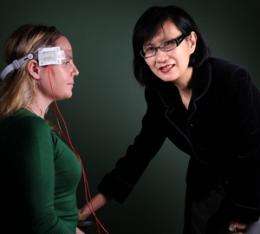
Professor Colleen Loo
(Medical Xpress) -- Recreational drug and anaesthetic, ketamine, is being trialled in people with severe depression and is providing almost instant relief from symptoms, offering fresh hope of a quick new way to manage the illness at its worst.
Ketamine, known colloquially as Special K, has been shown to alleviate depression in a matter of minutes or hours instead of the weeks it can take some conventional medications to treat the illness.
University of New South Wales researchers are leading the Australia-first clinical trial of ketamine to determine if it could be the next frontier in treating depression, which affects around 15 per cent of the population.
Professor Colleen Loo, from UNSWs School of Psychiatry and the Black Dog Institute, says while traditional antidepressant drugs remain useful, ketamine is envisaged as an additional treatment option, not a replacement.
The magnitude of improvement were seeing within 24 hours is just astounding compared to existing antidepressant treatments, Professor Loo says.
The only other antidepressant treatment that comes anything close to it is electro-convulsive therapy, or ECT, the most effective proven treatment for depression.
Researchers are investigating the bodys response to ketamine by administering a range of small doses in the placebo-controlled trial, given by intravenous infusion under careful medical monitoring.
Ketamine works on a different part of the brain from other traditional antidepressants, which is helping researchers understand more about the brain and its role in depression.
Its a paradigm shift. All the other existing antidepressant medications work on receptor systems like serotonin, noradrenaline and dopamine, whereas this works on the glutamate system, Professor Loo says.
A successful, ongoing trial could mean ketamine will be used in Australia in clinical settings within a decade.
More information: Ketamine has so far been successfully trialled on a handful of people, with more participants being recruited. Anyone interested in participating in the trial should email n.katalinic@unsw.edu.au , contact 02 9113 1637 or visit the Black Dog Institute website for more information.
Candidates for the treatment are those adults with severe depression in need of medication but who havent responded to traditional treatments.
Provided by
University of New South Wales
-
Ketamine helps see how the brain works in clinical depression
Jun 16, 2011 |
not rated yet |
0
-
Ketamine improved bipolar depression within minutes
May 30, 2012 |
not rated yet |
0
-
Researchers explore the antidepressant effects of ketamine
Feb 21, 2008 |
not rated yet |
0
-
Ketamine reduces suicidality in depressed patients
Sep 10, 2009 |
not rated yet |
0
-
Drug boosts growth factor to jump-start rapid antidepressant response
Jun 22, 2011 |
not rated yet |
0
-
Motion perception revisited: High Phi effect challenges established motion perception assumptions
Apr 23, 2013 |
3 / 5 (2) |
2
-
Anything you can do I can do better: Neuromolecular foundations of the superiority illusion (Update)
Apr 02, 2013 |
4.5 / 5 (11) |
5
-
The visual system as economist: Neural resource allocation in visual adaptation
Mar 30, 2013 |
5 / 5 (2) |
9
-
Separate lives: Neuronal and organismal lifespans decoupled
Mar 27, 2013 |
4.9 / 5 (8) |
0
-
Sizing things up: The evolutionary neurobiology of scale invariance
Feb 28, 2013 |
4.8 / 5 (10) |
14
-
Pressure-volume curve: Elastic Recoil Pressure don't make sense
May 18, 2013
-
If you became brain-dead, would you want them to pull the plug?
May 17, 2013
-
MRI bill question
May 15, 2013
-
Ratio of Hydrogen of Oxygen in Dessicated Animal Protein
May 13, 2013
-
Alcohol and acetaminophen
May 13, 2013
-
Marie Curie's leukemia
May 13, 2013
- More from Physics Forums - Medical Sciences
More news stories
Ketamine shows significant therapeutic benefit in people with treatment-resistant depression
Patients with treatment-resistant major depression saw dramatic improvement in their illness after treatment with ketamine, an anesthetic, according to the largest ketamine clinical trial to-date led by researchers from the ...
Psychology & Psychiatry
8 hours ago |
4.5 / 5 (2) |
0
|
US psychiatry gets makeover in new manual
The latest makeover to a massive psychiatric tome honored by some, reviled by others and even called the "Bible" of mental disorders is being released Saturday with a host of new changes.
Psychology & Psychiatry
20 hours ago |
not rated yet |
1
Study reviews readmissions in inpatient psychiatric facilities
(HealthDay)—Most Medicare beneficiaries treated in inpatient psychiatric facilities (IPFs) exhibit characteristics associated with hospital readmission, according to a report prepared for the National Association ...
Psychology & Psychiatry
May 17, 2013 |
not rated yet |
0
Skydiving is never plane sailing
Skydivers show the same level of physical stress before every jump whether a first-timer or experienced jumper, say Northumbria researchers.
Psychology & Psychiatry
May 17, 2013 |
not rated yet |
0
|
Kids, especially boys, perceive sadness of depressed parents
Children of depressed parents pick up on their parents' sadness—whether mom or dad realizes their mood or not.
Psychology & Psychiatry
May 17, 2013 |
4.5 / 5 (2) |
1
|
'Gap' for HIV vaccine efforts after latest setback
The hunt for an HIV vaccine has gobbled up $8 billion in the past decade, and the failure of the most recent efficacy trial has delivered yet another setback to 26 years of efforts.
Consuming coffee linked to lower risk of detrimental liver disease, study finds
Regular consumption of coffee is associated with a reduced risk of primary sclerosing cholangitis (PSC), an autoimmune liver disease, Mayo Clinic research shows. The findings were being presented at the Digestive Disease ...
Research examines new methods for managing digestive health
Research presented at Digestive Disease Week (DDW) explores new methods for managing digestive health through diet and lifestyle.
New smartphone application improves colonoscopy preparation
The use of a smartphone application significantly improves patients' preparation for a colonoscopy, according to new research presented today at Digestive Disease Week (DDW). The preparation process, which begins days in ...
New research identifies risks, interventions for children's GI health
An increasing number of U.S. children are experiencing gastrointestinal issues that require interventions to resolve, according to research presented at Digestive Disease Week (DDW).
New research identifies practice changes to improve value and quality of GI procedures
There are significant cost and risk factors associated with two procedures commonly used to diagnose or treat gastrointestinal problems, according to research presented at Digestive Disease Week (DDW).
Jun 08, 2012
Rank: 1 / 5 (1)