Why cutting-edge medical technology may not lead to exploding health care costs
July 27, 2012 By Peter Dizikes in Health

Why cutting-edge medical technology may not lead to exploding health care costs

Enlarge

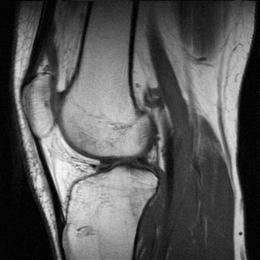
A sagittal MRI of the knee Credit: wikipedia

Sophisticated medical imaging is often cited as a leading driver of health care costs. The increasing availability of techniques such as computed tomography (CT), magnetic resonance imaging (MRI) and positron emission tomography (PET), while aiding large number of patients, has also made the treatment of disease and injury more expensive.

But as a new study co-authored by an MIT economist observes, the growth of such cutting-edge procedures has slowed, suggesting that the diffusion of technology does not necessarily lead to steadily increasing costs.

Instead, in the paper — “The Sharp Slowdown In Growth Of Medical Imaging,” published this week in the August issue of the journal Health Affairs — MIT economist Frank Levy and David W. Lee of GE Healthcare suggest that a more selective use of high-end imaging is evolving within the medical profession. This transformation is likely due to the changing structure of insurance plans — especially the exercise of “prior authorization,” the preapproval of certain treatments — as well as increased concerns about the side effects of some imaging methods.

In turn, the findings suggest the need for a nuanced understanding of the ways new technologies are incorporated into medical practices over time — and of the relationship medical practices may have to America’s fiscal situation.  

“There’s no chance of ever getting the federal deficit under control unless you can get health care costs under control,” says Levy, a professor of urban economics in MIT’s Department of Urban Studies and Planning. “But just to say technology is the driver, I think, is an easy way out in terms of looking at the system.”

‘More consideration’ of avoiding advanced imaging

The study by Levy and Lee builds on a 2010 Health Affairs paper by researchers at Thomas Jefferson University in Philadelphia, who showed that after a rapid expansion in advanced medical imaging, use of the technologies for Medicare recipients slowed in 2006 and 2007. Combining statistics for the government-backed Medicare system with data from commercial insurers, Levy and Lee found that the trend extended at least through 2009, and included patients enrolled in employer-sponsored health plans, too.

Specifically, from 2000 through 2005, use of CT scans among Medicare recipients (who are age 55 and older) grew by an annual average of 14.3 percent, but that growth then declined every year after 2005, falling to 7.1 percent in 2006 and 1.4 percent in 2009. Among Medicare enrollees, the number of MRI exams increased by 14 percent from 2000 through 2005, but only grew by 2.6 percent during the 2006 to 2009 period. And among a sample of 1.1 million non-elderly, commercially insured people in the study, the number of CT scans performed on patients increased by 20.4 percent from 2002 to 2006, but by just 3.1 percent from 2006 to 2009.  

Using data from commercial insurers, Levy and Lee, who is the general manager and head of health economics and reimbursement at GE Healthcare, found that about half of the slowdown in MRI imaging involved diagnoses of back, elbow and knee problems; essentially, doctors in those cases appear to have opted for more conservative treatments to deal with ailments that may only have been temporary injuries.

“Eight or nine years ago, the atmosphere [in clinics and hospitals] was that if you’re not doing a scan, you’re not doing modern medicine,” Levy says. “Now … there’s more consideration about whether patients really need a scan or not. And in a lot of situations, that’s totally appropriate.” The study also included interviews with doctors and benefits managers to shed light on their decision-making practices.

One external factor affecting these treatment decisions, Levy and Lee believe, may have been increased concerns about the exposure to radiation involved in CT and PET tests. (MRIs do not involve the same exposure to radiation.)

But the main reason growth slowed, the paper suggests, is because of new insurance arrangements. These include larger deductibles: The percentage of employees with a deductible of at least $1,000 grew from 10 percent in 2006 to 27 percent in 2010. Levy and Lee also cite the increased use of “prior authorization” in insurance, which requires general practitioners to conform to guidelines about the appropriateness of medical treatments, such as exams and medication. Congress’ 2005 Deficit Reduction Act, which reduced reimbursements for imaging performed in physicians’ offices, also played a role. This may have reduced the incentives for doctors to acquire, say, MRI machines for their own offices and then use them frequently to pay for that initial investment.

The new “fiscal pressure on the system,” Levy says, likely drove doctors to take a more moderate approach to imaging that would not have occurred “if money were not a problem.”

Changing the norms

As Levy notes, the study implies “no general conclusion that we’re always overutilizing technology in every area.”

Yet other researchers who have seen the study think the apparent connection Levy and Lee have found between insurance changes and the altered use of imaging may have parallels in other fields of medicine.  

“I find [the paper] very plausible,” says Richard Frank, a professor of health economics at Harvard Medical School. “It’s instructive for thinking more broadly about the kinds of things we need to do to bring down health care costs.”

To be sure, Frank notes, different medical disciplines “vary a tremendous amount.” However, he adds, “There are a lot of norms in medical practice, which adapt to the financial and management systems we have in place. And when we start to change those systems … it starts to change the [medical] norms in important ways.”

Jonathan Skinner, a health care at Dartmouth College, calls the paper “a landmark study,” and suggests a pair of further research questions deriving from the study: one, whether the slowdown in imaging led to a slowdown in the follow-up procedures typically related to imaging, and two, whether some kinds of health care providers were quicker to than others to scale back on unnecessary imaging.

For his part, Levy’s ongoing research on health care will continue to focus on imaging: He is working with a group of physicians at a major Boston hospital as they develop treatment guidelines to avoid excessive use of imaging technology.

Levy’s work has been supported by an investigator award from the Robert Wood Johnson Foundation.

Journal reference: Health Affairs search and more info website

Provided by Massachusetts Institute of Technology search and more info website

This story is republished courtesy of MIT News (web.mit.edu/newsoffice/), a popular site that covers news about MIT research, innovation and teaching.

5 /5 (1 vote)  

Filter


Move the slider to adjust rank threshold, so that you can hide some of the comments.


Display comments: newest first

Eikka
Jul 27, 2012

Rank: 2.5 / 5 (2)
The increasing availability of techniques such as computed tomography (CT), magnetic resonance imaging (MRI) and positron emission tomography (PET), while aiding large number of patients, has also made the treatment of disease and injury more expensive.


I think it's more about the fact that when you have sophisticated imaging techniques, you find more things to treat instead of letting it heal on its own.

Kinda like when anesthetics were invented, it allowed surgeons to cut more, which lead to more patients dying because antiseptics weren't invented yet...
wealthychef
Jul 27, 2012

Rank: 2.3 / 5 (3)
We are willing to start war after war to feel safe, but we are afraid of spending too much making people live healthier longer lives. Bleh.
IronhorseA
Jul 27, 2012

Rank: 4 / 5 (3)
"a professor of health economics"

Yeah, these are the people I'd trust to decide what health care I got. ;P
Sanescience
Jul 27, 2012

Rank: 1 / 5 (2)
First I must say that I have benefited greatly by modern medical scanning techniques. That said...

The elephant in the room no one talks about is in a free market system both provider and consumer have a free choice to sell or buy. If the provider has something needed for quality of life, or even staying alive, then there is very little "freedom" about it. Putting more money into the system (Obama care) will continue the industry growth, focusing on treatments and not cures, and increase overhead expenses of administration. This will delay the ultimate dysfunction collapse, not prevent it.
CapitalismPrevails
Jul 30, 2012

Rank: not rated yet
Great Sanescience, so confiscating someone else's labor(money) to subsidize someone else's healthcare won't create a a moral hazard. Why would that someone else have more appreciation for someone's else's labor and use it efficiently? Would you treat you car with better care or would someone else? When you convolute/micromanage the economy like that, you'd disincentivize production of labor because the fruits of your own labor get taken away. Look and what happened to Massachusetts healthcare. It got used and abused.
Sanescience
Jul 31, 2012

Rank: not rated yet
No system is perfect. Pure socialist medical care system isn't a good idea. Like wise pure free market isn't a good idea either. And note that in a pure free market monopolies are a natural result and we already restrict their creation.
In some peoples mind though, considering the more complex middle ground is too much effort. And the discussion often becomes an imperfect proposal is disregarded despite it representing an improvement over the current situation. And despite no solution is going to make everyone happy. Once a decision making group becomes large enough or diverse enough, there will be no consensus.
CapitalismPrevails
Jul 31, 2012

Rank: not rated yet
The middle ground is subjective and up to interpretation only. A monopoly is what's called a government agency like the FDA and EPA which rules by power of law and is democratically created to democratically make regulate and harass businesses. Private sector companies can not be a monopoly in a free market because if they raise their prices it would make it easier for smaller and more ambitious startups to compete. Standard Oil is a perfect example. They tried to control the price of oil but were unsuccessful.
IronhorseA
Aug 01, 2012

Rank: not rated yet
Standard Oil is the reason Theodore Roosevelt (a republican at the time) fought for the anti-trust laws.
CapitalismPrevails
Aug 01, 2012

Rank: not rated yet
LMAO,Rossevelt also established the first wage laws, and was in favor or universal healthcare. He helped create more laws so therefor he was Democrate in heart but Republican in name. Just because because someone is Republican doesn't mean the someone advocates free markets. President Nixon is the greatest example. He took us off the gold standard for crying out loud. He also established several departments like the EPA, DEA, CPSC, OSHA, etc. Just more and more government and little results to show for it except the optics of good intentions.
Rank 5 /5 (1 vote)
Relevant PhysicsForums posts

More news stories

Seniors more likely to crash when driving with pet, study finds

(HealthDay)—Animals make great companions for senior citizens, but elderly people who always drive with a pet in the car are far more likely to crash than those who never drive with a pet, researchers have ...

Health created 5 hours ago | popularity not rated yet | comments 0

Driving and hands-free talking lead to spike in errors, study shows

Talking on a hands-free device while behind the wheel can lead to a sharp increase in errors that could imperil other drivers on the road, according to new research from the University of Alberta.

Health created May 24, 2013 | popularity not rated yet | comments 1

About one in four uninsured could be excluded from ACA

(HealthDay)—More than one in four of those eligible for new premium assistance tax credits under the Affordable Care Act (ACA) do not have a checking account and will not be able to receive premiums from ...

Health created May 24, 2013 | popularity not rated yet | comments 0

Audiologists recommend smart phone apps to monitor noise levels

After studying noise in one French Quarter neighborhood of New Orleans to determine whether or not noise levels exceeded municipal ordinances, Annette Hurley, PhD, Assistant Professor of Audiology at LSU Health Sciences Center ...

Health created May 24, 2013 | popularity not rated yet | comments 0

Young children who miss well-child visits are more likely to be hospitalized

Young children who missed more than half of recommended well-child visits had up to twice the risk of hospitalization compared to children who attended most of their visits, according to a study published today in the American Jo ...

Health created May 24, 2013 | popularity not rated yet | comments 0


First drug to improve heart failure mortality in over a decade

Coenzyme Q10 decreases all cause mortality by half, according to the results of a multicentre randomised double blind trial presented today at Heart Failure 2013 congress. It is the first drug to improve heart failure mortality ...

Heart failure accelerates male 'menopause'

Heart failure accelerates the aging process and brings on early andropausal syndrome (AS), according to research presented today at the Heart Failure Congress 2013. AS, also referred to as male 'menopause', was four times ...

Death highest in heart failure patients admitted in January, on Friday, and overnight

Mortality and length of stay are highest in heart failure patients admitted in January, on Friday, and overnight, according to research presented today at the Heart Failure Congress 2013. The analysis of nearly 1 million ...

Feds fight morning-after pill age ruling in NY

(AP)—Department of Justice lawyers have again asked a federal appeals court in New York to delay lifting age restrictions and prescription requirements on an emergency contraceptive popularly known as the morning-after ...

New immune system discovered

(Medical Xpress)—A research team, led by Jeremy Barr, a biology post-doctoral fellow, unveils a new immune system that protects humans and animals from infection.

Brain can be trained in compassion, study shows

Until now, little was scientifically known about the human potential to cultivate compassion—the emotional state of caring for people who are suffering in a way that motivates altruistic behavior.