In the insect brain, dopamine-releasing nerve cells are crucial to the formation of both punished, rewarded memories
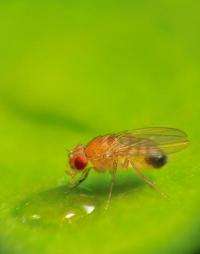
Children quickly learn to avoid negative situations and seek positive ones. But humans are not the only species capable of remembering positive and negative events; even the small brain of a fruit fly has this capacity. Dopamine-containing nerve cells connected with the mushroom body of the fly brain play a role here. Scientists from the Max Planck Institute of Neurobiology in Martinsried have identified four different types of such nerve cells. Three of the nerve cell types assume various functions in mediating negative stimuli, while the fourth enables the fly to form positive memories.
From earliest childhood we learn to avoid things that harm us and seek positive experiences instead. Aversive memory is created by experiences like pricking our finger on a rose thorn, which we remember for a long time. Conversely, the smell of fresh food is positively associated with a feeling of satiety and creates a reward memory.
Hiromu Tanimoto and his colleagues at the Max Planck Institute of Neurobiology recently localised and identified the most important types of nerve cells involved in forming positive and negative memories of a fruit fly. All four nerve cell types they discovered use dopamine to communicate with other nerve cells. The dopamine signals released by these cells are received in the mushroom body, a prominent brain structure in insect brains. "It is really surprising that similar dopamine-releasing nerve cells can play such different roles," says Tanimoto.
The scientists investigate the functions of the individual nerve cell types in two separate studies. In the process of learning avoidance strategies, the flies were presented with an odour that was associated with a negative stimulus, a foot shock. As a result, the flies learned to avoid this odour in future.
In the next round of experiments, the scientists replaced the shock with artificial activation of defined sets of nerve cells during an odour presentation. They discovered that the transient activation of these nerve cells alone is sufficient to signal aversive stimulus in the fly brain and lead to the formation of an aversive odour memory – even when no real aversive stimulus is present.
The scientists were also able to demonstrate that the three types of nerves cells that are responsible for the memory of punishment fulfil different functions. A major difference here is the stability of the induced memories. One of the cell types is responsible for the long-lasting memory, while memories formed by other dopamine cells are short-lived. "Punishing events induce aversive memories with different stabilities by combining distinct dopamine cells in the fly brain" explains Tanimoto.
The same method was employed to demonstrate that another set of dopamine cells signals reward to form positive odour memory. When these cells were artificially activated, the flies remembered the smell and tried to get to the source of the odour even in the absence of sugar reward. The scientists proved that specific dopamine neurons also play a key role in this process.
The messenger substance dopamine is not only significant for fruit flies and other insects. Particularly, it is also needed for reward-based learning in humans. These new discoveries suggest that functional diversity of dopamine is a highly conserved mechanism in brains.
More information: Chang Liu, Pierre-Yves Plaçais, Nobuhiro Yamagata, Barret D. Pfeiffer, Yoshinori Aso, Anja B. Friedrich, Igor Siwanowicz, Gerald M. Rubin, Thomas Preat, Hiromu Tanimoto, A subset of dopamine neurons signals reward for odour memory in Drosophila, Nature, 18th of July 2012, DOI: 10.1038/nature11304
Yoshinori Aso, Andrea Herb, Maite Ogueta, Igor Siwanowicz, Thomas Templier, Anja B. Friedrich, Kei Ito, Henrike Scholz and Hiromu Tanimoto, Three Dopamine Pathways Induce Aversive Odor Memories with Different Stability, PLoS Genet 8(7): e1002768. doi:10.1371/journal.pgen.1002768 , 12th of July 2012


