Playing several sports keeps kids slimmer: study
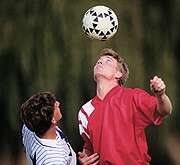
(HealthDay) -- Teens who play on three or more sports teams are much less likely to be overweight or obese than their peers who don't play a sport, new research finds.
The study also found that high school students who walk or ride a bike to school are less likely to be obese -- but not less likely to be overweight -- than their bus-riding counterparts. And, the research shows that school physical education programs don't alter the risk of obesity or of being overweight.
"If parents are truly interested in preventing overweight and obesity, getting their kids to join one or more sports teams may be an effective way to do that," said the study's lead author, Keith Drake, a postdoctoral research fellow at the Hood Center for Children and Families at the Geisel School of Medicine at Dartmouth College in Lebanon, N.H.
"It really might be worth all that driving you'll have to do, because playing sports has a healthy impact on weight," Drake said.
In the United States, more than one-third of high school students are overweight or obese, according to background information in the study.
Results of the study, released online July 16, will be published in the August print issue of Pediatrics.
The study, conducted through telephone surveys, included more than 1,700 high school students from New Hampshire and Vermont and their parents. They were asked about extracurricular activities and sports, transportation to school, and their TV and computer habits. Other questions covered weight, height, diet quality and family demographics, such as race and parental education.
Almost 30 percent (498 teens) were overweight or obese. Thirteen percent were obese, according to the study.
The researchers found that playing on three or more sports teams, which have regular practices and competitions, was linked to a 27 percent lower risk of being overweight and a 39 percent lower risk of obesity compared to kids who didn't play sports at all.
Riding a bike or walking to school 3.5 days or more a week lowered obesity risk by 33 percent compared to those who never bicycled or walked to school, the study found. There was no association between active commuting and a lower risk of being overweight, however.
Drake said it was likely that active commuting just didn't provide enough physical activity to lower the risk of being overweight. The same seemed true of physical education classes.
Another expert, Dana Rofey, an assistant professor of pediatrics and the director of behavioral health at Children's Hospital of Pittsburgh, said, "physical education classes generally aren't consistent enough or long enough to make a difference in the risk of obesity and overweight."
But, even if phys-ed classes are infrequent, "any movement is better than no movement at all," she added.
Because high school sports participation provides moderate to strenuous exercise, the researchers estimated that if all teenagers played on two or more sports teams each year, the rate of obesity would drop by 26 percent. And, if all teens walked or bicycled to school most days, the authors believe obesity would decline by about 22 percent.
Drake suggested trying to get kids involved in sports earlier than high school. "The earlier you start, the more likely you are to stay in it," he said.
And, if your kids aren't natural athletes or especially competitive, he added, "I believe there is an activity our there for every child, and I would encourage parents to let them try many activities," he said. If a child dislikes baseball, maybe ice skating or dance would be better activities, he suggested.
Rofey said for kids who really balk at traditional physical activities, start with just getting them out of the house. Have them volunteer at an animal shelter. Walking dogs isn't strenuous exercise, but again, she said any activity is better than none.
It's usually helpful if a parent or siblings get involved, too, she said. "If the family is supportive, and parents lead by example, kids may be more willing to try an activity," she said.
More information: For advice on getting your kids to be more active, see the Nemours Foundation.
Copyright © 2012 HealthDay. All rights reserved.


