Web-based tools facilitate matching cancer drugs with gene targets

July 16, 2012 in Cancer

Web-based tools facilitate matching cancer drugs with gene targets

Enlarge

This is a cell plate with cell lines from the NCI-60. Credit: NIH/National Cancer Institute

A new study details how a suite of web-based tools provides the research community with greatly improved capacity to compare data derived from large collections of genomic information against thousands of drugs. By comparing drugs and genetic targets, researchers can more easily identify pharmaceuticals that could be effective against different forms of cancer.

The newly updated software, called CellMiner, was built for use with the NCI-60, one of the most widely utilized collections of cancer cell samples employed in the testing of potential anti-. The tools, available free, provide rapid access to data from 22,379 genes catalogued in the NCI-60 and from 20,503 previously analyzed , including 102 U.S. -approved drugs.

The study, written by the scientists that developed the tools at the (NCI), part of the National Institutes of Health, appeared in the July 16, 2012, issue of .

"Previously you would have to hire a bioinformatics team to sort through all of the data, but these tools put the entire database at the fingertips of any researcher," explained Yves Pommier, M.D., Ph.D., of the NCI's Center for Cancer Research. "These tools allow researchers to analyze drug responses as well as make comparisons from drug to drug and gene to gene."
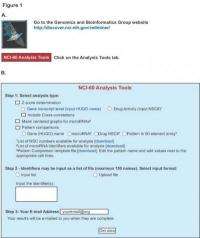
Web-based tools facilitate matching cancer drugs with gene targets
Enlarge

The CellMiner software suite, developed by the National Cancer Institute, provides the research community with greatly improved capacity to compare data derived from large collections of genomic information against thousands of drugs. By comparing drugs and genetic targets, researchers can more easily identify pharmaceuticals that could be effective against different forms of cancer. The newly updated software, called CellMiner, was built for use with the NCI-60, one of the most widely utilized collections of cancer cell samples employed in the testing of potential anti-cancer drugs. Credit: National Cancer Institute

Genomic sequencing and analysis have become increasingly important in , but they are yielding data sets so vast that researchers may find it difficult to access and compare them. As new technologies emerge and more data are generated, tools to facilitate the comparative study of genes and potentially will be of even greater importance. With the new tools, available at http://discover.nci.nih.gov/cellminer, researchers can compare patterns of drug activity and , not only to each other but also to other patterns of interest. CellMiner allows the input of large quantities of genomic and drug data, calculates correlations between genes and drug activity profiles, and identifies correlations that are statistically significant. Its data integration capacities are easier, faster, and more flexible than other available methods, and these tools can be adapted for use with other collections of data.

Researchers looking at a particular drug can use the tools to access data from previous experiments done on that drug and analyze how the drug relates to other drugs and various gene profiles. As a case example for this study, the researchers compared drug activity levels and gene expression patterns from previous research to identify an investigational compound, called NSC732298, which is not currently being studied for colon cancer, but could be a potential therapy for the disease based on a CellMiner gene-drug match. In the same exercise, the researchers were able to identify that a second investigational drug that is being tested for colon cancer, called selumetinib, might also be effective against melanoma.

"We're looking forward to seeing how other people are going to use this tool to look at gene co-regulation, regulation of gene expression, and the relationship between gene expression and cancer," said Pommier.

Journal reference: Cancer Research search and more info website

Provided by National Cancer Institute search and more info website

not rated yet  

Rank not rated yet
Relevant PhysicsForums posts

More news stories

New fluorescent tools for cancer diagnosis

In recent years, microRNAs (miRNAs) and other non-coding RNAs are small molecules that help control the expression of specific proteins. In recent years they have emerged as disease biomarkers. miRNA profiles have been used ...

Cancer created 19 hours ago | popularity not rated yet | comments 0

Modulating the immune system to combat metastatic cancer

Cancer cells spread and grow by avoiding detection and destruction by the immune system. Stimulation of the immune system can help to eliminate cancer cells; however, there are many factors that cause the immune system to ...

Cancer created 20 hours ago | popularity 5 / 5 (1) | comments 0

Scientists put bowel cancer under the microscope

Researchers from London's Kingston University have begun a two-year study which could help prolong the lives of people with colorectal tumours.

Cancer created 23 hours ago | popularity 5 / 5 (1) | comments 0

Researcher identifies breast cancer fighting hormone

Transformative research from Western University has identified new hormones in the body which may suppress breast cancer and stimulate the regression of breast tumors.

Cancer created May 24, 2013 | popularity 5 / 5 (2) | comments 0

Ground breaking cancer research finds immune system link

(Medical Xpress)—Curtin University researchers have found evidence that targeting specific cells in the body can reverse the effects of cancer on the immune system.

Cancer created May 24, 2013 | popularity 5 / 5 (4) | comments 0


First drug to improve heart failure mortality in over a decade

Coenzyme Q10 decreases all cause mortality by half, according to the results of a multicentre randomised double blind trial presented today at Heart Failure 2013 congress. It is the first drug to improve heart failure mortality ...

Heart failure accelerates male 'menopause'

Heart failure accelerates the aging process and brings on early andropausal syndrome (AS), according to research presented today at the Heart Failure Congress 2013. AS, also referred to as male 'menopause', was four times ...

Feds fight morning-after pill age ruling in NY

(AP)—Department of Justice lawyers have again asked a federal appeals court in New York to delay lifting age restrictions and prescription requirements on an emergency contraceptive popularly known as the morning-after ...

Death highest in heart failure patients admitted in January, on Friday, and overnight

Mortality and length of stay are highest in heart failure patients admitted in January, on Friday, and overnight, according to research presented today at the Heart Failure Congress 2013. The analysis of nearly 1 million ...

Engineered cytomegalovirus protects monkeys from HIV equivalent

(Medical Xpress)—A new study by researchers in the US has shown that an ancient virus can be modified to help in the fight against the simian immunodeficiency virus SIV, which is the equivalent in monkeys ...

Hormone levels may provide key to understanding psychological disorders in women

Women at a particular stage in their monthly menstrual cycle may be more vulnerable to some of the psychological side-effects associated with stressful experiences, according to a study from UCL.