Contact lens sensor measures 24-hour intraocular pressure
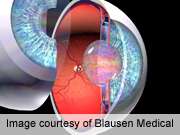
Contact lens sensor measures 24-hour intraocular pressure
A contact lens sensor provides safe and tolerable 24-hour monitoring of intraocular pressure patterns in patients with or suspected of having glaucoma, according to research published online Aug. 13 in the Archives of Ophthalmology.

(HealthDay) -- A contact lens sensor (CLS) provides safe and tolerable 24-hour monitoring of intraocular pressure (IOP) patterns in patients with or suspected of having glaucoma, according to research published online Aug. 13 in the Archives of Ophthalmology.

In an effort to evaluate the safety, tolerability, and reproducibility of measurements during 24-hour IOP monitoring via CLS, Kaweh Mansouri, M.D., M.P.H., of the Hamilton Center at the University of California San Diego, and colleagues conducted a study involving 40 patients (mean age, 55.5 years) who were suspected of having (21 patients) or had been diagnosed with glaucoma (19 patients). Two separate 24-hour monitoring sessions were conducted one week apart (S1 and S2).

The researchers found that the main adverse events associated with the IOP-monitoring CLS included blurred vision in 82 percent, conjunctival hyperemia in 80 percent, and superficial punctate keratitis in 15 percent. There was no significant difference in the mean visual analogue scale score in the two sessions (27.2 mm in S1 and 23.8 mm in S2), with the overall correlation between the sessions being 0.59 (0.51 for patients with no and 0.63 for those with medication).

"This study reveals that CLS provides a safe and well-tolerated approach to 24-hour IOP monitoring in glaucoma patients," the authors write. "The 24-hour IOP patterns seem to be fairly reproducible when repeated in the short term. The availability of continuous 24-hour IOP monitoring holds the promise to improve glaucoma care."

Several authors disclosed to medical device and pharmaceutical companies, including Sensimed, which funded the study and manufactures the CLS used in the study.

More information: Abstract
Full Text (subscription or payment may be required)

add to favorites email to friend print save as pdf

Related Stories

Physical fitness could have a positive effect on eye health

Oct 24, 2011

Physical activity may be what the doctor orders to help patients reduce their risk of developing glaucoma. According to a recently published scientific paper, higher levels of physical exercise appear to have a long-term ...

Recommended for you

New drug could help AMD sufferers

15 hours ago

There is no cure for age-related macular degeneration, an eye disease that is the leading cause of vision loss and blindness in older Americans. Last year, the National Institutes of Health reported that ...

Researchers find diminished balance in those with poor vision

Jun 06, 2013

UC Davis Health System Eye Center research has found that visually impaired individuals and those with uncorrected refractive error—those who could benefit from glasses to achieve normal vision but don't wear glasses—have ...

Good outcomes for resident-performed cataract surgery

Jun 04, 2013

(HealthDay)—In an underserved patient population, supervised resident-performed cataract surgery is successful and cost-effective, according to a study published online May 30 in JAMA Ophthalmology.

User comments

More news stories

Study suggests new approach to fight lung cancer

Recent research has shown that cancer cells have a much different – and more complex – metabolism than normal cells. Now, scientists at The University of Texas at Dallas have found that exploiting these differences might ...

Getting enough sleep could help prevent type 2 diabetes

Men who lose sleep during the work week may be able to lower their risk of developing Type 2 diabetes by getting more hours of sleep, according to Los Angeles Biomedical Research Institute (LA BioMed) research findings presented ...