Causes of maternal intrapartum fever in induced labor ID'd
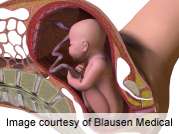
(HealthDay) -- Labor induction correlates with a slight increase in maternal temperature, with significant effects seen for time from membrane rupture to delivery and body mass index, according to a study published in the August issue of Anesthesiology.
In an effort to identify the potential causes of noninfectious maternal temperature change during labor, Michael A. Frölich, M.D., of the University of Alabama at Birmingham, and associates conducted a prospective study involving 81 women scheduled for labor induction.
The researchers observed a significant linear trend of temperature over time. Significantly longer time from membrane rupture to delivery and a higher body mass index was seen for patients with a positive temperature trend. There was no effect on temperature trend noted for epidural analgesia.
"In our cohort of patients, there was an overall significant linear trend of temperature over time after correcting for heterogeneity among patients," the authors write. "Temperature increase was associated with higher body mass index values and longer time from rupture of membranes to delivery. Epidural analgesia had no effect on maternal temperature."
More information: Full Text
Copyright © 2012 HealthDay. All rights reserved.


