Making sense of memory
August 17, 2012 in Psychology & Psychiatry

Making sense of memory

Enlarge

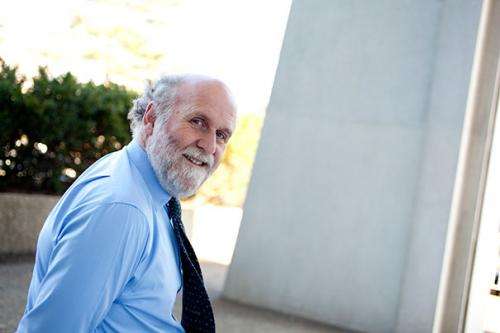
Misremembering happens to us all the time, says Harvard psychologist Daniel Schacter, because our minds rely on patterns to reconstruct memories — and the patterns often lead us astray. File photo: Rose Lincoln/Harvard Staff Photographer

It happens to all of us: We think we learned of the Sept. 11 attacks from a radio report, when, in fact, the news came from a co-worker; we’re sure the robber running from the bank was tall, when actually he was short; we remember waking up at 7 yesterday, when 8 is closer to the truth. Such “false memories,” unavoidable in everyday life, can have disastrous consequences in courtrooms and other settings where exactitude matters.

We create these false memories, according to Harvard psychologist Daniel Schacter, because our brains are designed to tell stories about the . “Memory’s flexibility is useful to us, but it creates distortions and illusions,” says Schacter, the William R. Kenan Jr. Professor of Psychology. “If memory is set up to use the past to imagine the future, its flexibility creates a vulnerability — a risk of confusing imagination with reality.”

Schacter, author of two books on memory, was recently honored with the Distinguished Scientific Contribution Award from the American Psychological Association (APA). In a review paper in a forthcoming edition of the journal American Psychologist, Schacter argues that the time machine of the brain is really a virtual reality simulator. Our memories are designed to flexibly imagine the future, Schacter says, but not to record the past verbatim — so they are inherently prone to predictable errors, which experiments reveal.

Misremembering happens to us all the time, Schacter says, because our minds rely on patterns to reconstruct memories — and the patterns often lead us astray. Routine behaviors, called “schemas” by the psychologist Frederic Bartlett in his classic “Remembering” (1932), distort our memories by making us assume events happened the way they usually do. For example, we may “remember” that we biked to work today because we ordinarily do, when today we actually drove. Our memories are also biased by our emotions.

“Positivity bias” is an example of such a memory distortion. Since we have a tendency to remember emotionally charged events, our memories are crowded more with emotional events than with ordinary things from our daily lives — and these tend to be biased toward the positive, while negative memories slip away. In a recent study with postdoctoral researcher Karl Szpunar, Schacter showed that when people are asked to imagine positive, negative, and neutral future scenarios, they forget the negative ones faster than the others. That study, subtitled “Remembering a Rosy Future,” was published in the journal Psychological Science in January.

We typically underestimate the length of time that something will take, or the likelihood of future events, because our memories are often weak on the most common (hence most likely) events in our past. We remember the emotional moments, the fun or scary or sexy ones, and forget the daily drives to work and lunch-table conversations. This leads us to predict the future inaccurately, because we misremember a richer past. Schacter thinks a malfunction in this system may be to blame for mood disorders like depression and anxiety — where simulations of the future are repetitively negative, and hammer home a distortedly negative worldview. His lab plans to follow up on this line of research.

Memory is inherently constructive, Schacter says: We remember by rebuilding the past from bits and pieces — and the same ability helps us imagine the future. The hippocampus, long considered the seat of memory in the brain, Schacter posits, is actually a “simulator” — the part of the brain responsible for creating movies in the mind, whether they are memories of yesterday, plans for tomorrow, or imaginings from a book or an article we read. In all cases, our minds draw from a store of details to build episodes.

More information: pss.sagepub.com/co… 3/1/24.short

Journal reference: American Psychologist search and more info website Psychological Science search and more info website

Provided by Harvard University search and more info website

This story is published courtesy of the Harvard Gazette, Harvard University's official newspaper. For additional university news, visit Harvard.edu.

4 /5 (1 vote)  

Filter


Move the slider to adjust rank threshold, so that you can hide some of the comments.


Display comments: newest first

Tausch
Aug 17, 2012

Rank: not rated yet
Yes. All music performed without scoresheets are patterns. - Despite overwhelming 'emotional' and 'feelings'content.

Are you glade the future hold no place for flexibilites in your explanations for the mind/brain?

Start over. Play music from memory. A change of mind.
theskepticalpsychic
Aug 17, 2012

Rank: not rated yet
"Positivity bias" is noticeably lower among chronic depressives than among emotionally balanced individuals. I suffer from diagnosed PTSD, and imagining believably positive futures for myself has always been next to impossible for me. Oddly, I have no trouble imagining believably positive futures for others.
Rank 4 /5 (1 vote)
Tags

Related Stories
Relevant PhysicsForums posts

More news stories

Ketamine shows significant therapeutic benefit in people with treatment-resistant depression

Patients with treatment-resistant major depression saw dramatic improvement in their illness after treatment with ketamine, an anesthetic, according to the largest ketamine clinical trial to-date led by researchers from the ...

Psychology & Psychiatry created 12 hours ago | popularity 4.7 / 5 (3) | comments 0 | with audio podcast

US psychiatry gets makeover in new manual

The latest makeover to a massive psychiatric tome honored by some, reviled by others and even called the "Bible" of mental disorders is being released Saturday with a host of new changes.

Psychology & Psychiatry created May 18, 2013 | popularity not rated yet | comments 1

Study reviews readmissions in inpatient psychiatric facilities

(HealthDay)—Most Medicare beneficiaries treated in inpatient psychiatric facilities (IPFs) exhibit characteristics associated with hospital readmission, according to a report prepared for the National Association ...

Psychology & Psychiatry created May 17, 2013 | popularity not rated yet | comments 0

Skydiving is never plane sailing

Skydivers show the same level of physical stress before every jump whether a first-timer or experienced jumper, say Northumbria researchers.

Psychology & Psychiatry created May 17, 2013 | popularity not rated yet | comments 0 | with audio podcast

Kids, especially boys, perceive sadness of depressed parents

Children of depressed parents pick up on their parents' sadness—whether mom or dad realizes their mood or not.

Psychology & Psychiatry created May 17, 2013 | popularity 4.5 / 5 (2) | comments 1 | with audio podcast


Researchers identify a potential new risk for sleep apnea: Asthma

Researchers at the University of Wisconsin have identified a potential new risk factor for obstructive sleep apnea: asthma. Using data from the National Institutes of Health (Heart, Lung, and Blood Institute)-funded Wisconsin ...

Study finds that sleep apnea and Alzheimer's are linked

A new study looking at sleep-disordered breathing (SDB) and markers for Alzheimer's disease (AD) risk in cerebrospinal fluid (CSF) and neuroimaging adds to the growing body of research linking the two.

Ginger compounds may be effective in treating asthma symptoms

Gourmands and foodies everywhere have long recognized ginger as a great way to add a little peppery zing to both sweet and savory dishes; now, a study from researchers at Columbia University shows purified components of the ...

Computational tool translates complex data into simplified 2-dimensional images

In their quest to learn more about the variability of cells between and within tissues, biomedical scientists have devised tools capable of simultaneously measuring dozens of characteristics of individual ...

New theory on genesis of osteoarthritis comes with successful therapy in mice

Scientists at Johns Hopkins have turned their view of osteoarthritis (OA) inside out. Literally. Instead of seeing the painful degenerative disease as a problem primarily of the cartilage that cushions joints, ...

'Gap' for HIV vaccine efforts after latest setback

The hunt for an HIV vaccine has gobbled up $8 billion in the past decade, and the failure of the most recent efficacy trial has delivered yet another setback to 26 years of efforts.