Leaving balloon in is safe in urinary sphincter revision
September 21, 2012 in Diseases, Conditions, Syndromes

Leaving balloon in is safe in urinary sphincter revision

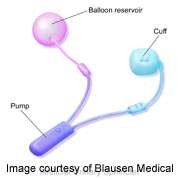
Intentionally leaving the pressure-regulating balloon in place during a non-infected artificial urinary sphincter revision procedure is safe and is not associated with infection or complications, according to research published online Sept. 13 in The Journal of Sexual Medicine.

(HealthDay)—Intentionally leaving the pressure-regulating balloon in place during a non-infected artificial urinary sphincter (AUS) revision procedure is safe and is not associated with infection or complications, according to research published online Sept. 13 in The Journal of Sexual Medicine.

Tobias S. Köhler, M.D., M.P.H., of the Southern Illinois University School of Medicine in Springfield, and colleagues conducted a retrospective review to describe long-term outcomes in 35 patients with an artificial urinary sphincter (AUS) who underwent 36 AUS revisions. During the revisions, the original pressure-regulating balloon was left in place, while the defective cuff and pump were removed and replaced.

The researchers found that, after a mean follow-up of 14 months, 11 percent of patients in this revision series experienced a complication. However, no infections or complications occurred secondary to the retained pressure-regulating balloon.

"This series' data with short- to medium-term follow-up [indicate] that leaving the original fluid pressure-regulating balloon undisturbed during AUS revision in a non-infected setting safely avoids a potential counter incision and is not associated with intraoperative or ," the authors write.

Several authors disclosed to the medical device industry.

More information: Abstract
Full Text (subscription or payment may be required)

Journal reference: Journal of Sexual Medicine search and more info website

Copyright © 2012 HealthDay. All rights reserved.

not rated yet  

Rank not rated yet
Relevant PhysicsForums posts

More news stories

FDA warns of infections tied to Tennessee pharmacy

(AP)—Government health officials are investigating several health problems reported with potentially contaminated medications made by a Tennessee specialty pharmacy.

Diseases, Conditions, Syndromes created 8 hours ago | popularity not rated yet | comments 0

Comorbidities common with alopecia areata

(HealthDay)—Comorbid conditions often accompany alopecia areata, according to a study published online May 22 in JAMA Dermatology.

Diseases, Conditions, Syndromes created 9 hours ago | popularity not rated yet | comments 0

Top-ranked golfer beats scoliosis

(HealthDay)—As a world-class golfer, Stacy Lewis' accomplishments are remarkable. But it was a physical challenge in her childhood that defined her ascent to the top of her sport.

Diseases, Conditions, Syndromes created 9 hours ago | popularity not rated yet | comments 0

Saudi to send animal samples to US in coronavirus probe (Update)

Saudi Arabia said Friday it would send samples taken from animals possibly infected with a deadly SARS-like virus to the United States for testing in a bid to find the source of disease.

Diseases, Conditions, Syndromes created 13 hours ago | popularity not rated yet | comments 0

WHO voices deep concern over spread of SARS-like virus

The World Health Organization voiced deep concern Thursday over the SARS-like virus that has killed 22 people in less than a year, saying it might potentially spread more widely between humans.

Diseases, Conditions, Syndromes created 16 hours ago | popularity 5 / 5 (1) | comments 0


Engineered cytomegalovirus protects monkeys from HIV equivalent

(Medical Xpress)—A new study by researchers in the US has shown that an ancient virus can be modified to help in the fight against the simian immunodeficiency virus SIV, which is the equivalent in monkeys ...

Researchers identify first drug targets in childhood genetic tumor disorder

Two mutations central to the development of infantile myofibromatosis (IM)—a disorder characterized by multiple tumors involving the skin, bone, and soft tissue—may provide new therapeutic targets, according to researchers ...

Hormone levels may provide key to understanding psychological disorders in women

Women at a particular stage in their monthly menstrual cycle may be more vulnerable to some of the psychological side-effects associated with stressful experiences, according to a study from UCL.

Going live: Immune cell activation in multiple sclerosis

Biological processes are generally based on events at the molecular and cellular level. To understand what happens in the course of infections, diseases or normal bodily functions, scientists would need to ...

Driving and hands-free talking lead to spike in errors, study shows

Talking on a hands-free device while behind the wheel can lead to a sharp increase in errors that could imperil other drivers on the road, according to new research from the University of Alberta.

Depression raises diabetics' risk of severe low blood sugar episodes

(Medical Xpress)—Patients with diabetes who are depressed are much more likely to develop episodes of dangerously low blood sugars, or hypoglycemia, than are those who are not depressed, a new study has ...