Doctors failing to follow up test results
September 27, 2012 in Health

Doctors failing to follow up test results

Enlarge

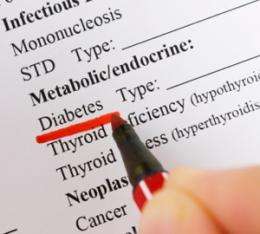
(Medical Xpress)—A systematic review by UNSW Medicine researchers has found up to 62 per cent of laboratory tests and up to 36 per cent of radiology reports were not being followed up by doctors, for patients attending GPs, clinics or hospital outpatient departments.

In Australia, their related research revealed almost 50 per cent of in one hospital study believed their colleagues had missed test results, resulting in delays in treatment, and over 20 per cent conceded missing results themselves.

They say potential options include laboratories releasing test results directly to patients to help them share responsibility for their own health.

Lead researcher, UNSW Medicine Associate Professor Joanne Callen and her colleagues at the Centre for Health Systems and Safety Research found a "considerable" impact on patients, including missed critical diagnoses of diseases such as cancer and delays in seeking treatment for a range of conditions. The review revealed a great discrepancy in follow up: the best health practitioners missed only 6.8 per cent of lab test follow ups and 1.0 per cent of radiology results.

"Failure to follow-up for patients is a critical safety issue which requires urgent attention. Without knowledge of the size and effect of the problem, many clinicians may underestimate its extent and consequences," Associated Professor Callen says.

The review, published in the , examined 19 studies carried out in the United States, where most research is being undertaken. However, Associate Professor Callen says strong anecdotal evidence in Australia and the similarity of the mean the results suggest a similar level of risk. 

Australia currently has no laws or regulations to ensure results are followed up.

"In Australia, we need to consider every option, including regulation. Given the huge and rising costs of medical testing and the consequences of delayed treatment in terms of both patient suffering and health care dollars, there is good reason to act urgently," Associate Professor Callen says.

"Opting for some kind of 'patient-direct' notification system may ensure patients get the information they need to seek treatment as soon as possible. This would go some way to giving responsibility for their own health."

Journal reference: Journal of General Internal Medicine search and more info website

Provided by University of New South Wales search and more info website

not rated yet  

Rank not rated yet
Relevant PhysicsForums posts

More news stories

New research identifies risks, interventions for children's GI health

An increasing number of U.S. children are experiencing gastrointestinal issues that require interventions to resolve, according to research presented at Digestive Disease Week (DDW).

Health created 11 hours ago | popularity not rated yet | comments 0 | with audio podcast

Youth who have their first drink during puberty have higher levels of later drinking

Research shows that the earlier the age at which youth take their first alcoholic drink, the greater the risk of developing alcohol problems. Thus, age at first drink (AFD) is generally considered a powerful predictor of ...

Health created May 17, 2013 | popularity not rated yet | comments 0

British MPs concerned about parliamentary boozing

One quarter of British lawmakers believe there is an "unhealthy" drinking culture in the Houses of Parliament, according to a survey published on Friday.

Health created May 17, 2013 | popularity not rated yet | comments 0

Patient openness to research can depend on race and sex of study personnel

Researchers at the University of Cincinnati (UC) have found that the race and sex of study personnel can influence a patient's decision on whether or not to participate in clinical research.

Health created May 17, 2013 | popularity not rated yet | comments 0

Clinical support for patient self-management is rhetoric rather than reality

The processes to allow people to self-manage their own illness are not being used appropriately by health professionals to the benefit of their patients, new research suggests.

Health created May 17, 2013 | popularity not rated yet | comments 0


US psychiatry gets makeover in new manual

The latest makeover to a massive psychiatric tome honored by some, reviled by others and even called the "Bible" of mental disorders is being released Saturday with a host of new changes.

New case of SARS-like virus in Saudi: ministry

A new case of the deadly coronavirus has been detected in Saudi Arabia where 15 people have already died after contracting it, the health ministry announced on Saturday on its Internet website.

AIDS science at 30: 'Cure' now part of lexicon

Big names in medicine are set to give an upbeat assessment of the war on AIDS on Tuesday, 30 years after French researchers identified the virus that causes the disease.

For combat veterans suffering from post-traumatic stress disorder, 'fear circuitry' in the brain never rests

Chronic trauma can inflict lasting damage to brain regions associated with fear and anxiety. Previous imaging studies of people with post-traumatic stress disorder, or PTSD, have shown that these brain regions can over-or ...

New colonoscope provides ground-breaking view of colon

A ground-breaking advance in colonoscopy technology signals the future of colorectal care, according to research presented today at Digestive Disease Week(DDW). Additional research focuses on optimizing the minimal withdrawal ...

Flesh-eating disease victim gets prosthetic hands

(AP)—A woman who lost both hands, her left leg and right foot after contracting a flesh-eating disease has been fitted with prosthetic hands.