Emergency medicine: heart-lung machine brings clinically dead patients back to life
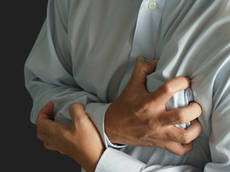
Young people especially who suffer acute heart failure can be saved with the prompt use of a heart-lung machine. And the number of patients that can be saved could be even higher, according to a current study by the University Department of Emergency Medicine at the Medical University of Vienna.
Heart-lung machines are normally used in operating theatres and on intensive care units. A study by the University Department of Emergency Medicine at the MedUni Vienna has demonstrated that this technology can also save people's lives in an emergency medicine setting in which other resuscitation measures have been unsuccessful.
The study's authors, led by Fritz Sterz, report that around 15 per cent of patients have been successfully brought back to life with this technology since 1995 – and without any long-term damage. Says Sterz: "The patients are primarily young people. They are only 35 years old on average. If more of them were brought to us immediately, we could save many more young people's lives."
More information: "Emergency cardio-pulmonary bypass in cardiac arrest: Seventeen years of Experience.". Christian Wallmüller, Fritz Sterza, Christoph Testori, Andreas Schober, Peter Stratil, David Hörburger, Mathias Stöckl, Christoph Weiser, Danica Kricanac, Daniel Zimpfer, Zeno Deckert, Michael Holzer; Resuscitation. 2012 Jul 16. www.ncbi.nlm.nih.g… med/22800860
Provided by
Medical University of Vienna
-
First aid training for primary students has long-term benefits
Sep 05, 2012 |
not rated yet |
0
-
Tiny heart pump helps heart attack, heart failure patients
Mar 25, 2011 |
not rated yet |
0
-
Themes identified for improving end-of-life care in ER
Sep 05, 2012 |
not rated yet |
0
-
New mathematical model more accurately diagnoses acute heart failure in emergency rooms
Oct 15, 2009 |
not rated yet |
0
-
Heart pumps save lives
Jun 14, 2010 |
not rated yet |
0
-
Motion perception revisited: High Phi effect challenges established motion perception assumptions
Apr 23, 2013 |
3 / 5 (2) |
2
-
Anything you can do I can do better: Neuromolecular foundations of the superiority illusion (Update)
Apr 02, 2013 |
4.5 / 5 (11) |
5
-
The visual system as economist: Neural resource allocation in visual adaptation
Mar 30, 2013 |
5 / 5 (2) |
9
-
Separate lives: Neuronal and organismal lifespans decoupled
Mar 27, 2013 |
4.9 / 5 (8) |
0
-
Sizing things up: The evolutionary neurobiology of scale invariance
Feb 28, 2013 |
4.8 / 5 (10) |
14
-
Classical and Quantum Mechanics via Lie algebras
Apr 15, 2011
- More from Physics Forums - Independent Research
More news stories
ACP issues recommendations for management of high blood glucose in hospitalized patients
High blood glucose is associated with poor outcomes in hospitalized patients, and use of intensive insulin therapy (IIT) to control hyperglycemia is a common practice in hospitals. But the recent evidence does not show a ...
Other
4 hours ago |
not rated yet |
0
Future doctors unaware of their obesity bias
Two out of five medical students have an unconscious bias against obese people, according to a new study by researchers at Wake Forest Baptist Medical Center. The study is published online ahead of print in the Journal of ...
Other
10 hours ago |
not rated yet |
0
Plastic realistic: Medical students to use plastinated human bodies for anatomy learning
Nanyang Technological University's (NTU) new medical school will be pioneering the use of plastinated bodies for medical education in Singapore.
Other
19 hours ago |
not rated yet |
0
Survey points out deficiencies in addictions training for medical residents
A 2012 survey of internal medicine residents at Massachusetts General Hospital (MGH) – one of the nation's leading teaching hospitals – found that more than half rated the training they had received in addiction and other ...
Other
May 22, 2013 |
5 / 5 (1) |
0
Early use of tracheostomy for mechanically ventilated patients not associated with improved survival
For critically ill patients receiving mechanical ventilation, early tracheostomy (within the first 4 days after admission) was not associated with an improvement in the risk of death within 30 days compared to patients who ...
Other
May 21, 2013 |
not rated yet |
0
Controlling mood through the motions of mitochondria
(Medical Xpress)—Regulating the distribution of power in neurons is done by a system that makes the national electric grid look simple by comparison. Each neuron has several thousand mitochondria confined ...
Motion quotient: IQ predicted by ability to filter motion (w/ video)
A brief visual task can predict IQ, according to a new study. This surprisingly simple exercise measures the brain's unconscious ability to filter out visual movement. The study shows that individuals whose ...
Multiple research teams unable to confirm high-profile Alzheimer's study
Teams of highly respected Alzheimer's researchers failed to replicate what appeared to be breakthrough results for the treatment of this brain disease when they were published last year in the journal Science.
Scientists discover molecule triggers sensation of itch
Scientists at the National Institutes of Health report they have discovered in mouse studies that a small molecule released in the spinal cord triggers a process that is later experienced in the brain as ...
Researchers find common childhood asthma unconnected to allergens or inflammation
Little is known about why asthma develops, how it constricts the airway or why response to treatments varies between patients. Now, a team of researchers at Weill Cornell Medical College, Columbia University Medical Center ...
Diabetes' genetic underpinnings can vary based on ethnic background, studies say
Ethnic background plays a surprisingly large role in how diabetes develops on a cellular level, according to two new studies led by researchers at the Stanford University School of Medicine.