Flu season's approaching so roll up your sleeve
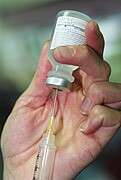
(HealthDay)—The only thing predictable about the flu is its unpredictability, U.S. health officials said Thursday, as they urged virtually all Americans to get vaccinated for the coming season.
Even though last year's flu season was one of the mildest on record, that's no sign of what this season will bring. It was only two years ago, officials noted, that the H1N1 pandemic flu swept around the world, sickening millions.
"The last several years have demonstrated that influenza is predictably unpredictable," Dr. Howard Koh, assistant secretary for health at the U.S. Department of Health and Human Services, said during a morning news conference.
"Even mild seasons can lead to suffering and death," Koh added. "Sadly, last year there were some 34 influenza-associated pediatric deaths."
Every year an estimated 5 percent to 20 percent of Americans come down with the flu, leading to 200,000 hospitalizations—including 20,000 children under age 5, Koh said. And over a 30-year span, from 1976 to 2006, estimates of flu-related annual deaths ranged from a low of about 3,000 to a high of about 49,000.
This year's vaccine contains the same strains as last year's, plus two new strains—one for a new influenza A virus and another for a new influenza B, Dr. Daniel Jernigan, deputy director of the U.S. Centers for Disease Control and Prevention's Influenza Division, said at the news conference.
"More than 85 million doses of flu vaccine have already been distributed and more is on the way," he said, adding that about 170 million doses are expected to be available.
"The best time to get vaccinated is before the flu season gets started," Jernigan said. "Everyone 6 months and older is encouraged to get vaccinated."
The typical flu season runs from the fall through early spring.
Koh stressed the vaccine is safe and has only mild side effects. Because the flu is different each year, the vaccine needs to be revised to keep up with the circulating strains.
Despite the low level of flu activity in 2011-2012, about 42 percent of Americans got vaccinated, which is about the same as for the previous flu season, according to CDC records.
Among children, some 52 percent were vaccinated last year, compared with 51 percent the year before, Koh said. Vaccination rates typically drop as children get older, he noted.
For children 6 to 23 months old, almost 75 percent were vaccinated during the 2011-2012 flu season, compared to just 35 percent of teens, Koh said. "We were pleased that, for kids, for the second year in a row there were no racial or ethnic disparities in coverage," he said.
But when it comes to adults, "there is much room for improvement," Koh said. "Last year about 39 percent of adults were vaccinated, compared to some 41 percent the year before," he said.
Vaccination is important for all adults, but particularly for those with conditions such as asthma, diabetes and heart disease, which can leave them susceptible to complications from flu, Koh said. "Coverage among these high-risk adults was only 45 percent last season, compared to 47 percent the season before," he said.
While there were no racial or ethnic disparities in vaccination rates among children, disparities remained among adults, he said. Whites, American Indians and Alaska Natives had the highest vaccination rates at 42 percent, while Hispanics had the lowest rate at 29 percent, he said.
On the plus side, more pregnant women are getting vaccinated, Koh said, noting that pregnant women are at greater risk of complications from the flu. What's more, a mother's immunity can protect her newborn for the six months before the child is old enough to be vaccinated.
Koh also reported that last year 67 percent of health-care personnel were vaccinated, but there were major differences among workers in this group. For example, 87 percent of doctors working in hospitals were vaccinated. But in nursing homes, other than doctors and nurses, the vaccine coverage rate was 50 percent. "This is worrisome because these people care for people at high risk for complications from flu," he said.
Getting vaccinated is the best protection from the flu, Koh said. Everyone 6 months and older should get a flu shot every year. Last season's vaccination campaign prevented almost 5 million cases of the flu, 2 million doctor's visits and 40,000 hospitalizations, according to CDC estimates.
More information: To learn more about the flu, visit the U.S. Centers for Disease Control and Prevention.
Copyright © 2012 HealthDay. All rights reserved.


