GEN reports on ocular therapeutics targeting the retina
September 10, 2012 in Ophthalmology

GEN reports on ocular therapeutics targeting the retina

Enlarge

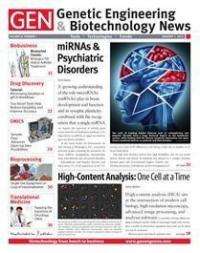
Genetic Engineering & Biotechnology News cover image. GEN is published 21 times per year. Credit: ©2012, Mary Ann Liebert, Inc., publishers

Therapies for retinal diseases are expected to overtake those for glaucoma by 2014, reports Genetic Engineering & Biotechnology News (GEN). Because current retinal disease treatments only improve vision for six to eight weeks, there is a critical need for new remedies, according to a recent issue of GEN.

"As increasing numbers of baby-boomers continue to grow older, many will have to deal with eye diseases such as age-related macular degeneration," said John Sterling, Editor-in-Chief of GEN. "Some estimates put the current AMD and diabetic retinopathy drug segment of the market at $3 billion, and this is expected to increase to about $5 billion in two years."

Standard therapy has been Genentech's VEGF inhibitors Lucentis and the off-label use of Avastin®. Regeneron, in collaboration with Bayer HealthCare, is challenging these drugs with a similar VEGF inhibitor, Eyela. The FDA approved the drug last November for wet AMD.

In another approach, Acucela is in Phase II trials using visual cycle modulators to lighten the metabolic load on the retina by reducing the activity of the rod visual system. This protects the retina from light damage, improves retinal vasculature, and reduces the accumulation of A2E and other retinal-related toxic by-products.

GlaxoSmithKline has two drugs in Phase II trials for ocular therapy: darapladib, an oral Lp-PLA2 inhibitor for diabetic macular edema, and Votrient®, a multi-kinase angiogenesis inhibitor in eye drop form for AMD. Early-stage work also is under way for neovascular AMD, dry AMD, diabetic retinopathy, diabetic macula edema, uveitis, and , as well as for technologies for drug delivery.

Provided by Mary Ann Liebert, Inc search and more info website

5 /5 (1 vote)  

Rank 5 /5 (1 vote)
Relevant PhysicsForums posts

More news stories

Glaucoma drug can cause droopy eyelids

Prostaglandin analogues (PGAs), drugs which lower intraocular pressure, are often the first line of treatment for people with glaucoma, but their use is not without risks. PGAs have long been associated with blurred vision, ...

Ophthalmology created May 21, 2013 | popularity not rated yet | comments 0

Eyes on the sun: Child sunshine exposure and eye development

(Medical Xpress)—Exposure to sunshine as a small child is crucial to the development of a healthy eye according to results of long-term myopia study conducted by University of Sydney researchers.

Ophthalmology created May 21, 2013 | popularity 5 / 5 (1) | comments 0

New study pinpoints biochemical mechanism underlying fibrosis following glaucoma surgery

The most common cause of failure after glaucoma surgery is scarring at the surgical site, so researchers are actively looking for ways to minimize or prevent scar formation. Previous work had suggested that vascular endothelial ...

Ophthalmology created May 17, 2013 | popularity not rated yet | comments 0 | with audio podcast

Early screenings key to diagnosing glaucoma

New research is emphasizing the importance of regular screenings for glaucoma, a disease that deteriorates the optic nerve over time and is a leading cause of irreversible blindness worldwide. The onset of glaucoma is associated ...

Ophthalmology created May 17, 2013 | popularity not rated yet | comments 0 | with audio podcast

University partners with Sony to find cure for 'lazy eye'

The University of Nottingham and Nottingham University Hospitals NHS Trust, have been working with Sony Computer Entertainment Europe (SCEE) to develop special 3-D glasses and games to help treat children ...

Ophthalmology created May 08, 2013 | popularity not rated yet | comments 0


Rate of bicycle-related fatalities significantly lower in states with helmet laws

Existing research shows that bicyclists who wear helmets have an 88 percent lower risk of brain injury, but researchers at Boston Children's Hospital found that simply having bicycle helmet laws in place showed a 20 percent ...

Slowing the aging process—only with antibiotics

Swiss scientists reveal the mechanism responsible for aging hidden deep within mitochondria—and dramatically slow it down in worms by administering antibiotics to the young.

Researchers complete largest genetic sequencing study of human disease

Researchers from Queen Mary, University of London have led the largest sequencing study of human disease to date, investigating the genetic basis of six autoimmune diseases.

Brain can be trained in compassion, study shows

Until now, little was scientifically known about the human potential to cultivate compassion—the emotional state of caring for people who are suffering in a way that motivates altruistic behavior.

Having both migraines, depression may mean smaller brain

(HealthDay)—Migraines and depression can each cause a great deal of suffering, but new research indicates the combination of the two may be linked to something else entirely—a smaller brain.

Novel approach for influenza vaccination shows promise in early animal testing

A new approach for immunizing against influenza elicited a more potent immune response and broader protection than the currently licensed seasonal influenza vaccines when tested in mice and ferrets. The vaccine ...