Solving the puzzle of drug-induced liver injury
Antibiotics are the first line of defense against many infections. But for some individuals, treatment with certain antibiotics can bring on a new set of health problems, including serious liver damage.
Why some individuals are vulnerable to this potentially life-threatening drug reaction while others are not remains unclear.
Now, with the support of a three-year, $1.29 million grant from Connecticut's Stem Cell Research Program, a team of University of Connecticut scientists is looking deeper into the problem, investigating whether genes play a role in determining a person's susceptibility to drug-induced liver injury. Ultimately, the researchers hope to develop a reliable genetic test can be used to identify individuals most at risk.
The collaborative grant was one of the first handed out by the state of Connecticut for stem cell research targeting a specific disease.
Drug-induced liver injury is an important public health issue affecting thousands of people around the world annually. It is particularly insidious, as it can develop suddenly after weeks or months of drug treatment.
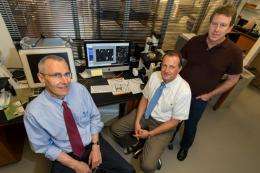
"It's a significant clinical problem with high morbidity and mortality and nobody knows why this happens," says Urs A. Boelsterli, an expert in mechanistic toxicology and one of three researchers in UConn's School of Pharmacy working on the project. Theodore Rasmussen, a stem cell specialist and associate professor of pharmacology and toxicology, and Winfried Krueger, a genetics specialist and associate research professor in the School of Pharmacy, round out the research team. Paul Watkins, director of the Hamner-University of North Carolina Institute for Drug Safety Sciences, is providing the team with patient skin and blood samples that will be used for the development of the stem cells critical to the research.
One of the antibiotics the research team is focusing on is isoniazid, which is used worldwide to treat tuberculosis and causes drug-induced liver injury in about 1 percent of all people who take the drug.
The researchers are currently developing a line of induced pluripotent stem cells or iPS cells, that are derived from skin and blood cells and can be turned into liver cells called hepatocytes. Using stem cells fashioned from cells obtained from both healthy individuals and those with liver injury allows the researchers to overcome one of the primary obstacles to their work – the lack of available material for testing. Donated liver biopsies are rare, and ethically, the researchers cannot ask for liver biopsy samples from a living person.
In the past, most research in this area has involved the use of animal models and limited clinical trials. But the toxicology tests are not optimal, as mice may not react to some drugs in the same way as humans and – because they are raised for testing – mice can lack the broad genetic variations needed to truly study a drug's effects in the human population as a whole. In vitro studies for drug toxicity, such as the one being performed at UConn, are a new and promising step toward greater understanding.
"We take skin cells or blood cells, which are both very medically accessible, and we reprogram them into iPS cells that can be made into hepatocytes," says Rasmussen, who is affiliated with the Department of Pharmaceutical Sciences and UConn's Stem Cell Institute. "These are like pharmaceutically-naïve hepatocytes because they have never been exposed to pharmaceuticals in the liver. But what they do have is each individual's unique genome. If we use them in tests and get a different response from an individual with liver injury and one without, then it is very likely that genetics plays a role rather than environment because we have pretty much taken environment out of the equation."
When this point is reached, Krueger will then follow up by developing a genome expression profile for the proteins suspected of being involved in the disease to see which particular subset of regulated genes and pathways may be linked to susceptibility for drug-induced liver injury.
"Once those genes are identified, that would be a tremendous advance in the field because right now there is no indication of which target genes are participating in this disease," Krueger says.
Adds Rasmussen, "Eventually, we'd like to develop a genetic test that would essentially show an individual's risk profile before you give them a drug."
More than a thousand different drugs can cause liver disease in patients. Most individuals can take a drug and not have a serious reaction. But because such a large number of people use these medications, even a small percentage of users who experience health problems is a concern.
"For most drug development companies, liver injury is the most important toxicological problem right now," says Boelsterli, the Boehringer Ingelheim Endowed Chair in UConn's School of Pharmacy. "Not only does it kill drugs in development, but companies may not find out until later clinical trials or when a drug is already on the market that it can produce idiosyncratic liver injury and the drug has to be pulled. Companies can lose millions of dollars in development costs. The situation is especially tragic if a drug has been proven to be a good one that fights a disease."
Krueger says the group's research will help drug developers identify at-risk populations early on.
"When companies develop a new drug, they don't always know what all the risk factors are in the population because it is so novel," he says. "But if you have a bank of hepatocytes against which you can test a drug, then you have a filter in place and can identify a certain subset of patients who may be at risk if they use the drug. That may allow you to still keep the drug on the market, as long as it includes a warning for the particular population at risk."
Rasmussen says this kind of disease-specific stem cell research is a platform for personalized medicine.
Adds Boelsterli, "With Induced Pluripotent Stem Cells, we can look at patient-specific genomes and incorporate that information into drug screening that was never before possible. Being able to look at such a broad spectrum of genetic variation in the context of drug toxicology is really quite novel."


