Video games help patients and health care providers

(Medical Xpress)—Can video games help patients with cancer, diabetes, asthma, depression, autism and Parkinson's disease? A new publication by researchers from the University of Utah, appearing in the Sept 19 issue of the journal Science Translational Medicine, indicates video games can be therapeutic and are already beginning to show health-related benefits.
The lead author of the paper "Patient-Empowerment Interactive Technologies" is Carol Bruggers, a professor in the University of Utah's Department of Pediatrics and physician at Primary Children's Medical Center. Contributing to the paper were other faculty from the University of Utah's Department of Pediatrics, the Brain Institute, College of Fine Arts, College of Pharmacy, School of Computing, Pierre Lassonde Entrepreneur Center, students who recently graduated from the Entertainment Arts and Engineering (EAE) Master's program, and a current medical student.
In the Perspectives article, the team describes therapeutic video games, including their own Patient Empowerment Exercise Video Game (PE Game), an activity-promoting game specifically designed to improve resilience, empowerment, and a "fighting spirit" for pediatric oncology patients. The researchers also looked at other games that have been shown to help patients with several chronic diseases.
"Therapeutic video games will push video game design into exciting new directions," says Robert Kessler, director of EAE. "Meeting the needs of the competing goals of physical therapy through exercise and patient empowerment is extremely challenging. The PE Game is clearly the first of a whole line of research into therapeutic video games."
The researchers looked at available clinical data on health-related video games, including sedentary games and activity-promoting "exergames" played with Wii, XBOX or PlayStation systems.
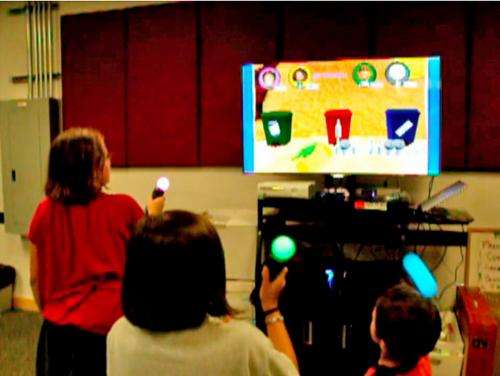
Bruggers says that "a growing number of published studies show promise in effecting specific health-related behavioral changes and self-management of obesity, neurological disorders, cancer or asthma. We envision interactive exergames designed to enhance patient empowerment, compliance and clinical outcomes for specific disease categories".
Health care providers will also benefit from many opportunities to use incentive-based video games in management and prevention of diseases. More and more companies, non-profit organizations and academic centers are involved in design and publishing interactive technologies for metabolic diseases, mental health disorders, cancer, stroke or rehabilitation. The authors say "Clinical evaluations of onset, daily and total play time, types of game stories and music, and intensity of physical activities will provide useful information for development and optimization of therapeutic exergames."
The Utah researchers say that video games can act as "nonpharmacological interventions [that] may enhance patients' resilience toward various chronic disorders via neuronal mechanisms that activate positive emotions and the reward system."
Roger Altizer, a professor at the University of Utah's College of Fine Arts and director of game design and production for the EAE program, is excited about how his video games can be used to harness patients' brains to promote a positive attitude and empowerment.
"People play games because they are engaging. We are now starting to understand how games motivate us, and how to use this motivation to change health care," says Altizer. "If games like ours can help patients to feel better and motivate them to manage their health care or physical therapy, then I believe we will soon see the medical community saying, 'game on!'"
Grzegorz Bulaj, an associate professor of medicinal chemistry at the University of Utah, adds: "Research shows that playing video games increases levels of dopamine in the brain, but whether interactive technologies can mimic actions of pharmacological drugs remains unknown. Nonetheless, our study points towards video games becoming a part of personalized medicine, helping and bringing smiles to individual patients, doctors, nurses and physical therapists. Our paper shows these games offer great promise, but we also looked at the challenges of delivering safe, efficacious and fun-loaded therapeutic games."
To view a short video of the University of Utah's Patient Empowerment Game in action:


