3L tubular bandaging significantly improves healing of chronic wounds, study finds
October 18, 2012 in Medical research

Reducing the burden of chronic wounds

Enlarge

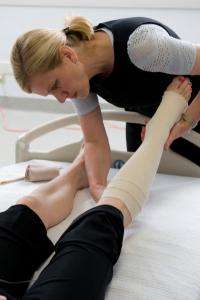
Dr. Weller applies the 3L tubular bandage to a VLU patient.

(Medical Xpress)—A characteristically inflamed, weeping sore that fails to heal, heals slowly or tends to recur is known as a chronic wound, a common debilitating and painful medical condition which requires specialist care.

Compression bandages have been shown to significantly improve healing of the most common and incapacitating chronic wound problem known as (VLUs). VLUs are caused mostly by an underlying disease known as chronic (CVI), where veins in the legs lose the ability to pump oxygenated blood efficiently and the effects become visible on the leg in the form of a painful, malodorous wound.

For the first time new research, published in international journal Wound Repair and Regeneration, has examined compression bandaging contrasting the effectiveness of the 'sock-like' three-layer (3L) tubular compression bandage with standard single layer bandages in the treatment of venous leg ulcers in Victorian and Queensland hospital clinics.

The study, led by Dr Carolina Weller from Monash University's Department of Epidemiology and , found 3L tubular bandaging significantly improved healing, minimised of the wound and was more affordable than standard single layer bandages.

Dr Weller said VLUs were a significant yet under represented burden to patients and healthcare professionals, affecting the elderly and patients aged from their 40's due to the rise in obesity, diabetes, and other , which are known causes of CVI.

"The adequate management of venous leg ulcers represents a significant clinical problem. Currently, there are a number of barriers preventing adequate treatment, including of compression, knowledge of application by nurses and patient adherence to keep a tight bandage on despite pain or discomfort," Dr Weller said.

"Without compression, a wound simply will not heal. Our study found the three-layer bandage was easier to apply and patients reported it was a comfortable alternative to standard compression bandages, which were costly and potentially less successful at healing due to lower ."

Dr Weller said in Victoria there was currently no subsidy available in the treatment of VLU and the burden of cost was a major issue.

"We found the cost of the three-layer tubular bandage, including application by a nurse, was almost halved in comparison to the more commonly used standard control compression bandage," Dr Weller said.

"If you consider the burden of disease beyond cost alone, it can have debilitating effects. Some patients suffer with a lot of pain and cannot go to work or exercise and some often feel a sense of social isolation as a result.

"This research will help clinicians better manage people with VLUs and ensure they comply with evidence based management guidelines."

Provided by Monash University search and more info website

not rated yet  

Rank not rated yet
Relevant PhysicsForums posts

More news stories

H. pylori, smoking trends, and gastric cancer in US men

Trends in Helicobacter pylori (H. pylori) and smoking explain a significant proportion of the decline of intestinal-type noncardia gastric adenocarcinoma (NCGA) incidence in US men between 1978 and 2008, and are estimated ...

Medical research created 10 hours ago | popularity not rated yet | comments 0

Common food supplement fights degenerative brain disorders

Widely available in pharmacies and health stores, phosphatidylserine is a natural food supplement produced from beef, oysters, and soy. Proven to improve cognition and slow memory loss, it's a popular treatment for older ...

Medical research created 15 hours ago | popularity 5 / 5 (3) | comments 0 | with audio podcast

Finding a family for a pair of orphan receptors in the brain

Researchers at Emory University have identified a protein that stimulates a pair of "orphan receptors" found in the brain, solving a long-standing biological puzzle and possibly leading to future treatments for neurological ...

Medical research created 15 hours ago | popularity 5 / 5 (1) | comments 0 | with audio podcast

Insight into the dazzling impact of insulin in cells

Australian scientists have charted the path of insulin action in cells in precise detail like never before. This provides a comprehensive blueprint for understanding what goes wrong in diabetes.

Medical research created 16 hours ago | popularity 4.6 / 5 (7) | comments 0 | with audio podcast

Do men's and women's hearts burn fuel differently?

Researchers at the University of Illinois at Chicago College of Medicine will study gender differences in how the heart uses and stores fat—its main energy source—and how changes in fat metabolism play ...

Medical research created 19 hours ago | popularity not rated yet | comments 0


If you can remember it, you can remember it wrong

(Medical Xpress)—Native peoples in regions where cameras are uncommon sometimes react with caution when their picture is taken. The fear that something must have been stolen from them to create the photo ...

B vitamins could delay dementia

(Medical Xpress)—Despite spending billions of dollars on research and development, drug companies have been unable to come up with effective treatments for dementia and Alzheimer's Disease (AD). Now, A. ...

New sleeping pill poised to hit US markets

An experimental sleeping pill from US drug company Merck is effective at helping people fall and stay asleep, according to reviewers at the US Food and Drug Administration, which could soon approve the new drug.

Reducing caloric intake delays nerve cell loss

Activating an enzyme known to play a role in the anti-aging benefits of calorie restriction delays the loss of brain cells and preserves cognitive function in mice, according to a study published in the May ...

Antidepressant reduces stress-induced heart condition

A drug commonly used to treat depression and anxiety may improve a stress-related heart condition in people with stable coronary heart disease, according to researchers at Duke Medicine.

Drugs found to both prevent and treat Alzheimer's disease in mice

Researchers at USC have found that a class of pharmaceuticals can both prevent and treat Alzheimer's Disease in mice.