Benefits of bariatric surgery for sleep apnoea negligible, researchers find
October 8, 2012 in Sleep apnea

Bariatric surgery not silver bullet for sleep apnoea

Enlarge

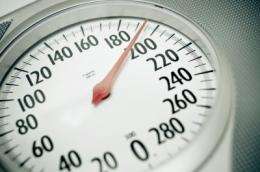
New research shows although bariatric surgery results in greater weight loss than conventional measures, this does not translate into significantly greater improvement in obstructive sleep apnoea.

(Medical Xpress)—Although bariatric surgery results in greater weight loss than conventional measures, new research shows this does not translate into significantly greater improvement in obstructive sleep apnoea (OSA).

Researchers from Monash University, the Alfred Hospital and Baker IDI Heart and Diabetes Institute conducted the first high-quality, randomised trial comparing the effect on OSA of surgical and medically-supervised weight loss in severely .

The results, which show negligible statistical advantage of in terms of treating OSA, are published in the .

OSA is a condition affecting almost five per cent of the Australian population, in which a person stops breathing for periods of time during their normal cycle. It is caused by obstruction to the upper airway by a floppiness or heaviness around the face and neck and in some patients, obesity is thought to be a cause of the condition.

Head of Obesity Research at Monash and Baker IDI, Associate Professor John Dixon, and Professor Matthew Naughton, a sleep specialist at Monash and Alfred Health, led the research.

Participants were recruited from sleep centres where they had been recently diagnosed with moderate to severe OSA and all had a of between 35 and 55. Both groups - surgical and conventional weight loss - were followed up every four to six weeks for two years.

The participants who underwent laparoscopic adjustable gastric banding (LAGB) achieved an average two-year weight loss of approximately 20 per cent of their initial weight. The conventional group, who were provided with tailored dietary, exercise and behavioural programs, lost on average almost three per cent of their body weight over the two-year period.

Associate Professor Dixon said the dramatic differences in weight loss were not reflected in improvements in OSA, which was comprehensively monitored using polysomnography.

"Both groups experienced a reduction in OSA severity, but the difference between the surgical group and the conventional group was surprisingly small, given the weight loss disparity, and the majority still needed their CPAP machines during sleep," Associate Professor Dixon said.

"Our research confirmed that weight loss is associated with reduction in OSA, but it's a complex relationship. The effects vary greatly between individuals. It seems that the largest improvement in OSA, is associated with mild to moderate, rather than extreme weight loss."

The researchers urged caution in advising patients on the benefits of for OSA reduction and that OSA therapies should be continued until the patient is properly assessed.

More information: jama.jamanetwork.c… leid=1360864

Journal reference: Journal of the American Medical Association search and more info website

Provided by Monash University search and more info website

not rated yet  

Rank not rated yet
Relevant PhysicsForums posts

More news stories

Better behavior after tonsil/adenoid surgery for kids with sleep breathing trouble?

Children with obstructive sleep apnea who had a common surgery to remove their tonsils and adenoids showed notable improvements in behavior, quality of life and other symptoms compared to those treated with "watchful waiting" ...

Sleep apnea created 13 hours ago | popularity 5 / 5 (1) | comments 0

Stress test may help predict increased mortality risk in sleep apnea patients

Many studies have shown that men and women who suffer from obstructive sleep apnea (OSA) - a disorder that causes breathing to halt intermittently during sleep – have a higher mortality rate than those who do not have the ...

Sleep apnea created May 20, 2013 | popularity not rated yet | comments 0

Treatment of sleep apnea improves glucose levels in prediabetes

Optimal treatment of sleep apnea in patients with prediabetes improves blood sugar (glucose) levels and thus can reduce cardiometabolic risk, according to a study to be presented at the ATS 2013 International Conference in ...

Sleep apnea created May 20, 2013 | popularity not rated yet | comments 0 | with audio podcast

Researchers identify a potential new risk for sleep apnea: Asthma

Researchers at the University of Wisconsin have identified a potential new risk factor for obstructive sleep apnea: asthma. Using data from the National Institutes of Health (Heart, Lung, and Blood Institute)-funded Wisconsin ...

Sleep apnea created May 19, 2013 | popularity 5 / 5 (1) | comments 0 | with audio podcast

Want to boost your memory and mood? Take a nap, but keep it short

We're told to have power naps to keep us safe on the road and improve our alertness if we've had insufficient sleep. They even help our surgeons stay awake during long shifts. But siestas and nana naps can ...

Sleep apnea created May 17, 2013 | popularity 5 / 5 (3) | comments 1


If you can remember it, you can remember it wrong

(Medical Xpress)—Native peoples in regions where cameras are uncommon sometimes react with caution when their picture is taken. The fear that something must have been stolen from them to create the photo ...

B vitamins could delay dementia

(Medical Xpress)—Despite spending billions of dollars on research and development, drug companies have been unable to come up with effective treatments for dementia and Alzheimer's Disease (AD). Now, A. ...

Insight into the dazzling impact of insulin in cells

Australian scientists have charted the path of insulin action in cells in precise detail like never before. This provides a comprehensive blueprint for understanding what goes wrong in diabetes.

New sleeping pill poised to hit US markets

An experimental sleeping pill from US drug company Merck is effective at helping people fall and stay asleep, according to reviewers at the US Food and Drug Administration, which could soon approve the new drug.

Reducing caloric intake delays nerve cell loss

Activating an enzyme known to play a role in the anti-aging benefits of calorie restriction delays the loss of brain cells and preserves cognitive function in mice, according to a study published in the May ...

Antidepressant reduces stress-induced heart condition

A drug commonly used to treat depression and anxiety may improve a stress-related heart condition in people with stable coronary heart disease, according to researchers at Duke Medicine.