Blood cells may offer telltale clues in cancer diagnosis
October 12, 2012 in Cancer

Blood cells may offer telltale clues in cancer diagnosis

Enlarge

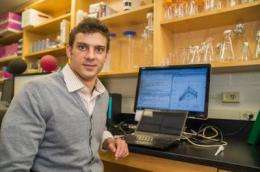
Devin Koestler is a biostatistician whose research is focused on the development and application of statistical methods for analyzing genomic data. Credit: Eli Burakian

Postdoctoral Research Fellow Devin Koestler is a biostatistician in the Geisel School of Medicine at Dartmouth. He develops and applies statistical methods to large volumes of data, seeking new approaches for understanding disease, cancer in particular. Koestler and his colleagues are investigating the potential use of white blood cell variation as a diagnostic, predictive, and research tool in the study of non-blood cancers.

"There is promise here for a new diagnostic tool," says Koestler. "What we show here is not ready for immediate clinical utility, but I think it is on the right path."

Koestler is working in the Quantitative Biomedical Sciences program with Professors Margaret Karagas and Jason Moore. His focus is the development of computational and statistical tools for investigating the process of DNA methylation.

In methylation, a molecule known as a (chemically CH3—three and one carbon) attaches itself to the DNA. When this occurs, the DNA function can change dramatically. An example might be the methyl group blocking the expression of a tumor-suppressing gene.

Koestler is the first author on a paper with Karagas and a host of colleagues from Dartmouth, Brown University, Oregon State University, the University of Minnesota and the University of California. Its subject is methylation in leukocytes () and their association with in tissues and organs other than blood, such as bladder or .

"When we have an illness or a disease, that does something to our immune system," Koestler explains. "It responds by providing whatever cells are necessary to combat that threat. In the blood, the leukocytes supply that immune response."

Methylation has been studied in biopsied cells from cancer patients, in comparison to cells of cancer-free individuals. "Those studies have compellingly shown there are very striking differences in methylation patterns between cancer and cancer-free subjects," Koestler says. "This brought us to also look at patterns of methylation in blood."

The new studies, in which Koestler took part, showed differences in methylation patterns in the leukocytes of versus cancer-free individuals. There are different types of leukocytes, referred to as subsets, each of which exhibits its own signature methylation pattern. The proportions of these identifiable subsets shift, depending on the kind of disease they may be combating.

Using data from studies of ovarian, bladder, and head and neck cancers, the researchers demonstrated statistically significant correlations between the specific cancers and the methylation signatures that characterize leukocyte subsets.

"What made our study unique is that we had the methylation data on the individual leukocytes themselves, enabling us to connect the dots, and better understand the mechanisms underlying the results from previous studies."

Analyzing the relative proportions of the leukocyte types in the blood sample can help predict the onset of a particular cancer or identify and diagnose a cancer in progress. The alternative of sampling a patient's blood is far preferable to undergoing an invasive surgical biopsy.

The advantages of using methylation patterns to assess proportions of white blood cell subtypes in cancer research extend beyond the bedside to the lab bench. Archival blood samples frozen and stored at some time in the past can now be used as research material, whereas existing methods typically require fresh blood samples with intact cells to assess white blood cell subtypes.

Provided by Dartmouth College search and more info website

5 /5 (1 vote)  

Rank 5 /5 (1 vote)
Related Stories
Relevant PhysicsForums posts

More news stories

Novel RNA-based classification system for colorectal cancer

A novel transcriptome-based classification of colon cancer that improves the current disease stratification based on clinicopathological variables and common DNA markers is presented in a study published in PLOS Medicine this w ...

Cancer created 39 seconds ago | popularity not rated yet | comments 0

Low radiation scans help identify cancer in earliest stages

A study of veterans at high risk for developing lung cancer shows that low-dose computed tomography (LDCT) can be highly effective in helping clinicians spot tiny lung nodules which, in a small number of patients, may indicate ...

Cancer created 1 hour ago | popularity not rated yet | comments 0

Poliovirus vaccine trial shows early promise for recurrent glioblastoma

An attack on glioblastoma brain tumor cells that uses a modified poliovirus is showing encouraging results in an early study to establish the proper dose level, researchers at Duke Cancer Institute report.

Cancer created 3 hours ago | popularity not rated yet | comments 0

Racial disparities in the surgical management of non-small cell lung cancer

The surgical management of non-small cell lung cancer (NSCLC) in U.S. hospitals varies widely depending on the race of the patient, according to a new study.

Cancer created 7 hours ago | popularity not rated yet | comments 0

Treatment with A1-PI slows the progression of emphysema in Alpha-1 antitrypsin deficiency

Treatment with an Alpha-1 proteinase inhibitor (A1-PI), a naturally occurring protein that protects lung tissue from breakdown and protects the lung's elasticity, is effective in slowing the progression of emphysema in patients ...

Cancer created 7 hours ago | popularity not rated yet | comments 0


Reducing caloric intake delays nerve cell loss

Activating an enzyme known to play a role in the anti-aging benefits of calorie restriction delays the loss of brain cells and preserves cognitive function in mice, according to a study published in the May ...

Antidepressant reduces stress-induced heart condition

A drug commonly used to treat depression and anxiety may improve a stress-related heart condition in people with stable coronary heart disease, according to researchers at Duke Medicine.

Americans still making unhealthy choices, CDC reports

(HealthDay)—The overall health of Americans isn't improving much, with about six in 10 people either overweight or obese and large numbers engaging in unhealthy behaviors like smoking, heavy drinking or ...

CDC presents recent trends in health behaviors of US adults

(HealthDay)—In 2008 to 2010, the prevalence of key health behaviors among U.S. adults varied, with about one in five adults current smokers and 62.1 percent overweight or obese, according to a report presented ...

Study examines outbreak of spinal infections in Michigan

(HealthDay)—Factors such as increased case finding may explain why Michigan had half of the total spinal infections associated with contaminated methylprednisolone acetate in the recent fungal meningitis ...

Early use of tracheostomy for mechanically ventilated patients not associated with improved survival

For critically ill patients receiving mechanical ventilation, early tracheostomy (within the first 4 days after admission) was not associated with an improvement in the risk of death within 30 days compared to patients who ...