Colorful detergent 'pods' a danger for children: CDC
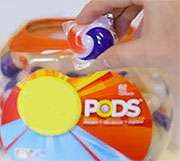
(HealthDay)—Those bite-sized, brightly colored packets of concentrated liquid laundry detergent need to be kept out of the reach of small children, who often mistake them for candy, U.S. health officials warn.
Ninety-four percent of poisonings from these laundry detergent "pods" are among kids aged 5 and younger, a new report from the U.S. Centers for Disease Control and Prevention shows.
"These little pods are small and colorful, and appealing to small children," explained Dr. Jose Rosa-Olivares, medical director of the Pediatric Care Center at Miami Children's Hospital.
When swallowed, the concentrated cleaning chemicals inside the packets can cause a variety of side effects, from minor stomach or breathing problems to "significant symptoms that can be life-threatening," he said.
Symptoms include belly pain, vomiting, diarrhea and extreme difficulty breathing. Children also can become confused and drowsy, Rosa-Olivares added.
"It is important for parents and caregivers to keep these items out of the reach of children," he said.
If a child does swallow one of these pods, the first thing to do is call the local poison-control center and follow whatever instructions are given, Rosa-Olivares added.
"Many times, the child needs to be immediately transported to an emergency room via EMS," he said. "That could make a difference in what could be a life-threatening situation."
The report was published in the Oct. 19 issue of the Morbidity and Mortality Weekly Report, a CDC publication.
According to the report, more than 180,000 children were poisoned by household cleaning products in 2010 alone. Of these, nearly 9,000 involved laundry detergents.
During the month in 2012 when CDC researchers collected poisoning statistics for their report, more than 1,000 poisonings involved laundry detergents and nearly 500 involved laundry-detergent pods. In addition, detergent pods caused side effects in 76 percent of the children who swallowed them, compared with 27 percent among children who ingested other, less concentrated laundry products, the CDC noted.
"Parents need to ensure they can prevent children from gaining access to household cleaning products—particularly laundry-detergent pods," the researchers advised. "Clinicians and caregivers are encouraged to report laundry detergent exposures and cases of associated illness to their local poison center by calling 800-222-1222."
The problem is not confined to the United States.
In a recent issue of the journal Archives of Disease in Childhood, British researchers looked at the scope of such poisonings in that country.
In Great Britain, the National Poisoning Information Service received nearly 650 telephone inquiries about laundry detergent poisoning; further research uncovered nearly 4,000 more cases. Those figures make laundry detergent "the most common household product to be accidentally ingested," according to the researchers.
More information: For more on kids and poisoning, visit the U.S. Centers for Disease Control and Prevention.
Copyright © 2012 HealthDay. All rights reserved.


