Negative pigment network able to distinguish melanoma
Negative pigment network able to distinguish melanoma
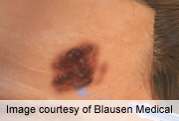
Negative pigment network can be used to distinguish melanoma from Spitz nevus and other benign lesions, according to a study published online Oct. 11 in the Journal of the American Academy of Dermatology.

(HealthDay)—Negative pigment network (NPN) can be used to distinguish melanoma from Spitz nevus and other benign lesions, according to a study published online Oct. 11 in the Journal of the American Academy of Dermatology.

Maria A. Pizzichetta, M.D., from the in Aviano, Italy, and colleagues assessed the frequency, sensitivity, specificity, and odds of NPN in digitalized images of from 679 patients with histopathological diagnosis of dermatofibroma (115), melanocytic nevus (220), Spitz nevus (139), and (205).

The researchers found that the frequency of NPN was higher in the melanoma group (34.6 percent) than in the Spitz nevus (28.8 percent), melanocytic nevus (18.2 percent), and dermatofibroma (11.3 percent) groups. The odds of melanoma diagnosis versus non-melanoma diagnosis in the presence of NPN were significantly increased (odds ratio, 1.8). For melanocytic nevi and dermatofibromas, the odds ratios were very low (0.5 and 0.3, respectively), while for Spitz nevi, the odds ratio of 1.1 was not statistically significant. There was a significantly higher frequency of multicomponent pattern (68.1 percent), asymmetric pigmentation (92.9 percent), irregularly distributed NPN (87.3 percent), and peripheral location of NPN (66.2 percent) in melanomas compared to dermatofibroma, melanocytic nevus, and Spitz nevus.

"The overall morphologic pattern of NPN, such as the irregular distribution and the peripheral location of NPN, along with the multicomponent pattern and the asymmetric pigmentation could be used as additional features in distinguishing melanoma from Spitz nevus and other ," the authors write.

More information: Abstract
Full Text (subscription or payment may be required)

add to favorites email to friend print save as pdf

Related Stories

Polyclonality of BRAF mutations in acquired melanocytic nevi

Sep 14, 2009

The polyclonality of BRAF mutations in melanocytic nevi suggests that mutation of BRAF may not be an initial event in melanocyte transformation, according to a new brief communication published online September 14 in the ...

Recommended for you

Renewed hope in a once-abandoned cancer drug class

3 hours ago

Could drugs that block the body's system for repairing damage to the genetic material DNA become a boon to health? As unlikely as it may seem, those compounds are sparking optimism as potential treatments ...

Finding the way to lung tumours by 'GPS'

4 hours ago

The innumerable divisions of the bronchi often turn the hunt for tumours in the lungs into a game of chance. But soon, lung specialists will be able to navigate accurately inside the airways by "GPS".

Study suggests new approach to fight lung cancer

19 hours ago

Recent research has shown that cancer cells have a much different – and more complex – metabolism than normal cells. Now, scientists at The University of Texas at Dallas have found that exploiting these differences might ...

User comments

More news stories

Validating maps of the brain's resting state

Kick back and shut your eyes. Now stop thinking. You have just put your brain into what neuroscientists call its resting state. What the brain is doing when an individual is not focused on the outside world ...

No danger of cancer through gene therapy virus

In fall 2012, the European Medicines Agency (EMA) approved the modified adeno-associated virus AAV-LPL S447X as the first ever gene therapy for clinical use in the Western world. uniQure, a Dutch biotech company, had developed ...

Antioxidant shows promise in Parkinson's disease

Diapocynin, a synthetic molecule derived from a naturally occurring compound (apocynin), has been found to protect neurobehavioral function in mice with Parkinson's Disease symptoms by preventing deficits in motor coordination.