Some face transplant patients may regain sensory, motor function
October 26, 2012 in Surgery

Some face transplant patients may regain sensory, motor function

Ability to smile, chew, speak, smell depends on whether nerves can be reconnected, surgeons say.

(HealthDay)—Within a year after having face transplant surgery, some patients regain sensory and motor functions such as the ability to speak, chew food and smile, experts have found.

For the study, Dr. Bohdan Pomahac, director of the transplantation program at Brigham & Women's Hospital in Boston, and colleagues assessed the return of sensory and motor functions in four patients who had full or partial face transplants between 2009 and 2011.

Initially, the transplant patients could not breathe through their new mouth or nose and required a breathing tube. They were also unable to speak or chew, and could not sense objects touching the surface of their skin.

But one year after the transplant, some of the patients could breathe, eat and talk quite easily. They also regained their sense of smell, were able to make facial expressions and could do some socializing, the investigators found.

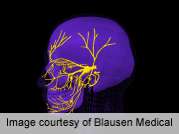
These successes depended on whether major nerves in the body were able to be reconnected with those in the transplanted face, the researchers noted. In some patients, severe damage from their original injuries made it impossible to reconnect nerves in some areas.

The study was scheduled for presentation Saturday at the American Society of Plastic Surgeons' annual meeting in New Orleans.

"What we found is that a is more than a way to create a more pleasing appearance because the new face can be functional as well," Pomahac, who is also an ASPS member surgeon, said in a society news release.

The data and conclusions of research presented at medical meetings should be viewed as preliminary until published in a peer-reviewed journal.

More information: The American Academy of Facial Plastic and Reconstructive Surgery has more about face transplantation.

Copyright © 2012 HealthDay. All rights reserved.

5 /5 (1 vote)  

Rank 5 /5 (1 vote)
Related Stories
Relevant PhysicsForums posts
  • Magnetic field and repulsion bewteen wires
    created1 hour ago
  • Enthalpy of reaction
    created7 hours ago
  • Harmonic oscillation problem -Dancing pot
    created8 hours ago
  • Ultracapacitor to power electromagnet?
    created8 hours ago
  • Confusion in Electro Statics
    created9 hours ago
  • simple gravity question
    created10 hours ago
  • More from Physics Forums - Classical Physics

More news stories

Study supports 'aggressive' treatment for posterior fossa hematoma in newborns

Posterior fossa subdural hematoma (PFSDH) is a serious and rare condition in newborns, generally occurring after difficult deliveries. But with appropriate treatment, there's an excellent chance of good long-term outcomes ...

Surgery created 3 hours ago | popularity not rated yet | comments 0

More than one-third of Texas women still receive unnecessary breast biopsy surgery

Many women in Texas who are found to have an abnormality on routine mammogram or discover a lump in one of their breasts end up having an old-fashioned surgical biopsy to find out whether the breast abnormality is malignant. ...

Surgery created May 17, 2013 | popularity not rated yet | comments 0

Majority of surgical residents object to regulated hours

(HealthDay)—About 65 percent of surgical residents report that they disapprove of the 2011 Accreditation Council for Graduate Medical Education (ACGME) Common Program requirements, which place restrictions ...

Surgery created May 16, 2013 | popularity not rated yet | comments 0

Tissue damage from metal-on-metal hip implants appears before pain symptoms appear

Metal-on-metal hip implants can cause inflammation of the joint lining (synovitis) long before symptoms appear, and magnetic resonance imaging (MRI) can be used to identify this inflammation, according to ...

Surgery created May 15, 2013 | popularity not rated yet | comments 0

Robotic transplant an option for obese kidney patients

Obese patients who received robotic kidney transplants had fewer wound complications than patients who received traditional "open" transplant surgery, according to surgeons at the University of Illinois Hospital ...

Surgery created May 15, 2013 | popularity not rated yet | comments 0


The compound in the Mediterranean diet that makes cancer cells 'mortal'

New research suggests that a compound abundant in the Mediterranean diet takes away cancer cells' "superpower" to escape death. By altering a very specific step in gene regulation, this compound essentially re-educates cancer ...

Study shows how bilinguals switch between languages

(Medical Xpress)—Individuals who learn two languages at an early age seem to switch back and forth between separate "sound systems" for each language, according to new research conducted at the University of Arizona.

Study suggests new source of kidneys for transplant

Nearly 20 percent of kidneys that are recovered from deceased donors in the U.S. are refused for transplant due to factors ranging from scarring in small blood vessels of the kidney's filtering units to the organ going too ...

Discovery of circadian clock in mice hair reveals period of time when damage from radiotherapy can be quickly repaired

Discovering that mouse hair has a circadian clock - a 24-hour cycle of growth followed by restorative repair - researchers suspect that hair loss in humans from toxic cancer radiotherapy and chemotherapy ...

SARS-like virus claims new life in Saudi

A Saudi man who had contracted the coronavirus has died, raising the death toll in the kingdom from the SARS-like virus to 16, the health ministry announced on Monday on its Internet website.

Gym class reduces probability of obesity, study finds for first time

Little is known about the effect of physical education (PE) on child weight, but a new study from Cornell University finds that increasing the amount of time that elementary schoolchildren spent in gym class reduces the probability ...