Speaking up improves anaesthesiological treatment, study finds
(Medical Xpress)—Errors in the operating theatre can have tragic consequences. Researchers from ETH Zurich and the University Hospital Zurich demonstrate that the efficiency of anaesthesia teams depends greatly on their ability to communicate openly and speak up constructively with regard to the performance of colleagues.
Surgeons operate on the wrong leg. Doctors give a woman antibiotics to which she has already had a strong allergic reaction – as indicated in her file. Or due to a misunderstanding, an anaesthesia nurse injects far too high a dosage of a painkiller. Errors like these occur in medicine, albeit in varying degrees of frequency and enormity. What the mistakes have in common is the fact that they could often have been avoided through more effective communication within the team. "Although the awareness of communication in healthcare has ballooned in recent years, there's still plenty of room for improvement," says Michaela Kolbe, a psychologist and senior research associate from ETH Zurich's Department of Management, Technology and Economics (D-MTEC). Together with colleagues from her department and the Institute of Anaesthesiology at University Hospital Zurich, she studied communication in anaesthesia teams and discovered that the more frequently team members express uncertainty and speak up, the better the team performs.
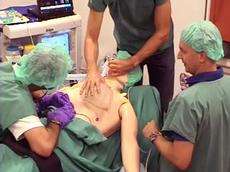
The scientists did not conduct the study with real anaesthesia, but rather in a simulation with a high-tech mannequin. "The mannequin looked quite real and, like under real anaesthesia, could be connected up to the respirator and monitors," says Kolbe. Around thirty teams each consisting of one doctor and one anaesthesia nurse participated in the study at University Hospital Zurich. Their task was to anaesthetise the "patient" for an operation and insert a breathing tube into his trachea – all basically routine for an anaesthesia team. However, the study supervisors complicated the exercise by simulating non-routine events. For instance, they were able to manipulate the blood pressure, pulse or respiratory rate on both the mannequin and the monitors. Watching video recordings of the exercises, the psychologists then studied how the participants communicated and doctors evaluated the team performance from a medical point of view.
Team members don't always speak up
The psychologists focused on such typical hospital situations as the following: during the operation, an anaesthesia nurse gets the impression that something is not going right or suspects that the resident physician is making a mistake. "Anaesthesia nurses don't always speak up in such situations," says Kolbe – because they are not entirely certain, hierarchical obstacles prevent them from doing so or they fear negative consequences of their criticism, such as the collegial relationship suffering as a result. It is the same story with doctors.
Even if speaking up is not always easy, it pays off in the operating theatre, as the scientists have now demonstrated. After all, in the study there were fewer medical errors in teams that made relevant observations and voiced constructive criticism more frequently – in other words, generally communicated more openly with one another.
Management needs to encourage dialogue culture
It is especially necessary to encourage this behaviour in hospitals where a large number of highly specialised staff work together in a complex environment and where errors can have fatal consequences. According to Kolbe, studies have shown that communicating criticism can be learned. "After all, people often don't voice criticism because they don't know how to express themselves without offending their colleagues." Consequently, these days great store is set by doctors and nurses learning to communicate their observations and speak up in simulation-based training – with noticeable success.
Training alone is not enough, however, says Kolbe. Staff need to feel psychologically safe that they will not face any negative consequences if they question the conduct of their superior, for instance. We know that people speak up more frequently in the operating theatre if the doctor in charge actively invites them to comment openly on any potential abnormalities before the procedure begins. And ultimately it might be helpful if the different management levels at the hospital encouraged a culture of open dialogue, says Kolbe. This all helps to vastly increase patient safety.
More information: Kolbe M, Burtscher MJ, Wacker J, Grande B, Nohynkova R, Manser T, Spahn DR, Grote G: Speaking Up Is Related to Better Team Performance in Simulated Anesthesia Inductions: An Observational Study. Anesthesia & Analgesia, 2012, Advance online publication, DOI: 10.1213/ane.0b013e318269cd32


