Dirty pacifiers may make infants sick, study says
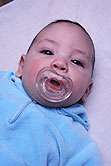
November 3, 2012 by Barbara Bronson Gray, Healthday Reporter in Pediatrics

Dirty pacifiers may make infants sick: study

But some experts say concerns about germs are overstated and parents should not be worried.

(HealthDay)—Pacifiers are universally popular with new parents and their infants, but there's one big problem with them: They can get dirty. Very dirty.

Researchers report that they found a wide range of disease-causing bacteria, fungus and mold on pacifiers that young children had been using.

They added that pacifiers can often grow a slimy coating of bacteria—called a biofilm—that actually alters the normal bacteria in a baby or toddler's mouth. That can spur inflammation and potentially increase the risk of developing such as colic or even ear infections.

In fact, the same types of bacteria found on a common pacifier have been linked to cardiovascular disease, , allergies, asthma and , said study author Dr. Tom Glass, a professor of forensic sciences, pathology and at Oklahoma State University.

Glass said the problem with pacifiers applies also to removable orthodontic appliances such as retainers and even athletic mouth guards and dentures. Pores in the plastic can capture fungi, bacteria, food and water, creating a perfect spot for bacterial and and infection, he explained.

The research was scheduled to be presented Friday at the American Society for Clinical Pathology annual meeting in Boston. The data and conclusions of the study should be considered preliminary until they are published in a peer-reviewed journal.

The study authors collected 10 pacifiers from healthy infants at a pediatric clinic. They chopped up the nipples and shields finely, and put them in laboratory dishes designed to allow any bacteria or fungi that was present on the pacifiers to grow.

After 24 and 48 hours, the investigators compared the growth around the used pacifiers to the growth in dishes in which chopped-up new, unused pacifiers had been placed.

While half of the 10 used pacifiers were lightly contaminated, the other 5 were heavily contaminated (with levels reaching as high as 100 million colony-forming units per gram).

The researchers cultured 40 different species of bacteria from the 10 used pacifiers. One pacifier was contaminated with four different strains of Staphylococcus aureus. Yet, the unused pacifiers were found to be sanitary (with colony growths in the dishes less than 100 colony-forming units per gram).

What was particularly concerning, said Glass, was that many of the bacteria growing from the used pacifiers were resistant to commonly used antibiotics such as penicillin and methicillin.

The development of such resistance to certain antibiotics does not cause the organism to be more infectious than other strains that have no antibiotic resistance, but it can make the infection more difficult to treat.

Glass doesn't recommend that parents use pacifiers to calm their babies and toddlers. "After doing the study, I say why take a risk? The key is to recognize that pacifiers can cause illness," he said. "In the long run, it may be that what you do now [using a pacifier] may have a lot to do with whether a child ends up developing atherosclerosis or type 2 diabetes."

For those who still choose to use pacifiers, Glass recommends soaking them daily in a denture-cleaning agent and carrying extras so a dropped or soiled pacifier doesn't have to be replaced without first cleaning it thoroughly at home.

He also recommends throwing out pacifiers after two weeks of use because wear increases the bacteria-trapping porousness of the plastic.

Some experts are not concerned about pacifiers carrying disease-causing germs.

Dr. Ben Hoffman, medical director of the Children's Safety Center at Oregon Health and Science University's Doernbecher Children's Hospital, said he can't think of an infection a child has had that he would attribute to a pacifier.

"The majority of things you're going to find on a pacifier are things we'll find on our clothes, normal human flora," said Hoffman. "It's not a reason to demonize if people find them useful."

More information: Find out more about the risks and benefits of pacifiers from the American Academy of Family Physicians.

Copyright © 2012 HealthDay. All rights reserved.

3 /5 (2 votes)  

Filter


Move the slider to adjust rank threshold, so that you can hide some of the comments.


Display comments: newest first

alfie_null
Nov 04, 2012

Rank: 5 / 5 (1)
Compared to all the other stuff kids put in their mouths (instead)?

How well does this theory mesh with that of under-exposure to germs during childhood causes auto-immune problems later on?
Rank 3 /5 (2 votes)
Relevant PhysicsForums posts
  • Equating differentials => equating coefficients
    created1 hour ago
  • The idea behind a reverse shock
    created7 hours ago
  • Guass's Law for a charge distribution
    created7 hours ago
  • Noise dependence
    created8 hours ago
  • siphon and bernouli theorum
    created9 hours ago
  • Hot gas expansion rate into outer space
    created9 hours ago
  • More from Physics Forums - Classical Physics

More news stories

Rate of bicycle-related fatalities significantly lower in states with helmet laws

Existing research shows that bicyclists who wear helmets have an 88 percent lower risk of brain injury, but researchers at Boston Children's Hospital found that simply having bicycle helmet laws in place showed a 20 percent ...

Pediatrics created May 23, 2013 | popularity not rated yet | comments 0

More kids getting donor organs, but gaps persist, study finds

(HealthDay)—Over the last decade, the number of American children who die each year awaiting an organ donation dropped by more than half, new research reveals. And increasing numbers of children are receiving ...

Pediatrics created May 22, 2013 | popularity not rated yet | comments 0

Phthalates: Study links chemicals widely found in plastics, processed food to elevated blood pressure in children, teens

Plastic additives known as phthalates (pronounced THAL-ates) are odorless, colorless and just about everywhere: They turn up in flooring, plastic cups, beach balls, plastic wrap, intravenous tubing and—according to the ...

Pediatrics created May 22, 2013 | popularity not rated yet | comments 1 | with audio podcast

Less sleep associated with increased risk of crashes for young drivers

A study by Alexandra L. C. Martiniuk, M.Sc, Ph.D., of The George Institute for Global Health, Sydney, Australia, and colleagues suggests less sleep per night is associated with a significant increase in the risk for motor ...

Pediatrics created May 20, 2013 | popularity not rated yet | comments 0

Whole-cell vaccine was more effective than acellular vaccine during CA pertussis outbreak

Whole-cell pertussis vaccines were more effective at protecting against pertussis than acellular pertussis vaccines during a large recent outbreak, according to a new Kaiser Permanente study published in Pediatrics.

Pediatrics created May 20, 2013 | popularity not rated yet | comments 0 | with audio podcast


First drug to improve heart failure mortality in over a decade

Coenzyme Q10 decreases all cause mortality by half, according to the results of a multicentre randomised double blind trial presented today at Heart Failure 2013 congress. It is the first drug to improve heart failure mortality ...

Seniors more likely to crash when driving with pet, study finds

(HealthDay)—Animals make great companions for senior citizens, but elderly people who always drive with a pet in the car are far more likely to crash than those who never drive with a pet, researchers have ...

Heart failure accelerates male 'menopause'

Heart failure accelerates the aging process and brings on early andropausal syndrome (AS), according to research presented today at the Heart Failure Congress 2013. AS, also referred to as male 'menopause', was four times ...

Death highest in heart failure patients admitted in January, on Friday, and overnight

Mortality and length of stay are highest in heart failure patients admitted in January, on Friday, and overnight, according to research presented today at the Heart Failure Congress 2013. The analysis of nearly 1 million ...

Feds fight morning-after pill age ruling in NY

(AP)—Department of Justice lawyers have again asked a federal appeals court in New York to delay lifting age restrictions and prescription requirements on an emergency contraceptive popularly known as the morning-after ...

New immune system discovered

(Medical Xpress)—A research team, led by Jeremy Barr, a biology post-doctoral fellow, unveils a new immune system that protects humans and animals from infection.