Molecular lung cancer test identifies patients at high risk of death even after surgery
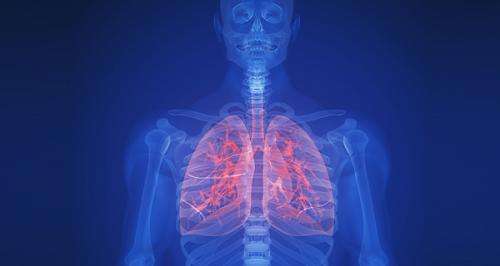
(Medical Xpress)—One of the toughest issues facing patients who have surgery for very early-stage lung cancer is uncertainty: Despite complete removal of their small lung tumors and no evidence of metastasis, at least one quarter of patients harbor tiny, undetectable clumps of cancer cells that have already spread outside their lungs and will kill them within a few years.
Doctors have no way of telling which cancers will recur, and, as a result, none of these patients receives chemotherapy that might otherwise reduce their chance of dying from the disease.
A new molecular test developed by doctors at the University of California, San Francisco (UCSF) may give doctors the ability to better predict post-operative early-stage lung cancer mortality. This week in the Journal of the American Medical Association (JAMA), the team reports that the test effectively identifies patients with a high likelihood of recurrence even of this very early form of cancer, which is called "T1a node-negative non-squamous, non-small cell lung cancer."
The retrospective study involved analyzing tumors from 1,439 patients in the United States and China who underwent surgery during the last 15 years. These patients belonged to either the Kaiser Permanente Northern California System or had gone to one of three hospitals in mainland China that participate in the China Clinical Trials Consortium.
The study showed that the scientists could accurately stratify patients even with the earliest stage of lung cancer into groups at low-, intermediate- or high-risk of death based solely on the activity of 14 different genes found in their tumors. The prognostic information obtained from this molecular analysis of an individual tumor's biology significantly surpassed the information that could be obtained from any conventional prognostic criteria derived either from microscopic examination of the tumors, or from the patients' clinical situations.
"This group of patients with very early disease is expected to increase as screening for lung cancer is more widely implemented," said UCSF thoracic surgeon Michael Mann, MD. A number of hospitals around the country, including UCSF Medical Center, have implemented lung cancer screening programs in the last two years.
More Hope for Lung Cancer Survival
Published guidelines currently recommend chemotherapy for stage I lung cancer patients who are thought to be at very high risk of recurrence. These guidelines, however, provide no criteria to aid in the identification of high-risk patients with T1a node-negative disease.
The UCSF team and their colleagues previously demonstrated that the new assay better identifies high-risk stage I patients than the published criteria. It remained uncertain, however, if high-risk patients could also be identified from among the growing number of patients with the earliest, T1a node-negative cancers. The new report now confirms that the test can successfully identify patients even in this group who have a 50 percent chance of death, and for whom further intervention might also need to be considered.
Lung cancer is currently the most lethal cancer in the world, largely because of its propensity to spread even at very early stages of the disease. As a result, lung cancer is most often diagnosed after it has become incurable. Doctors hope that screening for lung cancer will lead to earlier detection and increase overall survival from the disease, which has not improved after 40 years of research. Identification of patients with these early tumors who are still at high risk of death may further improve the benefit derived from early detection.
Mann is one of several doctors at UCSF who jointly developed the technology upon which the test is based. The test itself was developed by Pinpoint Genomics, a company that was acquired in 2012 by Life Technologies Corp., which is currently making the test available to clinicians throughout the United States. Importantly, the test can be run on standard pathology specimens and does not require any special handling of the tumor tissues.
The article, "Ability of a Prognostic Assay to Identify Patients at High Risk of Mortality Despite Small, Node-Negative Lung Tumors" by Johannes R. Kratz, Stephen K. Van Den Eeden, Jianxing He, David M. Jablons and Michael J. Mann, was published by JAMA on Oct. 23, 2012.
Lung Cancer Statistics
- 226,160 new cases of lung cancer will be diagnosed in 2012
- 160,340 lung cancer deaths expected in 2012
- 6.94% of people born today will be diagnosed with lung cancer during their lifetime
- 1.4 million deaths worldwide caused by lung cancer every year
- $10.3 billion spent in the United States each year on lung cancer treatment
- $281.9 million invested by NCI in lung cancer research in 2010


