Researchers ID gene that turns carbs into fat: Discovery could help development of treatment for fatty liver, diabetes
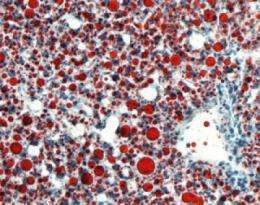
A gene that helps the body convert that big plate of holiday cookies you just polished off into fat could provide a new target for potential treatments for fatty liver disease, diabetes and obesity.
Researchers at the University of California, Berkeley, are unlocking the molecular mechanisms of how our body converts dietary carbohydrates into fat, and as part of that research, they found that a gene with the catchy name BAF60c contributes to fatty liver, or steatosis.
In the study, to be published online Dec. 6 in the journal Molecular Cell, the researchers found that mice that have had the BAF60c gene disabled did not convert carbohydrates to fat, despite eating a high-carb diet.
"This work brings us one step forward in understanding fatty liver disease resulting from an excessive consumption of carbohydrates," said the study's senior author, Hei Sook Sul, professor at UC Berkeley's Department of Nutritional Science and Toxicology. "The discovery of this role of BAF60c may eventually lead to the development of treatment for millions of Americans with fatty liver and other related diseases."
More than three-quarters of obese people and one-third of Americans have fatty liver, or steatosis, according to epidemiological studies. A diet excessively high in bread, pasta, rice, soda and other carbohydrates is a major risk factor for fatty liver, which is marked by the abnormal accumulation of fat within a liver cell.
After a meal, carbohydrates are broken down into glucose, an immediate source of energy. Excess glucose gets stored in the liver as glycogen or, with the help of insulin, converted into fatty acids, circulated to other parts of the body and stored as fat in adipose tissue. When there is an overabundance of fatty acids, fat also builds up in the liver.
"Fatty liver caused by the high intake of carbohydrates can be as bad as that due to excessive alcohol intake, and it contributes to various diseases including type 2 diabetes," said Sul. "The conversion of excess glucose into fatty acids occurs in the liver, but there are many steps in this process that have not been fully understood."
Sul's lab previously reported the role of a gene called DNA-PK in this process. The researchers found that DNA-PK, known to help repair breaks in DNA, acts as a signaling molecule for insulin that enhances the formation of fat from carbohydrates in the liver.
The newest discovery puts the spotlight on BAF60c, a molecule known for its role in remodeling the structure of chromatin, a mass of DNA and proteins found in the cell's nucleus.
The lead authors of the study, postdoctoral researcher Yuhui Wang and former graduate student Roger Wong, both at Sul's laboratory, discovered BAF60c's role in the conversion of dietary carbohydrates to fat. They found that BAF60c resides in the cytoplasm, outside the cell's nucleus. Once insulin binds to a receptor on the cell surface, it sends a signal to modify BAF60c so that it enters the nucleus. There, BAF60c binds to regions of chromatin that contain genes coding for various enzymes involved in the conversion of carbohydrates to fat. This action sends the signal to churn out more of the enzymes, enhancing the conversion of carbohydrates to fat.
The researchers tested the role of BAF60c by both increasing and decreasing its function in various experiments in live mice. Mice that had triple the normal levels of BAF60c in their livers produced significantly higher levels of fat-producing genes, even when they were fasting. In contrast, disabling BAF60c disrupted the formation of fatty acids, even when the mice feasted on a carb-heavy diet.
The researchers point out that fatty liver disease can result from overindulging in carbohydrates. They suggest avoiding refined sugars that increase blood insulin levels quickly, but note that there are complex carbohydrates—such as those in legumes, fruits and vegetables—that should be part of a healthy diet.
"Limiting consumption of sodas, cakes and cookies is a good idea for many reasons, even during the holidays," said Sul.


