Maternal BMI negatively linked to child cognition
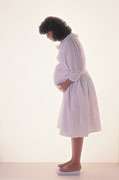
December 11, 2012 in Pediatrics
Maternal pre-pregnancy body mass index is negatively associated with children's cognitive performance at ages 5 and 7, although the overall effect size is modest, according to research published online Dec. 10 in Pediatrics.
(HealthDay)—Maternal pre-pregnancy body mass index (BMI) is negatively associated with children's cognitive performance at ages 5 and 7, although the overall effect size is modest, according to research published online Dec. 10 in Pediatrics.
Emre Basatemur, M.B.B.S., of University College London, and colleagues used data from the Millennium Cohort study to prospectively evaluate the association between maternal pre-pregnancy BMI and cognitive performance for 19,517 children at 5 and 7 years of age. General cognitive ability was identified using individual test scores from standardized cognitive assessments.
The researchers found that a mother's pre-pregnancy BMI correlated negatively with cognitive performance in their children at ages 5 (P = 0.0069) and 7 (P < 0.0001). Although statistically significant, the overall effect size was modest, with a 10-point increase in maternal BMI correlating with a decrease of one-tenth of a standard deviation in cognitive performance at age 7.
"By using data from a large, contemporary national birth cohort, we found that maternal pre-pregnancy BMI is negatively associated with children's cognitive performance, even after adjusting for various socio-demographic confounders and children's BMI. The relationship appears to become stronger as the children get older," the authors write. "Although our study design does not permit any inferences of causation, a suboptimal intrauterine environment in obesity may have direct effects on the developing fetal brain."
More information: Abstract
Full Text (subscription or payment may be required)
Journal reference:
Pediatrics
Copyright © 2012 HealthDay. All rights reserved.
-
Pre-pregnancy BMI important indicator of offspring obesity
Apr 17, 2012 |
not rated yet |
0
-
Maternal obesity not strongly linked to obesity in offspring says study
Mar 11, 2008 |
not rated yet |
0
-
Mothers' weight before and during pregnancy affects baby's weight
Dec 13, 2011 |
not rated yet |
0
-
Study shows link between pre-pregnancy obesity and lower test scores
May 08, 2012 |
not rated yet |
0
-
ECO: Behavioral treatment for obesity effective in children
May 14, 2012 |
not rated yet |
0
-
Motion perception revisited: High Phi effect challenges established motion perception assumptions
Apr 23, 2013 |
3 / 5 (2) |
2
-
Anything you can do I can do better: Neuromolecular foundations of the superiority illusion (Update)
Apr 02, 2013 |
4.5 / 5 (11) |
5
-
The visual system as economist: Neural resource allocation in visual adaptation
Mar 30, 2013 |
5 / 5 (2) |
9
-
Separate lives: Neuronal and organismal lifespans decoupled
Mar 27, 2013 |
4.9 / 5 (8) |
0
-
Sizing things up: The evolutionary neurobiology of scale invariance
Feb 28, 2013 |
4.8 / 5 (10) |
14
-
what is the distance traveled
2 hours ago
-
Image of a Convex Lens Cut in Half Horizontally
5 hours ago
-
Ray tracing throught optical system of thick lenses
6 hours ago
-
Faraday's law on circular wire
6 hours ago
-
Specific Exergy vs Specific Flow Exergy
8 hours ago
-
The Durability of Bone: Long Falls
16 hours ago
- More from Physics Forums - Classical Physics
More news stories
Phthalates: Study links chemicals widely found in plastics, processed food to elevated blood pressure in children, teens
Plastic additives known as phthalates (pronounced THAL-ates) are odorless, colorless and just about everywhere: They turn up in flooring, plastic cups, beach balls, plastic wrap, intravenous tubing and—according to the ...
Pediatrics
10 hours ago |
not rated yet |
1
|
Less sleep associated with increased risk of crashes for young drivers
A study by Alexandra L. C. Martiniuk, M.Sc, Ph.D., of The George Institute for Global Health, Sydney, Australia, and colleagues suggests less sleep per night is associated with a significant increase in the risk for motor ...
Pediatrics
May 20, 2013 |
not rated yet |
0
Whole-cell vaccine was more effective than acellular vaccine during CA pertussis outbreak
Whole-cell pertussis vaccines were more effective at protecting against pertussis than acellular pertussis vaccines during a large recent outbreak, according to a new Kaiser Permanente study published in Pediatrics.
Pediatrics
May 20, 2013 |
not rated yet |
0
|
New study recommends using active videogaming ('exergaming') to improve children's health
Levels of physical inactivity and obesity are very high in children, with fewer than 50% of primary school-aged boys and fewer than 28% of girls meeting the minimum levels of physical activity required to maintain health. ...
Pediatrics
May 17, 2013 |
5 / 5 (1) |
0
Study shows preschoolers affected by medication-related poisonings at alarming rate
Poisonings in young children have increased over the past decade, mainly due to medications in the home. A new study led by the Central Ohio Poison Center at Nationwide Children's Hospital, found that medication-related poisonings ...
Pediatrics
May 16, 2013 |
not rated yet |
0
Enzyme-activating antibodies revealed as marker for most severe form of rheumatoid arthritis
In a series of lab experiments designed to unravel the workings of a key enzyme widely considered a possible trigger of rheumatoid arthritis, researchers at Johns Hopkins have found that in the most severe ...
Research offers promising new approach to treatment of lung cancer
Researchers have developed a new drug delivery system that allows inhalation of chemotherapeutic drugs to help treat lung cancer, and in laboratory and animal tests it appears to reduce the systemic damage ...
Researchers analyse hunting behaviour of fish larvae in virtual reality
Moving objects attract greater attention – a fact exploited by video screens in public spaces and animated advertising banners on the Internet. For most animal species, moving objects also play a major ...
Overeating learned in infancy, study suggests
In the long run, encouraging a baby to finish the last ounce in their bottle might be doing more harm than good.
Study details genes that control whether tumors adapt or die when faced with p53 activating drugs
When turned on, the gene p53 turns off cancer. However, when existing drugs boost p53, only a few tumors die – the rest resist the challenge. A study published in the journal Cell Reports shows how: tumors that live even i ...
Children of married parents less likely to be obese
Children living in households where the parents are married are less likely to be obese, according to new research from Rice University and the University of Houston.