Blocking digestive enzymes may reverse shock, stop multiorgan failure
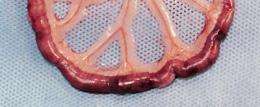
New research from the University of California, San Diego published in the Jan. 23 issue of Science Translational Medicine moves researchers closer to understanding and developing treatments for shock, sepsis and multiorgan failure. Collectively, these maladies represent a major unmet medical need: they are the number one cause of mortality in intensive care units in the United States, with hundreds of thousands of deaths annually. There is currently no treatment for these conditions in spite of many clinical trials.
Most researchers agree that organ failure in shock and sepsis involves the intestine – and that it arises when the mucosal barrier of the small intestine becomes permeable. However, the mechanism by which this disrupted membrane is tied to vastly different kinds of shock, as well as multiorgan failure and death has not been understood.
In the case of sepsis (septic shock), for example, some researchers speculate that bacteria in the intestine and their toxins are responsible for organ failure. However, interventions against bacteria that are aimed at reducing mortality in patients undergoing septic shock have been unsuccessful in clinical trials.
Looking more broadly than bacteria, a team of researchers led by Geert W. Schmid-Schönbein in the Department of Bioengineering at the UC San Diego Jacobs School of Engineering has carried out several years of careful analysis of the events in shock. That research led them to investigate the powerful, concentrated digestive enzymes in the intestine, the same enzymes that are part of daily digestion.
These digestive enzymes need to be restricted to the inside of the small intestine by the mucosal barrier. Once this barrier is disrupted, which can occur for a variety of reasons including dramatic loss of blood, physical puncture or opening (as in shrapnel injury or appendicitis), or degradation by bacterial toxins, digestive enzymes leak into the wall of the intestine and begin digesting it, a phenomenon the UC San Diego researchers call "autodigestion". Once beyond the mucosal barrier of the small intestine, the UC San Diego researchers believe the digestive enzymes damage other organs by indiscriminately starting to degrade them, which can lead to multiorgan failure and death.
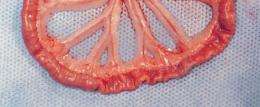
The new research, published in the Jan. 23 issue of Science Translational Medicine, provides novel results linking digestive enzymes to shock, sepsis and multiorgan failure. In particular, by administering digestive enzyme blockers directly into the small intestines of rats an hour after the onset of different types of shock, the researchers led by Schmid-Schönbein reversed the often fatal conditions, reduced injury to the heart and lungs, and greatly increased long-term survival of the animals from about 16 percent to 86 percent.
- The animals that received the digestive enzyme blockers in the lumen of the intestine regained their health and survived for long periods of time after shock. (Past experimental shock studies have been limited to relatively short observation periods.)
- The researchers showed a clear connection between direct inhibition of pancreatic digestive enzymes after the onset of three different shock models in rat, reduced organ damage and long-term survival of the animals. They demonstrated improved survival with three very different inhibitors of the digestive enzymes.
- All three of the pancreatic enzyme inhibitors, when delivered directly into the small intestine, but not when delivered intravenously, stopped autodigestion brought on by shock. (One of these enzyme inhibitors is already approved for use in the United States for other purposes).
- Blockade of the digestive enzymes was successful in three widely different forms of shock. The researchers studied hemorrhagic shock, septic shock and endotoxic shock.
Autodigestion
The UC San Diego bioengineers have described aspects of autodigestion, as well as the potential for stopping it (and treating shock) by blocking the powerful digestive enzymes that have breached the intestine barrier, in numerous papers in the scientific literature.
This research has the potential to lead to therapies that greatly reduce fatalities, morbidity, and length of stay in intensive care units in patients undergoing various forms of shock.
"Organisms rely on full containment of the digestive enzymes in the small intestine. The moment the intestinal mucosal barrier is compromised, the digestive enzymes escape and then we are no longer digesting just our food, but we may be digesting our organs," said Schmid-Schönbein.
A Phase 2 clinical pilot study is under way to test the efficacy and safety of a new method of administering an enzyme inhibitor for critically ill patients such as those with new-onset sepsis and septic shock, post-operative complications, and new-onset gastrointestinal bleeding.
In addition, a published clinical report points to successful treatment of a patient with severe septic shock with digestive enzyme inhibitors delivered directly into the intestine.
In shock, there is a major failure of the mucosal barrier in the small intestine. There may also be other conditions in which the failure of this barrier is less severe, and digestive enzymes leak more slowly into the blood stream. The effect on human health of slow leakage of digestive enzymes into the body with low level of autodigestion remains to be explored, Schmid-Schönbein explained.
More information: "Pancreatic Digestive Enzyme Blockade in the Intestine Increases Survival After Experimental Shock," by Frank A. DeLano et al., Published in the 23 Jan. issue of Science Translational Medicine.


