Specificity up with stereoscopic mammography for CA detection
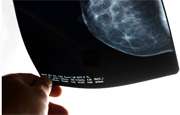
Three-dimensional stereoscopic digital mammography significantly improves the specificity and accuracy of breast cancer detection, with a lower patient recall rate and a sensitivity comparable to that of standard digital mammography in a high-risk population, according to research published in the January issue of Radiology.
(HealthDay)—Three-dimensional stereoscopic digital mammography (DM) significantly improves the specificity and accuracy of breast cancer detection, with a lower patient recall rate and a sensitivity comparable to that of standard DM in a high-risk population, according to research published in the January issue of Radiology.
Carl J. D'Orsi, M.D., of the Emory University School of Medicine in Atlanta, and colleagues compared the rate of patient recall and detection of cancer in 1,298 examinations from a cohort of 779 women at high-risk for breast cancer who underwent stereoscopic DM and standard DM. Case truth was determined by the results of one-year follow-up or biopsy.
The researchers found that, for detection of cancer, the specificity (91.2 versus 87.8 percent) and accuracy (90.9 versus 87.4 percent) were significantly higher for stereoscopic DM than standard DM, but the sensitivity was comparable (68.4 versus 63.2 percent). The patient recall rate was statistically significantly lower with stereoscopic DM compared with traditional DM (9.6 versus 12.9 percent).
"In conclusion, we found that DM and stereoscopic DM do not differ significantly in sensitivity for the detection of cancer. However, we did find that stereoscopic DM has significantly higher specificity than does DM," the authors write. "Further study is warranted to determine the efficacy of stereoscopic DM at a total dose equal to that of DM for breast cancer detection and in a general, non-high-risk population."
Several authors disclosed financial ties to the medical device, diagnostic, and imaging industries.
More information: Abstract
Full Text (subscription or payment may be required)
Journal reference:
Radiology
Copyright © 2012 HealthDay. All rights reserved.
-
Digital mammography improves population-based breast cancer screening
Oct 02, 2012 |
not rated yet |
0
-
Fracture prediction methods may be useful for patients with diabetes
May 31, 2011 |
not rated yet |
0
-
Diabetes, poor glucose control associated with greater cognitive decline in older adults
Jun 18, 2012 |
not rated yet |
0
-
In oropharyngeal cancer, HPV status impacts distant mets risk
Jan 14, 2013 |
not rated yet |
0
-
Stereoscopic mammography could reduce recall rate
Nov 13, 2012 |
not rated yet |
0
-
Motion perception revisited: High Phi effect challenges established motion perception assumptions
Apr 23, 2013 |
3 / 5 (2) |
2
-
Anything you can do I can do better: Neuromolecular foundations of the superiority illusion (Update)
Apr 02, 2013 |
4.5 / 5 (11) |
5
-
The visual system as economist: Neural resource allocation in visual adaptation
Mar 30, 2013 |
5 / 5 (2) |
9
-
Separate lives: Neuronal and organismal lifespans decoupled
Mar 27, 2013 |
4.9 / 5 (8) |
0
-
Sizing things up: The evolutionary neurobiology of scale invariance
Feb 28, 2013 |
4.8 / 5 (10) |
14
-
Why is zone 1 in liver more prone to ischemic injury?
May 23, 2013
-
How can there be villous adenoma in colon, if there are no villi there
May 22, 2013
-
How can there be a term called "intestinal metaplasia" of stomach
May 21, 2013
-
Pressure-volume curve: Elastic Recoil Pressure don't make sense
May 18, 2013
-
If you became brain-dead, would you want them to pull the plug?
May 17, 2013
-
MRI bill question
May 15, 2013
- More from Physics Forums - Medical Sciences
More news stories
New fluorescent tools for cancer diagnosis
In recent years, microRNAs (miRNAs) and other non-coding RNAs are small molecules that help control the expression of specific proteins. In recent years they have emerged as disease biomarkers. miRNA profiles have been used ...
Cancer
19 hours ago |
not rated yet |
0
Modulating the immune system to combat metastatic cancer
Cancer cells spread and grow by avoiding detection and destruction by the immune system. Stimulation of the immune system can help to eliminate cancer cells; however, there are many factors that cause the immune system to ...
Cancer
19 hours ago |
5 / 5 (1) |
0
Scientists put bowel cancer under the microscope
Researchers from London's Kingston University have begun a two-year study which could help prolong the lives of people with colorectal tumours.
Cancer
22 hours ago |
5 / 5 (1) |
0
Researcher identifies breast cancer fighting hormone
Transformative research from Western University has identified new hormones in the body which may suppress breast cancer and stimulate the regression of breast tumors.
Cancer
23 hours ago |
5 / 5 (2) |
0
Ground breaking cancer research finds immune system link
(Medical Xpress)—Curtin University researchers have found evidence that targeting specific cells in the body can reverse the effects of cancer on the immune system.
Cancer
23 hours ago |
5 / 5 (4) |
0
Feds fight morning-after pill age ruling in NY
(AP)—Department of Justice lawyers have again asked a federal appeals court in New York to delay lifting age restrictions and prescription requirements on an emergency contraceptive popularly known as the morning-after ...
Heart failure accelerates male 'menopause'
Heart failure accelerates the aging process and brings on early andropausal syndrome (AS), according to research presented today at the Heart Failure Congress 2013. AS, also referred to as male 'menopause', was four times ...
First drug to improve heart failure mortality in over a decade
Coenzyme Q10 decreases all cause mortality by half, according to the results of a multicentre randomised double blind trial presented today at Heart Failure 2013 congress. It is the first drug to improve heart failure mortality ...
Death highest in heart failure patients admitted in January, on Friday, and overnight
Mortality and length of stay are highest in heart failure patients admitted in January, on Friday, and overnight, according to research presented today at the Heart Failure Congress 2013. The analysis of nearly 1 million ...
Engineered cytomegalovirus protects monkeys from HIV equivalent
(Medical Xpress)—A new study by researchers in the US has shown that an ancient virus can be modified to help in the fight against the simian immunodeficiency virus SIV, which is the equivalent in monkeys ...
Researchers identify first drug targets in childhood genetic tumor disorder
Two mutations central to the development of infantile myofibromatosis (IM)—a disorder characterized by multiple tumors involving the skin, bone, and soft tissue—may provide new therapeutic targets, according to researchers ...