Backs bear a heavy burden
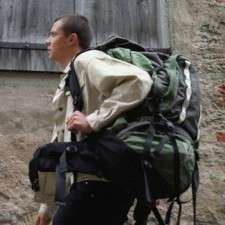
Trudging from place to place with heavy weights on our backs is an everyday reality, from schoolchildren toting textbooks in backpacks to firefighters and soldiers carrying occupational gear. Muscle and skeletal damage are very real concerns. Now Tel Aviv University researchers say that nerve damage, specifically to the nerves that travel through the neck and shoulders to animate our hands and fingers, is also a serious risk.
Prof. Amit Gefen of TAU's Department of Biomedical Engineering and Prof. Yoram Epstein of TAU's Sackler Faculty of Medicine, along with PhD student Amir Hadid and Dr. Nogah Shabshin of the Imaging Institute of the Assuta Medical Center, have determined that the pressure of heavy loads carried on the back have the potential to damage the soft tissues of the shoulder, causing microstructural damage to the nerves.
The result could be anything from simple irritation to diminished nerve capacity, ultimately limiting the muscles' ability to respond to the brain's signals, inhibiting movement of the hand and the dexterity of the fingers. In practice, this could impact functionality, reducing a worker's ability to operate machinery, compromise a soldiers' shooting response time, or limiting a child's writing or drawing capacity.
The research was published in the Journal of Applied Physiology and partially supported by a grant from TAU's Nicholas and Elizabeth Slezak Super Center for Cardiac Research and Biomedical Engineering.
Modeling impaired nerve function
Focusing their study on combat units in which soldiers must carry heavy backpacks, the researchers discovered that, in addition to complaining of discomfort or pain in their shoulders, soldiers also reported tickling sensations or numbness in the fingers.
Exploring this issue in a non-invasive manner, they used biomechanical analysis methods originally developed for investigating chronic wounds. The analyses show how mechanical loads, defined as the amount of force or deformation placed on a particular area of the body, were transferred beneath the skin to cause damage to tissue and internal organs.
Based on data collected by MRI, Profs. Gefen and Epstein developed anatomical computer models of the shoulders. These showed how pressure generated by the weight of a backpack load is distributed beneath the skin and transferred to the brachial plexus nerves. The models also account for mechanical properties, such as the stiffness of shoulder tissues and the location of blood vessels and nerves in the sensitive areas which are prone to damage.
Extensive mechanical loading was seen to have a high physiological impact. "The backpack load applies tension to these nerves," explains Prof. Gefen. He notes that the resulting damage "leads to a reduction in the conduction velocity—that is, the speed by which electrical signals are transferred through the nerves." With a delay or reduction in the amplitude or the intensity of signals, nerve communication cannot properly function, he says.
A danger to adults and children
These results apply to people from all walks of life, says Prof. Gefen. Many professions and leisure activities, such as hiking or travelling, involve carrying heavy equipment on the back. The researchers plan to extend this study in two directions: first, to study the effects of load on nerve conductivity, and second, to examine the impact of these heavy loads on a child's anatomy.
School bags are a major concern, he warns. It cannot be assumed that children's bodies react to shoulder stress in exactly the same way as adults. Differences in physiology could lead to different consequences, tolerance, and damage levels.


