New UN report on hormone-disrupting chemicals
February 20, 2013 in Health

New UN report on hormone-disrupting chemicals

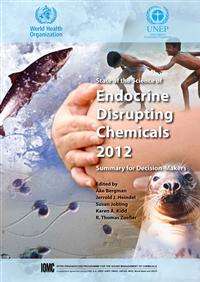
An international team of scientific experts has expressed great concern about the effect of increasing exposure of humans and animals to hormone-disrupting substances. This comes in a new report commissioned by the UN Environment Programme and the World Health Organization.

Chief Scientist Georg Becher at the Department of Exposure and Risk Assessment at the Norwegian Institute of Public Health contributed to the landmark 300-page report with his expertise on human exposure to .

"The report highlights the importance of the research and surveillance work at the Norwegian Institute of Public Health to increase awareness of how, and to what extent, the Norwegian population is exposed to harmful substances," says Becher.

Hormone-disrupting chemicals are present throughout the environment. People can ingest these substances through air, water, food and dust. The report focuses on the relationship between exposure to hormone-disrupting substances and a number of diseases such as breast and , , obesity, ADHD, and other effects on the nervous system. These are diseases with increasing incidence in many Western countries.

The report points to the need for increased knowledge of the relationship between intake and effect of hormone-disrupting substances and the need to develop appropriate testing methods to detect these substances, both in the environment and in consumer products. More detailed research and increased collaboration within the research community are required.

More information: Report: State of the Science of Endocrine Disrupting Chemicals 2012 - United Nations Environment Programme (UNEP) and World Health Organization (WHO).
www.who.int/ceh/pu… n/index.html

Provided by Norwegian Institute of Public Health search and more info website

not rated yet  

Filter


Move the slider to adjust rank threshold, so that you can hide some of the comments.


Display comments: newest first

arq
Feb 20, 2013

Rank: not rated yet

One of the easiest ways for people to reduce injesting hormone disrupting chemicals, is to avoid drinking water from clear plastic bottles(recycling code type 7).
Rank not rated yet
Relevant PhysicsForums posts

More news stories

Calorie information in fast food restaurants used by 40 percent of 9-18 year olds when making food choices

A new study published online today (Thursday) in the Journal of Public Health has found that of young people who visited fast food or chain restaurants in the U.S. in 2010, girls and youth who were obese were more likely ...

Health created 7 hours ago | popularity not rated yet | comments 0

Systematic screening of med adherence will ID barriers

(HealthDay)—Implementation of systematic monitoring for medication adherence will allow for identification of barriers to adherence and tailoring of interventions, according to a viewpoint piece published ...

Health created 9 hours ago | popularity not rated yet | comments 0

More doctors, hospitals using electronic records

(AP)—The Obama administration says more doctors and hospitals are embracing technology as adoption of computerized medical records reaches a "tipping point" in America.

Health created 10 hours ago | popularity not rated yet | comments 0

Hospitals profit when patients develop bloodstream infections

Johns Hopkins researchers report that hospitals may be reaping enormous income for patients whose hospital stays are complicated by preventable bloodstream infections contracted in their intensive care units.

Health created 11 hours ago | popularity not rated yet | comments 0

Alleviating hunger in the US, it's a SNAP, researcher says

A University of Illinois researcher says that the cornerstone of our efforts to alleviate food insecurity should be to encourage more people to participate in the Supplemental Nutrition Assistance Program (SNAP) "because ...

Health created 11 hours ago | popularity not rated yet | comments 0


Rate of bicycle-related fatalities significantly lower in states with helmet laws

Existing research shows that bicyclists who wear helmets have an 88 percent lower risk of brain injury, but researchers at Boston Children's Hospital found that simply having bicycle helmet laws in place showed a 20 percent ...

Slowing the aging process—only with antibiotics

Swiss scientists reveal the mechanism responsible for aging hidden deep within mitochondria—and dramatically slow it down in worms by administering antibiotics to the young.

Researchers complete largest genetic sequencing study of human disease

Researchers from Queen Mary, University of London have led the largest sequencing study of human disease to date, investigating the genetic basis of six autoimmune diseases.

Brain can be trained in compassion, study shows

Until now, little was scientifically known about the human potential to cultivate compassion—the emotional state of caring for people who are suffering in a way that motivates altruistic behavior.

Having both migraines, depression may mean smaller brain

(HealthDay)—Migraines and depression can each cause a great deal of suffering, but new research indicates the combination of the two may be linked to something else entirely—a smaller brain.

Novel approach for influenza vaccination shows promise in early animal testing

A new approach for immunizing against influenza elicited a more potent immune response and broader protection than the currently licensed seasonal influenza vaccines when tested in mice and ferrets. The vaccine ...