Tips to avoid return trip to the hospital
February 20, 2013 in Health

Tips to avoid return trip to the hospital

Understand instructions, ask questions, follow through with treatment, expert says.

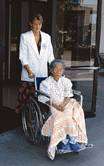
(HealthDay) —More than 1 million Americans end up back in the hospital just weeks after they're discharged, and many of those readmissions are preventable, according to an expert from Columbia University School of Nursing in New York City.

Patients can do their part to avoid return trips to the hospital by simply paying attention and speaking up when it's time to go home, advised Mary Donovan-Johnson, program director of the Acute Care Nurse Practitioner Program.

"Discharges are often rushed and patients may be overwhelmed during this stressful time," Donovan-Johnson said in a Columbia news release. "If you don't understand something a medical provider said, don't be afraid to ask your doctor or nurse to repeat the instructions... Ask the person accompanying you home to listen and take notes when instructions are being explained by your medical team."

Other steps you can take to reduce the odds of after discharge include:

  • Get all discharge instructions and information in writing, including directions for wound care, medications and food restrictions. Keep these instructions in a place where they are easily accessed.
  • After discharge, follow through on your treatment by filling prescriptions and taking medications as directed. If you have questions about your medications or other instructions, call your doctor.
  • Schedule follow-up visits with your doctor and blood tests or other procedures as directed, and keep those appointments.

"Ideally, the same team of doctors and nurses who worked with the patient would discharge them since they know the protocol in their medications, wound care, and how to set up the safest environment at home for them. But unfortunately, that doesn't always happen," Donovan-Johnson said. "So the patient needs to be vigilant about being an active participant in their recovery."

More information: Get more hospital discharge tips from the U.S. Agency for Healthcare Research and Quality.

Health News Copyright © 2013 HealthDay. All rights reserved.

5 /5 (1 vote)  

Rank 5 /5 (1 vote)
Relevant PhysicsForums posts

More news stories

Economic incentives increase blood donation without negative consequences

Can economic incentives such as gift cards, T-shirts, and time off from work motivate members of the public to increase their donations of blood?

Health created 1 hour ago | popularity not rated yet | comments 0 | with audio podcast

Adult day services for dementia patients provide stress relief to family caregivers

Family caregivers of older adults with dementia are less stressed and their moods are improved on days when dementia patients receive adult day services (ADS), according to Penn State researchers.

Health created 3 hours ago | popularity not rated yet | comments 0

Schools should provide opportunities for 60 minutes of daily physical activity to all students

Given the implications for the overall health, development, and academic success of children, schools should play a primary role in ensuring that all students have opportunities to engage in at least 60 minutes per day of ...

Health created 3 hours ago | popularity not rated yet | comments 0

Survey reveals the success of personal budgets in social care

Over 70 per cent of people who hold a personal budget for social care said it led to greater independence and support according to the latest survey.

Health created 6 hours ago | popularity not rated yet | comments 0

Scientists develop smartphone 'assistance agent' for older people

A new smartphone application, developed by scientists at the University of Ulster, which could help older people engage fully in an increasingly self-serve society, may be ready for use by the end of the ...

Health created 6 hours ago | popularity not rated yet | comments 0


Drug reverses Alzheimer's disease deficits in mice, research confirms

An anti-cancer drug reverses memory deficits in an Alzheimer's disease mouse model, University of Pittsburgh Graduate School of Public Health researchers confirm in the journal Science.

Scientists discover molecule triggers sensation of itch

Scientists at the National Institutes of Health report they have discovered in mouse studies that a small molecule released in the spinal cord triggers a process that is later experienced in the brain as the sensation of ...

Multiple research teams unable to confirm high-profile Alzheimer's study

Teams of highly respected Alzheimer's researchers failed to replicate what appeared to be breakthrough results for the treatment of this brain disease when they were published last year in the journal Science.

Motion quotient: IQ predicted by ability to filter motion (w/ video)

A brief visual task can predict IQ, according to a new study. This surprisingly simple exercise measures the brain's unconscious ability to filter out visual movement. The study shows that individuals whose ...

Researchers find common childhood asthma unconnected to allergens or inflammation

Little is known about why asthma develops, how it constricts the airway or why response to treatments varies between patients. Now, a team of researchers at Weill Cornell Medical College, Columbia University Medical Center ...

Antibiotics: A new understanding of sulfonamide nervous system side effects

Since the discovery of Prontosil in 1932, sulfonamide antibiotics have been used to combat a wide spectrum of bacterial infections, from acne to chlamydia and pneumonia. However, their side effects can include serious neurological ...