In medicine, the future is light
February 18, 2013 in Medical research

In medicine, the future is light

Enlarge

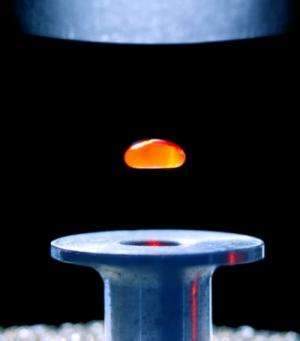
Levitated malaria-infected red blood cells, ready for laser diagnosis.

Light, together with artificial intelligence systems that deliver fast, accurate analysis, has the potential to reshape the diagnosis and treatment of disease.

Dr Bayden Wood, of Monash University's School of Chemistry, is focusing on new ways to detect and analyse malaria, heart disease and cancer. The significance of this major project has been recognised by the Australian Research Council, which has awarded Dr Wood a Future Fellowship to support his work.

"It's all based on using light as a diagnostic tool in medicine," Dr Wood said.

"It combines cutting-edge technology and very high-powered computing systems. The diagnosis ultimately is made by a machine, so it is non-subjective."

Working with national and international collaborators, he is developing the use of infrared and laser light, and state-of-the-art spectroscopic instrumentation including the infrared beamline at the Australian Synchrotron, to detect the early presence of disease.

Malaria, for example, can be detected in blood at the initial stages of the parasite's life cycle by the way it scatters light.

Dr Wood wants to use only tiny amounts of blood for analysis and is investigating ways of using acoustic levitation to hold in space as they are analysed by laser. This sci-fi-sounding approach has the very practical benefit of providing a container-less environment in which lasers have access to the entire cell, with potential going beyond malaria diagnosis.

Another approach, this time reminiscent of Dr McCoy's tricorder in Star Trek, would involve passing a hand-held spectrometer over someone's skin.

"We would essentially be using light to go through the skin to diagnose the parasites," Dr Wood said.

By eliminating the need for , this would make diagnosing children easier, and reduce risks for health workers in areas with high rates of AIDS.

Such an approach could not be used for most cancers or heart disease, where tissue samples would be needed. But spectroscopy still offers many potential advantages: it is so sensitive to chemical cell changes that it can detect the cell changes that precede visible indications of cancer, allowing for earlier diagnosis. Greater accuracy in grading tumours and establishing surgical boundaries is another possibility with technology that gives resolution at the single-cell level.

Light also has potential use in determining the status of atherosclerotic plaques in valves and arteries, providing better information about when to operate on heart-disease patients.

Developing the complex algorithms and huge databases necessary for high-powered artificial intelligence systems that can recognise the spectral patterns indicating disease is another part of Dr Wood's research.

Results would be fed into the system for accurate analysis that would avoid such problems as human fatigue.

The network is being designed to improve with time.

"New data adds to the previous data so the system is self-evolving," Dr Wood said.

"It is all high-speed, rapid automated diagnosis that is removed from human subjectivity, and can be done anywhere in the world."

Commercialisation of his ideas depends on further research, and clinical studies.

Provided by Monash University search and more info website

4.5 /5 (4 votes)  

Rank 4.5 /5 (4 votes)
Relevant PhysicsForums posts

More news stories

H. pylori, smoking trends, and gastric cancer in US men

Trends in Helicobacter pylori (H. pylori) and smoking explain a significant proportion of the decline of intestinal-type noncardia gastric adenocarcinoma (NCGA) incidence in US men between 1978 and 2008, and are estimated ...

Medical research created 8 hours ago | popularity not rated yet | comments 0

Common food supplement fights degenerative brain disorders

Widely available in pharmacies and health stores, phosphatidylserine is a natural food supplement produced from beef, oysters, and soy. Proven to improve cognition and slow memory loss, it's a popular treatment for older ...

Medical research created 12 hours ago | popularity 5 / 5 (2) | comments 0 | with audio podcast

Finding a family for a pair of orphan receptors in the brain

Researchers at Emory University have identified a protein that stimulates a pair of "orphan receptors" found in the brain, solving a long-standing biological puzzle and possibly leading to future treatments for neurological ...

Medical research created 13 hours ago | popularity 5 / 5 (1) | comments 0 | with audio podcast

Insight into the dazzling impact of insulin in cells

Australian scientists have charted the path of insulin action in cells in precise detail like never before. This provides a comprehensive blueprint for understanding what goes wrong in diabetes.

Medical research created 13 hours ago | popularity 4.5 / 5 (6) | comments 0 | with audio podcast

Do men's and women's hearts burn fuel differently?

Researchers at the University of Illinois at Chicago College of Medicine will study gender differences in how the heart uses and stores fat—its main energy source—and how changes in fat metabolism play ...

Medical research created 16 hours ago | popularity not rated yet | comments 0


If you can remember it, you can remember it wrong

(Medical Xpress)—Native peoples in regions where cameras are uncommon sometimes react with caution when their picture is taken. The fear that something must have been stolen from them to create the photo ...

B vitamins could delay dementia

(Medical Xpress)—Despite spending billions of dollars on research and development, drug companies have been unable to come up with effective treatments for dementia and Alzheimer's Disease (AD). Now, A. ...

New sleeping pill poised to hit US markets

An experimental sleeping pill from US drug company Merck is effective at helping people fall and stay asleep, according to reviewers at the US Food and Drug Administration, which could soon approve the new drug.

Reducing caloric intake delays nerve cell loss

Activating an enzyme known to play a role in the anti-aging benefits of calorie restriction delays the loss of brain cells and preserves cognitive function in mice, according to a study published in the May ...

Antidepressant reduces stress-induced heart condition

A drug commonly used to treat depression and anxiety may improve a stress-related heart condition in people with stable coronary heart disease, according to researchers at Duke Medicine.

Drugs found to both prevent and treat Alzheimer's disease in mice

Researchers at USC have found that a class of pharmaceuticals can both prevent and treat Alzheimer's Disease in mice.