Proscar won't boost prostate cancer survival, study finds
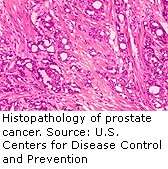
(HealthDay)—Men with prostate cancer taking the drug finasteride (Proscar) don't survive longer than similar men not taking the drug, a new study finds.
Although Proscar is touted to reduce the odds of being diagnosed with prostate cancer, once diagnosed, men do not appear to gain a benefit from the drug, researchers say.
However, they don't face lowered survival from the drug, a researcher added.
"There is no evidence that finasteride is worse than placebo, in terms of overall survival," said lead author Phyllis Goodman, a biostatistician at the Fred Hutchinson Cancer Research Center, in Seattle.
"If you are inclined to give finasteride to prevent cancer, survival shouldn't be a reason not to do it," she said. "You may not be improving survival in the long run, but you are avoiding having to deal with a diagnosis of prostate cancer."
Based on the new finding, one expert doesn't recommend men take Proscar.
"This lessens the importance of finasteride, because if you wanted to use it as a preventive measure you hope the death rate would go down," said Dr. Anthony D'Amico, chief of genitourinary radiation oncology at Brigham and Women's Hospital, in Boston.
One problem with the study is that it deals with overall deaths—not deaths specifically caused by prostate cancer. So it's hard to tell how effective Proscar really is, D'Amico said.
"Without a survival improvement it's hard to justify using the drug," he said. "Let me see what the cancer-specific survival looks like and then we can decide if it's appropriate at all."
The results of the study were presented Thursday at the annual Genitourinary Cancers Symposium in Orlando, Fla. The data and conclusions should be viewed as preliminary until published in a peer-reviewed journal.
For the U.S. National Cancer Institute-funded study, researchers collected data on deaths of men taking Proscar or an inactive placebo who were located in a Social Security database of deaths.
The investigators found that among 18,000 men who had been taking Proscar for seven years, there were more than 5,000 deaths. Of these, 2,584 deaths were among men taking Proscar and 2,544 deaths were among men taking placebo.
Over 15 years of follow-up, the survival rate was 78 percent for men in both groups, the study found.
Although men suffering from the most aggressive prostate cancers saw no benefit from Proscar, men with less aggressive cancer taking the drug did have a significant survival advantage, compared to men receiving placebo, the researchers found.
In 2011, the U.S. Food and Drug Administration placed a black-box warning on Proscar for a slight but statistically significant risk that its use could cause aggressive prostate cancer. The drug has several side effects including impotence and loss of interest in sex.
In the new study, the bottom line for the researchers is that "finasteride administration for seven years does not appear to affect mortality but significantly reduces the risk of a prostate cancer diagnosis."
Another expert gave his perspective on the drug.
"At this point, I think that the data is showing that the drug may not be of any significance to patients," said Dr. Louis Kavoussi, chairman of urology at North Shore-LIJ Arthur Smith Institute for Urology in New Hyde Park, N.Y.
However, Proscar may slow the progression of prostate cancer, he said.
"There are individuals who may benefit from being put on this drug and may rest a little bit easier at night knowing that it may not have a negative outcome on their long-term survival," Kavoussi said.
More information: To learn more about prostate cancer, visit the American Cancer Society.
Health News Copyright © 2013 HealthDay. All rights reserved.


