Video capsule accurately detects intestinal blood
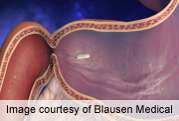
Video capsule endoscopy can be safely and accurately used to detect blood in patients with acute upper gastrointestinal hemorrhage seen in emergency departments, according to a study published online Feb. 11 in the Annals of Emergency Medicine.
(HealthDay)—Video capsule endoscopy can be safely and accurately used to detect blood in patients with acute upper gastrointestinal hemorrhage seen in emergency departments, according to a study published online Feb. 11 in the Annals of Emergency Medicine.
To see if video capsule endoscopy could be accurately used to diagnose gastrointestinal hemorrhage in an emergency department setting, Andrew C. Meltzer, M.D., from George Washington University in Washington, D.C., and colleagues performed video capsule endoscopy in 25 patients with acute upper gastrointestinal hemorrhage.
The researchers found that blinded gastroenterologists and emergency physicians were in strong agreement for the presence of fresh or coffee-ground blood (0.96 overall agreement; κ = 0.90). The procedure was well tolerated by 96 percent of patients. Capsule endoscopy had 88 percent sensitivity and 64 percent specificity for the detection of fresh blood compared with esophagogastroduodenoscopy, which had also been performed in 19 patients.
"We have demonstrated that video capsule endoscopy has promising test characteristics compared with traditional esophagoduodenoscopy for diagnosing the presence or absence of upper gastrointestinal bleeding," Meltzer and colleagues conclude.
Two authors are consultants for Given Imaging, the manufacturer of the Pillcam Eso used in the study. Given also awarded grant money to the authors' institution to conduct the study.
More information: Abstract
Full Text (subscription or payment may be required)
Journal reference:
Annals of Emergency Medicine
Health News Copyright © 2013 HealthDay. All rights reserved.
-
Capsule endoscopy turning up undiagnosed cases of Crohn's disease
Oct 16, 2007 |
not rated yet |
0
-
Safety study of capsule endoscopy in patients with implantable cardiac devices finds no interference
Oct 26, 2009 |
not rated yet |
0
-
Capsule endoscopy diagnoses more Crohn's disease recurrence after surgery than colonoscopy
Sep 26, 2007 |
not rated yet |
0
-
Endoscopy may not be necessary in asymptomatic children after caustic ingestion
Sep 26, 2008 |
not rated yet |
0
-
Complications after endoscopies may be underestimated using standard reporting procedures
Oct 25, 2010 |
not rated yet |
0
-
Motion perception revisited: High Phi effect challenges established motion perception assumptions
Apr 23, 2013 |
3 / 5 (2) |
2
-
Anything you can do I can do better: Neuromolecular foundations of the superiority illusion (Update)
Apr 02, 2013 |
4.5 / 5 (11) |
5
-
The visual system as economist: Neural resource allocation in visual adaptation
Mar 30, 2013 |
5 / 5 (2) |
9
-
Separate lives: Neuronal and organismal lifespans decoupled
Mar 27, 2013 |
4.9 / 5 (8) |
0
-
Sizing things up: The evolutionary neurobiology of scale invariance
Feb 28, 2013 |
4.8 / 5 (10) |
14
-
Classical and Quantum Mechanics via Lie algebras
Apr 15, 2011
- More from Physics Forums - Independent Research
More news stories
ACP issues recommendations for management of high blood glucose in hospitalized patients
High blood glucose is associated with poor outcomes in hospitalized patients, and use of intensive insulin therapy (IIT) to control hyperglycemia is a common practice in hospitals. But the recent evidence does not show a ...
Other
May 24, 2013 |
4 / 5 (1) |
0
Future doctors unaware of their obesity bias
Two out of five medical students have an unconscious bias against obese people, according to a new study by researchers at Wake Forest Baptist Medical Center. The study is published online ahead of print in the Journal of ...
Other
May 23, 2013 |
not rated yet |
0
Plastic realistic: Medical students to use plastinated human bodies for anatomy learning
Nanyang Technological University's (NTU) new medical school will be pioneering the use of plastinated bodies for medical education in Singapore.
Other
May 23, 2013 |
not rated yet |
0
Survey points out deficiencies in addictions training for medical residents
A 2012 survey of internal medicine residents at Massachusetts General Hospital (MGH) – one of the nation's leading teaching hospitals – found that more than half rated the training they had received in addiction and other ...
Other
May 22, 2013 |
5 / 5 (1) |
0
Early use of tracheostomy for mechanically ventilated patients not associated with improved survival
For critically ill patients receiving mechanical ventilation, early tracheostomy (within the first 4 days after admission) was not associated with an improvement in the risk of death within 30 days compared to patients who ...
Other
May 21, 2013 |
not rated yet |
0
Engineered cytomegalovirus protects monkeys from HIV equivalent
(Medical Xpress)—A new study by researchers in the US has shown that an ancient virus can be modified to help in the fight against the simian immunodeficiency virus SIV, which is the equivalent in monkeys ...
Researchers identify first drug targets in childhood genetic tumor disorder
Two mutations central to the development of infantile myofibromatosis (IM)—a disorder characterized by multiple tumors involving the skin, bone, and soft tissue—may provide new therapeutic targets, according to researchers ...
Hormone levels may provide key to understanding psychological disorders in women
Women at a particular stage in their monthly menstrual cycle may be more vulnerable to some of the psychological side-effects associated with stressful experiences, according to a study from UCL.
Going live: Immune cell activation in multiple sclerosis
Biological processes are generally based on events at the molecular and cellular level. To understand what happens in the course of infections, diseases or normal bodily functions, scientists would need to ...
Help at hand for people with schizophrenia
How can healthy people who hear voices help schizophrenics? Finding the answer for this is at the centre of research conducted at the University of Bergen.
Alzheimer's disease, the soft target of the euthanasia debate
(Medical Xpress)—The way Alzheimer's disease is portrayed by advocacy groups and the media is having undue influence on the euthanasia debate, according to a Deakin University nursing ethics professor.