Man dies after parasitic worms invade lungs
March 20, 2013 by Randy Dotinga, Healthday Reporter in Diseases, Conditions, Syndromes

Man dies after parasitic worms invade lungs

Steroid treatment for inflammatory disorder may have spurred 'hyperinfection,' report says.

(HealthDay)—A Vietnamese immigrant in California died of a massive infection with parasitic worms that spread throughout his body, including his lungs. They had remained dormant until his immune system was suppressed by steroid drugs used to treat an inflammatory disorder, according to the report.

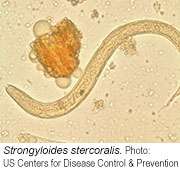
The 65-year-old man was apparently infected by the in Vietnam, one of many countries in the world where they're known to infect humans. About 80 percent to 90 percent of people die if they are infected by the worm species and then suffer from so-called "hyperinfection" as the worms travel through their bodies, said report co-author Dr. Niaz Banaei, an assistant professor of at Stanford University School of Medicine.

The man's case emphasizes the importance of testing patients who might be infected with the parasite before giving them drugs to dampen the immune system, said Dr. Peter Hotez, dean of the National School of at Baylor College of Medicine, who's familiar with the report findings.

"You have to think twice before starting big doses of steroids," Hotez said. "The problem is that most physicians are not taught about this disease. It often does not get recognized until it's too late."

of the Strongyloides stercoralis species are most commonly found in tropical and of the world, although they've also appeared in the Appalachian region of the United States. Typically, they infect people in rural areas such as Brazil, northern Argentina and , Hotez noted, and may currently infect as many 100 million people worldwide.

The worms live in the ground or water, typically in places with , and infect humans by penetrating the skin. They may live in the intestines for years or even decades, creating new larvae that grow into worms about 2 millimeters long, Hotez explained.

For the patient in this case, trouble came when he took steroids, which dampen the immune system, to treat "giant-cell arteritis," a disorder that causes inflammation of arteries of the scalp, neck and arms. The drugs appeared to have allowed the worms to grow and spread because they were no longer kept in check.

Exams uncovered a massive lung infection, report co-author Banaei noted. "The adult worms were producing eggs, and the larvae emerging from the eggs were invading the intestinal wall and disseminating to multiple organs in the body," Banaei said.

When this happens, Baylor's Hotez said, hundreds of thousands of larvae can transmit bacteria from the intestines into other parts of the body.

A medication can help treat infestation with the worms, but it doesn't help when the hyperinfection reaches an advanced stage, he said.

What should be done? In cases where patients come from a region of the world where the worms are common, Hotez suggested that physicians consider that they may be infected and screen them for the worms. That may be difficult though, because multiple fecal tests may be necessary, he said, and another kind of test has limited value in terms of detecting cases.

The study findings are published in the March 21 issue of the New England Journal of Medicine.

More information: For more about the worm species Strongyloides stercoralis, visit the University of Michigan.

Journal reference: New England Journal of Medicine search and more info website

Health News Copyright © 2013 HealthDay. All rights reserved.

5 /5 (2 votes)  

Rank 5 /5 (2 votes)
Related Stories
Relevant PhysicsForums posts

More news stories

Researchers find genetic risk factor for pulmonary fibrosis

A paper recently published in the New England Journal of Medicine and co-written by physicians and scientists at the University of Colorado School of Medicine finds that an important genetic risk factor for pulmonary fibros ...

Diseases, Conditions, Syndromes created 5 hours ago | popularity not rated yet | comments 0

Biomarkers discovered for inflammatory bowel disease

Using the Department of Defense Serum Repository (DoDSR), University of Cincinnati (UC) researchers have identified a number of biomarkers for inflammatory bowel disease (IBD), which could help with earlier diagnosis and ...

Diseases, Conditions, Syndromes created 5 hours ago | popularity not rated yet | comments 0

CDC says high number of public pools contain microbes

(HealthDay)—Three-quarters of public schools in the metro Atlanta area contain microbes, including bacteria indicating the presence of fecal matter, according to research published in the May 17 issue of ...

Diseases, Conditions, Syndromes created 6 hours ago | popularity not rated yet | comments 0

Study examines outbreak of spinal infections in Michigan

(HealthDay)—Factors such as increased case finding may explain why Michigan had half of the total spinal infections associated with contaminated methylprednisolone acetate in the recent fungal meningitis ...

Diseases, Conditions, Syndromes created 6 hours ago | popularity not rated yet | comments 0

World not ready for mass flu outbreak, WHO says

The world is unprepared for a massive virus outbreak, the deputy chief of the World Health Organization warned Tuesday, amid fears that H7N9 bird flu striking China could morph into a form that spreads easily among people.

Diseases, Conditions, Syndromes created 6 hours ago | popularity not rated yet | comments 0


If you can remember it, you can remember it wrong

(Medical Xpress)—Native peoples in regions where cameras are uncommon sometimes react with caution when their picture is taken. The fear that something must have been stolen from them to create the photo ...

B vitamins could delay dementia

(Medical Xpress)—Despite spending billions of dollars on research and development, drug companies have been unable to come up with effective treatments for dementia and Alzheimer's Disease (AD). Now, A. ...

New sleeping pill poised to hit US markets

An experimental sleeping pill from US drug company Merck is effective at helping people fall and stay asleep, according to reviewers at the US Food and Drug Administration, which could soon approve the new drug.

Reducing caloric intake delays nerve cell loss

Activating an enzyme known to play a role in the anti-aging benefits of calorie restriction delays the loss of brain cells and preserves cognitive function in mice, according to a study published in the May ...

Insight into the dazzling impact of insulin in cells

Australian scientists have charted the path of insulin action in cells in precise detail like never before. This provides a comprehensive blueprint for understanding what goes wrong in diabetes.

Antidepressant reduces stress-induced heart condition

A drug commonly used to treat depression and anxiety may improve a stress-related heart condition in people with stable coronary heart disease, according to researchers at Duke Medicine.