People with type 1 diabetes at risk of thyroid disease
(HealthDay)—People who have type 1 diabetes are more likely than others to develop an autoimmune thyroid condition.
Though estimates vary, the rate of thyroid disease—either under- or overactive thyroid—may be as high as 30 percent in people with type 1 diabetes, according to Dr. Betul Hatipoglu, an endocrinologist with the Cleveland Clinic in Ohio. And the odds are especially high for women, whether they have diabetes or not, she said, noting that women are eight times more likely than men to develop thyroid disease.
"I tell my patients thyroid disease and type 1 diabetes are sister diseases, like branches of a tree," she said. "Each is different, but the root is the same. And, that root is autoimmunity, where the immune system is attacking your own healthy endocrine parts."
Hatipoglu also noted that autoimmune diseases often run in families. A grandparent may have had thyroid problems, while an offspring may develop type 1 diabetes.
"People who have one autoimmune disease are at risk for another," explained Dr. Lowell Schmeltz, an endocrinologist and assistant professor at the Oakland University-William Beaumont School of Medicine in Royal Oak, Mich.
"There's some genetic risk that links these autoimmune conditions, but we don't know what environmental triggers make them activate," he explained, adding that the antibodies from the immune system that destroy the healthy tissue are different in type 1 diabetes than in autoimmune thyroid disease.
Hatipoglu said that people with type 1 diabetes are also more prone to celiac disease, another autoimmune condition.
Type 1 diabetes occurs when the immune system mistakenly attacks the insulin-producing cells in the pancreas, destroying them. Insulin is a hormone that's necessary for the metabolism of carbohydrates in foods. Without enough insulin, blood sugar levels can skyrocket, leading to serious complications or death. People who have type 1 diabetes have to replace the lost insulin, using shots of insulin or an insulin pump with a tube inserted under the skin. Too much insulin, however, can also cause a dangerous condition called hypoglycemia, which occurs when blood sugar levels drop too low.
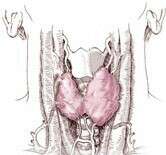
The thyroid is a small gland that produces thyroid hormone, which is essential for many aspects of the body's metabolism.
Most of the time, people with type 1 diabetes will develop an underactive thyroid, a condition called Hashimoto's disease. About 10 percent of the time, Schmeltz said, the thyroid issue is an overactive thyroid, called Graves' disease.
In general, people develop type 1 diabetes and then develop thyroid problems at some point in the future, said Hatipoglu. However, with more people being diagnosed with type 1 diabetes in their 30s, 40s and 50s, Schmeltz said, it's quite possible that thyroid disease can come first.
Thyroid problems are often diagnosed through routine annual blood tests, according to both experts.
Untreated thyroid problems can affect blood sugar levels in people with type 1 diabetes. "If I see someone having a lot of trouble controlling their blood sugars, it could be the thyroid," noted Hatipoglu.
"People who are diagnosed with type 1 diabetes often work very hard to control their blood sugar, but if they're not aware of an underactive thyroid, they may have a lot of unexplained low blood sugars," she said. "If someone is hyperthyroid, they may have unexplained high blood sugars."
Sometimes people with type 1 diabetes gain weight from taking insulin, but unexplained weight gain can also be due to an underactive thyroid.
"People really need to be aware that if you have one of these conditions, you're at risk of the other," Schmeltz said. "And, symptoms aren't always so obvious. Someone might be tired a lot and think it's because of diabetes, and they end up ignoring thyroid symptoms."
He said the classic symptoms of an underactive thyroid are decreased energy, hair loss, inappropriate weight gain, feeling cold, constipation, dry skin, heavy periods and difficulty concentrating. Some of the symptoms also overlap with a diagnosis of depression.
Symptoms of an overactive thyroid, which are often mistaken for other conditions, include trouble concentrating, heat intolerance, frequent bowel movements, excessive sweating, increased appetite, unexpected weight loss, restlessness, a visible lump in the throat (goiter), nervousness and irregular menstrual periods, according to the U.S. National Library of Medicine.
Autoimmune thyroid disease is usually managed with a daily pill, according to Schmeltz. Hatipoglu said it's important to try to take this pill at the same time every day and to not eat for about 45 minutes after taking it. She said she tells her patients to take the pill before breakfast, or at night before bed if they have to get out the door quickly in the morning. "Take it when you know you can take it in the same way every day," she said.
Hatipoglu also pointed out that autoimmune thyroid disease can be episodic in the beginning.
"It's like a volcano erupting," she said. "It can happen on and off as the thyroid is being damaged by the immune system. One day it will be totally destroyed, but until you come to that point, it may come and go—for how long depends on the individual. For some it's months. For some it can be decades."
More information: The Endocrine Society has more on thyroid diseases.
For more on thyroid disease and diabetes, read about one woman's story.
Health News Copyright © 2013 HealthDay. All rights reserved.


