What you eat before surgery may affect your recovery
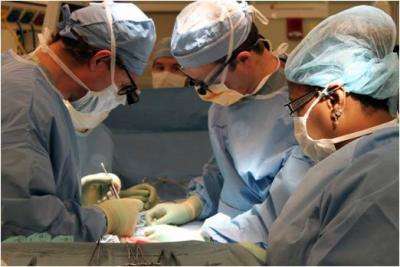
According to a new study, the last few meals before surgery might make a difference in recovery after surgery. Fat tissue is one of the most dominant components that make up the body, and fat tissue is always traumatized during major surgery.
Researchers at Brigham and Women's Hospital (BWH) found that this direct trauma greatly impacts the chemical balance of fat tissue—chemicals that are known to communicate with nearby and distant organs. In the study, mice that consumed a typical Western, high-fat diet showed an exaggerated imbalanced response. Importantly, restricting food intake to a lower-fat diet just a few weeks before surgery reduced the imbalance back toward a more normal response.
The study is published in the April 2013 issue of Surgery.
Senior study author C. Keith Ozaki, MD, Director of BWH Vascular Surgery Research, and colleagues measured how fat responds to surgery and whether restricting calorie intake before surgery changed how the fat tissue responded to typical trauma that usually occurs during an operation.
"Surgeons have learned that generally minimizing trauma accelerates patient recovery from surgery," noted Ozaki. "While we do this well for specific organs such as the heart, blood vessels, liver, and so forth, we historically have paid little attention to the fat that we cut through to expose these organs. Our findings challenge us all to learn more about how fat responds to trauma, what factors impact this response, and how fat's response is linked to the outcome of individual patients."
Researchers fed one group of mice a high-fat diet (containing 60 percent calories from fat), while a control group was given a more normal diet (containing 10 percent calories from fat).
Three weeks before surgery, researchers switched some of the high-fat diet mice to the normal diet. During surgery, the researchers performed procedures that would occur during a typical operation and observed that such surgical trauma rapidly affected the fat tissues located both near and away from the trauma site. This resulted in increased inflammation and decreased specialized fat hormone synthesis, especially in the young adult mice and those that had a simulated wound infection.
However, reducing food intake before surgery tended to reverse these activities for all mice age groups, even in the setting of the simulated infection. The results suggest that while fat is a very dominant tissue in the human body, its ability to rapidly change might be leveraged to lessen complications in humans during stressful situations such as surgery.
In an accompanying review article composed with key collaborator James Mitchell, PhD, assistant professor of Genetics and Complex Diseases, Harvard School of Public Health, the researchers suggest that restricting diet in humans before surgery provides a unique opportunity to test whether this method will decrease the incidence and severity of surgical complications brought on by over-exuberant inflammation and other stressors.
Simply cutting out certain dietary elements (without malnutrition) may be a feasible, inexpensive and effective way of protecting the body against stress from an operation. In the review article, the researchers specifically point to further studying this method in patients undergoing vascular surgery, a population that faces increased risks of surgical complications such as wound-healing problems, heart attack and stroke.
"The relationship between surgical outcomes and obesity has always been complex," said Ozaki. "Our results and those of others highlight that the quality of your fat tissues appears to be important, along with the total amount of body fat when it comes to the body's response to an operation."


