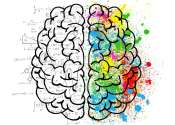
How the brain assigns objects to categories
The human brain is adept at recognizing similar items and placing them into categories for example, dog versus cat, or chair versus table. In a new study, MIT neuroscientists have identified the brain ...
Neuroscience
Jul 28, 2011 |
4.6 / 5 (11) |
6
|
Brains of addicts are inherently abnormal: study (Update)
(Medical Xpress) -- Researchers funded by the Medical Research Council (MRC) at the University of Cambridge have identified a brain abnormality which is found in drug-dependent individuals as well as their ...
Neuroscience
Feb 02, 2012 |
4.8 / 5 (8) |
2
|
'Strikingly similar' brains of man and fly may aid mental health research
A new study by scientists at King's College London and the University of Arizona (UA) published in Science reveals the deep similarities in how the brain regulates behaviour in arthropods (such as flies ...
Neuroscience
Apr 11, 2013 |
4.8 / 5 (6) |
1
|
In the brain, winning is everywhere
Winning may not be the only thing, but the human brain devotes a lot of resources to the outcome of games, a new study by Yale researchers suggest.
Neuroscience
Oct 05, 2011 |
5 / 5 (5) |
2
|
Game of Japanese chess reveals how experts develop their capacity for rapid problem-solving
(Medical Xpress)—The superior capability of experts to rapidly solve problems depends largely on their intuition, and it has long been known that this is related to experience and training. Although many ...
Neuroscience
Mar 22, 2013 |
5 / 5 (5) |
0
|
Genome-wide atlas of gene enhancers in the brain online
Future research into the underlying causes of neurological disorders such as autism, epilepsy and schizophrenia, should greatly benefit from a first-of-its-kind atlas of gene-enhancers in the cerebrum (telencephalon). ...
Genetics
Jan 31, 2013 |
4.6 / 5 (5) |
0
|
Songbirds' learning hub in brain offers insight into motor control
To learn its signature melody, the male songbird uses a trial-and-error process to mimic the song of its father, singing the tune over and over again, hundreds of times a day, making subtle changes in the pitch of the notes. ...
Neuroscience
May 20, 2012 |
5 / 5 (4) |
0
|
Stem cells hint at potential treatment for Huntington's disease
Huntington's disease, the debilitating congenital neurological disorder that progressively robs patients of muscle coordination and cognitive ability, is a condition without effective treatment, a slow death ...
Neuroscience
Mar 15, 2012 |
5 / 5 (3) |
0
|
Positive feedback in the developing brain
(Medical Xpress) -- When an animal is born, its early experiences help map out the still-forming connections in its brain. As neurons in sensory areas of the brain fire in response to sights, smells, and sounds, ...
Neuroscience
May 16, 2012 |
4.7 / 5 (3) |
0
|
New study to test unusual hypothesis on beta brainwaves
Beta oscillations are tightly linked to Parkinson's disease and the ability to process sensory information, such as touch. Two neuroscientists have brought their collaboration to Brown University and won funding from the ...
Neuroscience
Nov 28, 2011 |
5 / 5 (2) |
0
Methylphenidate 'normalizes' activation in key brain areas in kids with ADHD
The stimulant drug methylphenidate "normalizes" activation of several brain areas in young patients with attention-deficit/hyperactivity disorder (ADHD), according to a review published in the May Harvard Review of Psychiatry. ...
Attention deficit disorders
May 09, 2013 |
5 / 5 (2) |
0
When good habits go bad: Neuroscientist seeks roots of obsessive behavior, motion disorders
Learning, memory and habits are encoded in the strength of connections between neurons in the brain, the synapses. These connections aren't meant to be fixed, they're changeable, or plastic.
Autism spectrum disorders
Feb 16, 2013 |
4.5 / 5 (2) |
0
Uncovering the source of inflammatory malaise
(Medical Xpress)—A study conducted by researchers at Emory indicates that inflammation targets a part of the brain called the basal ganglia, causing symptoms of depression and fatigue. The study was recently ...
Psychology & Psychiatry
Oct 22, 2012 |
5 / 5 (1) |
0
|
Exploring the brain's relationship to habits
(Medical Xpress)—The basal ganglia, structures deep in the forebrain already known to control voluntary movements, also may play a critical role in how people form habits, both bad and good, and in influencing ...
Neuroscience
Jan 15, 2013 |
5 / 5 (1) |
0
|