Study reveals how melanoma evades chemotherapy
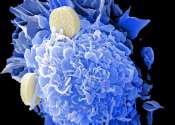
Nitric oxide (NO), a gas with many biological functions in healthy cells, can also help some cancer cells survive chemotherapy. A new study from MIT reveals one way in which this resistance may arise, and ...
Cancer
Apr 08, 2013 |
5 / 5 (1) |
0
|
Brain-building gene plays key role in gut repair
(Medical Xpress)—A gene with a colorful name – mindbomb 1 – plays a key role far beyond the brain. New research at Washington University School of Medicine in St. Louis shows that mindbomb 1 may be ...
Genetics
Apr 05, 2013 |
4.5 / 5 (2) |
0
|
Mitochondrial metabolic regulator SIRT4 guards against DNA damage
(Medical Xpress)—Healthy cells don't just happen. As they grow and divide, they need checks and balances to ensure they function properly while adapting to changing conditions around them.
Cancer
Apr 05, 2013 |
5 / 5 (4) |
2
|
Researchers say one specific microrna promotes tumor growth and cancer spread
Researchers at Moffitt Cancer Center have determined that the overexpression of microRNA-155 (miR-155), a short, single strand of ribonucleic acid encoded by the miR-155 host gene, promotes the growth of blood vessels in ...
Cancer
Apr 03, 2013 |
5 / 5 (1) |
0
|
Landmark study describes prostate cancer metastasis switch
Prostate cancer doesn't kill in the prostate – it's only once the disease travels to bone, lung, liver, etc. that it turns fatal. Previous studies have shown that loss of the protein E-Cadherin is essential for this metastasis. ...
Cancer
Apr 02, 2013 |
5 / 5 (2) |
0
|
Researchers see more realistic tumor growth and response to anti-cancer drugs using polymer scaffolds
(Medical Xpress)—Porous polymer scaffolds fabricated to support the growth of biological tissue for implantation may hold the potential to greatly accelerate the development of cancer therapeutics.
Cancer
Apr 02, 2013 |
3 / 5 (1) |
0
|
Loss of tumor suppressor SPOP releases cancer potential of SRC-3
Mutations in a protein called SPOP (speckle-type POZ protein) disarm it, allowing another protein called steroid receptor coactivator-3 (SRC-3) to encourage the proliferation and spread of prostate cancer cells, said researchers ...
Cancer
Apr 01, 2013 |
5 / 5 (1) |
0
|
The metabolic weathervane of cancer
Highly expressed in various cancers and known for its cytoprotective properties, TRAP1 protein has been identified as a potential target for antitumor treatments. As a result of the research conducted by Len Neckers, from ...
Cancer
Apr 01, 2013 |
not rated yet |
0
|
Researchers successfully map fountain of youth
In collaboration with an international research team, University of Copenhagen researchers have for the first time mapped telomerase, an enzyme which has a kind of rejuvenating effect on normal cell ageing. The findings have ...
Genetics
Mar 27, 2013 |
5 / 5 (2) |
0
|
New research looks at novel ways to combat drug resistance
University of Southampton biological scientists are leading a major research project aimed at making drugs more effective.
Medical research
Mar 27, 2013 |
5 / 5 (1) |
0
Ganetespib shows potency against ALK-positive lung cancer and overcomes crizotinib resistance
A drug that indirectly impairs the function of several cancer-driving proteins, including anaplastic lymphoma kinase (ALK), may be an effective new treatment for patients with ALK—positive non-small cell lung cancer.
Cancer
Mar 26, 2013 |
not rated yet |
0
Storming the gates: Study probes how pancreatic cancers metastasize
Researchers at the University of North Carolina at Chapel Hill have discovered that a protein found in the cells surrounding pancreatic cancers play a role in the spread of the disease to other parts of the ...
Cancer
Mar 25, 2013 |
not rated yet |
0
|
Study underlines potential of new technology to diagnose disease
Researchers at The Scripps Research Institute (TSRI) in Jupiter, FL, have developed cutting-edge technology that can successfully screen human blood for disease markers. This tool may hold the key to better diagnosing and ...
Medical research
Mar 21, 2013 |
5 / 5 (1) |
0
|
Insights into the immune system, from the fates of individual T cells
By charting the differing fates of individual T cells, researchers have shown that previously unpredictable aspects of the adaptive immune response can be effectively modeled. The crucial question: What determines ...
Medical research
Mar 20, 2013 |
5 / 5 (2) |
0
|
Tiny implants signal new way to treat cancer tumors
Cancer patients could be treated more effectively in future with tiny, sensory implants that will monitor tumours in real time and in great detail.
Cancer
Mar 14, 2013 |
not rated yet |
0