Medications
Circadian rhythms can influence drugs' effectiveness
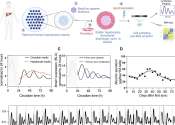
Giving drugs at different times of day could significantly affect how they are metabolized in the liver, according to a new study from MIT.
16 hours ago
0
59
Giving drugs at different times of day could significantly affect how they are metabolized in the liver, according to a new study from MIT.
16 hours ago
0
59
Sleep is as essential to our health as food and water. It is important to a number of brain functions, including how nerve cells communicate with each other. We sleep for a third of our lives and there are many restorative ...
Mar 14, 2024
0
1

Problems with our sleep and internal body clock can trigger or worsen a range of psychiatric disorders, according to a new review of recent research evidence.
Feb 19, 2024
0
77

A recent study from the laboratory of Joseph Bass, MD, Ph.D., the Charles F. Kettering Professor of Medicine and chief of Endocrinology in the Department of Medicine, has revealed how transcription factors within individual ...
Jan 31, 2024
0
34

A new study has found that the circadian clock—which synchronizes physiological and cellular activities with the day-night cycle and is generally thought to be tumor suppressive—in fact has a contextually variable role ...
Jan 24, 2024
0
10

All life on Earth is affected by the day-night cycle resulting from the planet's rotation. In line with this, humans are naturally awake during daylight hours, and sleep at night when it is dark. Being awake during the day ...
Jan 17, 2024
0
4

New research indicates that the eating disorder anorexia nervosa is associated with being an early riser, unlike many other disorders that tend to be evening-based such as depression, binge eating disorder and schizophrenia.
Jan 4, 2024
0
53

Scientists at the Johns Hopkins University School of Medicine and the National Institutes of Health have identified a protein in the visual system of mice that appears to be key for stabilizing the body's circadian rhythms ...
Dec 27, 2023
0
33

Only recently was it discovered that amino acids, the building blocks of proteins, exist in two different forms: L- and D-forms. While all natural proteins consist exclusively of L-amino acids, the function of D-amino acids ...
Dec 21, 2023
0
19

Why are we mentally sharper at certain times of day? A study led by Jonathan Lipton MD, Ph.D., at Boston Children's Hospital spells out the relationship between circadian rhythms—the body's natural day/night cycles—and ...
Dec 19, 2023
0
182

A circadian rhythm is a roughly-24-hour cycle in the biochemical, physiological or behavioral processes of living entities, including plants, animals, fungi and cyanobacteria (see bacterial circadian rhythms). The term "circadian", coined by Franz Halberg, comes from the Latin circa, "around," and diem or dies, "day", meaning literally "approximately one day." The formal study of biological temporal rhythms such as daily, tidal, weekly, seasonal, and annual rhythms, is called chronobiology.
Circadian rhythms are endogenously generated, and can be entrained by external cues, called Zeitgebers, the primary one of which is daylight. These rhythms allow organisms to anticipate and prepare for precise and regular environmental changes.
This text uses material from Wikipedia, licensed under CC BY-SA
