News tagged with immune system
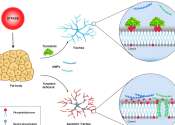
New immune system discovered
(Medical Xpress)—A research team, led by Jeremy Barr, a biology post-doctoral fellow, unveils a new immune system that protects humans and animals from infection.
Immunology
May 20, 2013 |
4.8 / 5 (21) |
8
|
Do salamanders hold the solution to regeneration?
Salamanders' immune systems are key to their remarkable ability to regrow limbs, and could also underpin their ability to regenerate spinal cords, brain tissue and even parts of their hearts, scientists have ...
Medical research
May 20, 2013 |
4.9 / 5 (7) |
4
|
Preventing blood poisoning
Peptide molecules derived from the body's natural immune system can help boost the body's defence against life-threatening blood poisoning, joint University research has uncovered.
Medical research
May 17, 2013 |
4 / 5 (1) |
0
|
New drug may help immune system fight cancer
(HealthDay)—An experimental drug that taps the power of the body's immune system to fight cancer is shrinking tumors in patients for whom other treatments have failed, an early study shows.
Cancer
May 16, 2013 |
5 / 5 (3) |
0
|
Stem-cell-based strategy boosts immune system in mice
Raising hopes for cell-based therapies, UC San Francisco researchers have created the first functioning human thymus tissue from embryonic stem cells in the laboratory. The researchers showed that, in mice, ...
Immunology
May 16, 2013 |
4.8 / 5 (5) |
0
|
Endothelium, heal thyself: A fresh look at this resilient, adaptable tissue
(Medical Xpress)—The endothelium, the cellular layer lining the body's blood vessels, is extremely resilient. Measuring just a few hundred nanometers in thickness, this super-tenuous structure routinely ...
Medical research
May 16, 2013 |
4 / 5 (2) |
1
|
Transplant experts challenge assumption, describe pathway that leads to organ rejection
Transplant researchers at the University of Pittsburgh School of Medicine challenge a long-held assumption about how biologic pathways trigger immune system rejection of donor organs in a report published online today in ...
Medical research
May 15, 2013 |
4.8 / 5 (4) |
0
|
Study identifies influenza viruses circulating in pigs and birds that could pose a risk to humans
In the summer of 1968, a new strain of influenza appeared in Hong Kong. This strain, known as H3N2, spread around the globe and eventually killed an estimated 1 million people.
Diseases, Conditions, Syndromes
May 10, 2013 |
not rated yet |
0
|
Stem cell researchers move toward treatment for rare genetic nerve disease
(Medical Xpress)—UCLA researchers at the Eli and Edythe Broad Center of Regenerative Medicine and Stem Cell Research have used induced pluripotent stem cells (iPSC) to advance disease-in-a-dish modeling of a rare genetic ...
Diseases, Conditions, Syndromes
May 10, 2013 |
5 / 5 (2) |
0
|
Engineered spider toxin could be the future of anti-venom vaccines
New engineered spider protein could be the start of a new generation of anti-venom vaccines, potentially saving thousands of lives worldwide. The new protein, created from parts of a toxin from the reaper ...
Medications
May 09, 2013 |
5 / 5 (3) |
0
|
Want tots without allergies? Try sucking on their pacifiers
(HealthDay)—A new Swedish study suggests that parents who want to protect their infants from developing allergies should try a simple approach to introducing their children to the wide world of microbes: ...
Immunology
May 06, 2013 |
4.7 / 5 (13) |
2
|
Genetic 'fine tuners' control body's own attack against cancer
(Medical Xpress)—The body's own immune system's fight against breast cancer is controlled by genetic 'fine tuners', known as microRNAs, according to a study published in Nature today.
Cancer
May 06, 2013 |
4 / 5 (3) |
1
|
Ebola's secret weapon revealed
Researchers have discovered the mechanism behind one of the Ebola virus' most dangerous attributes: its ability to disarm the adaptive immune system.
Medical research
May 02, 2013 |
5 / 5 (5) |
0
|
Study finds key protein for firing up central nervous system inflammation
Scientists have identified an influential link in a chain of events that leads to autoimmune inflammation of the central nervous system in a mouse model of multiple sclerosis (MS).
Medical research
May 02, 2013 |
5 / 5 (4) |
0
|
Scientists weaken HIV infection in immune cells using synthetic agents
HIV, the virus that causes AIDS, is notorious for hiding within certain types of cells, where it reproduces at a slowed rate and eventually gives rise to chronic inflammation, despite drug therapy. But researchers at Temple ...
HIV & AIDS
May 01, 2013 |
5 / 5 (2) |
0
|
Immune system
An immune system is a collection of biological processes within an organism that protects against disease by identifying and killing pathogens and tumour cells. It detects a wide variety of agents, from viruses to parasitic worms, and needs to distinguish them from the organism's own healthy cells and tissues in order to function properly. Detection is complicated as pathogens can evolve rapidly, producing adaptations that avoid the immune system and allow the pathogens to successfully infect their hosts.
To survive this challenge, multiple mechanisms evolved that recognize and neutralize pathogens. Even simple unicellular organisms such as bacteria possess enzyme systems that protect against viral infections. Other basic immune mechanisms evolved in ancient eukaryotes and remain in their modern descendants, such as plants, fish, reptiles, and insects. These mechanisms include antimicrobial peptides called defensins, phagocytosis, and the complement system. Vertebrates such as humans have even more sophisticated defense mechanisms. The immune systems of vertebrates consist of many types of proteins, cells, organs, and tissues, which interact in an elaborate and dynamic network. As part of this more complex immune response, the human immune system adapts over time to recognise specific pathogens more efficiently. This adaptation process is referred to as "adaptive immunity" or "acquired immunity" and creates immunological memory. Immunological memory created from a primary response to a specific pathogen, provides an enhanced response to secondary encounters with that same, specific pathogen. This process of acquired immunity is the basis of vaccination.
Disorders in the immune system can result in disease. Immunodeficiency occurs when the immune system is less active than normal, resulting in recurring and life-threatening infections. Immunodeficiency can either be the result of a genetic disease, such as severe combined immunodeficiency, or be produced by pharmaceuticals or an infection, such as the acquired immune deficiency syndrome (AIDS) that is caused by the retrovirus HIV. In contrast, autoimmune diseases result from a hyperactive immune system attacking normal tissues as if they were foreign organisms. Common autoimmune diseases include Hashimoto's Thyroiditis, rheumatoid arthritis, diabetes mellitus type 1 and lupus erythematosus. Immunology covers the study of all aspects of the immune system which has significant relevance to human health and diseases. Further investigation in this field is expected to play a serious role in promotion of health and treatment of diseases.

For more information about Immune system, read the full article at
Wikipedia.
This text uses material from Wikipedia and is available under the GNU Free Documentation License.