News tagged with mental illness
Sleep study reveals how the adolescent brain makes the transition to mature thinking
(Medical Xpress)—A new study conducted by monitoring the brain waves of sleeping adolescents has found that remarkable changes occur in the brain as it prunes away neuronal connections and makes the major ...
Neuroscience
Mar 19, 2013 |
4.8 / 5 (6) |
0
|
Mouse research links adolescent stress and severe adult mental illness
Working with mice, Johns Hopkins researchers have established a link between elevated levels of a stress hormone in adolescence—a critical time for brain development—and genetic changes that, in young adulthood, cause ...
Neuroscience
Jan 17, 2013 |
5 / 5 (5) |
3
|
Optogenetics illuminates pathways of motivation through brain, study shows
Whether you are an apple tree or an antelope, survival depends on using your energy efficiently. In a difficult or dangerous situation, the key question is whether exerting effort—sending out roots in search of nutrients ...
Neuroscience
Nov 18, 2012 |
5 / 5 (4) |
0
|
Large-scale study confirms link between creativity and mental illness
(Medical Xpress)—People in creative professions are treated more often for mental illness than the general population, there being a particularly salient connection between writing and schizophrenia. This according to researchers ...
Psychology & Psychiatry
Oct 16, 2012 |
4 / 5 (11) |
14
|
What does chronic stress in adolescence mean at the molecular level?
Chronic stress has a more powerful effect on the brain during adolescence than in adulthood and now there's proof at the molecular level, according to findings published in Neuron by University at Buffalo researchers.
Neuroscience
Mar 07, 2012 |
5 / 5 (2) |
1
|
Making memories: How one protein does it
Studying tiny bits of genetic material that control protein formation in the brain, Johns Hopkins scientists say they have new clues to how memories are made and how drugs might someday be used to stop disruptions ...
Medical research
Mar 05, 2012 |
5 / 5 (3) |
0
|
If you don't snooze, do you lose? Wake-sleep patterns affect brain synapses
An ongoing lack of sleep during adolescence could lead to more than dragging, foggy teens, a University of Wisconsin-Madison study suggests.
Neuroscience
Oct 09, 2011 |
4.6 / 5 (8) |
0
|
Top global challenges in mental health identified
Mental health experts are calling for a greater world focus on improving access to care and treatment for mental, neurological, and substance use (MNS) disorders, as well as increasing discoveries in research that will enable ...
Psychology & Psychiatry
Jul 06, 2011 |
4 / 5 (1) |
1
|
Now we know why old scizophrenia medicine works on antibiotics-resistant bacteria
In 2008 researchers from the University of Southern Denmark showed that the drug thioridazine, which has previously been used to treat schizophrenia, is also a powerful weapon against antibiotic-resistant bacteria such as ...
Medical research
May 17, 2013 |
4 / 5 (4) |
0
|
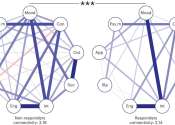
Hallmarks of psychiatric illness can reveal themselves remotely
Researchers discovered that healthy people and those with borderline personality disorder displayed different patterns of behavior while playing an online strategy game, so much so that when healthy players ...
Psychology & Psychiatry
Apr 09, 2013 |
4.3 / 5 (7) |
0
|
Research effort reveals differences in brain activity for two types of mental illness
(Medical Xpress)—Researchers in Australia have uncovered what they describe as differences in brain behavior for people diagnosed with either bipolar disorder (BP) or borderline personality disorder (BPD). ...
Psychology & Psychiatry
Apr 04, 2013 |
5 / 5 (3) |
0
|
From teens' sleeping brains, the sound of growing maturity
Listening in on the electrical currents of teenagers' brains during sleep, scientists have begun to hear the sound of growing maturity. It happens most intensively between the ages of 12 and 16 1/2: After years of frenzied ...
Neuroscience
Mar 22, 2013 |
5 / 5 (2) |
0
Evidence mounts for role of mutated genes in development of schizophrenia
Johns Hopkins researchers have identified a rare gene mutation in a single family with a high rate of schizophrenia, adding to evidence that abnormal genes play a role in the development of the disease.
Genetics
Jan 22, 2013 |
5 / 5 (1) |
0
|
New pill holds promise for fewer side effects in treating leukemia
(Medical Xpress)—An international team of researchers has developed a new anti-cancer drug that holds promise as a therapy that fights cancer while causing fewer side effects than current medicines. The ...
Cancer
Jan 07, 2013 |
5 / 5 (3) |
0
|
Can going hungry as a child slow down cognitive decline in later years?
People who sometimes went hungry as children had slower cognitive decline once they were elderly than people who always had enough food to eat, according to a new study published in the December 11, 2012, print issue of Neurology, the me ...
Neuroscience
Dec 10, 2012 |
4 / 5 (1) |
1
|
Mental disorder
A mental disorder or mental illness is a psychological or behavioral pattern that occurs in an individual and is thought to cause distress or disability that is not expected as part of normal development or culture. The recognition and understanding of mental disorders has changed over time and across cultures. Definitions, assessments, and classifications of mental disorders can vary, but guideline criteria listed in the ICD, DSM and other manuals are widely accepted by mental health professionals. Categories of diagnoses in these schemes may include dissociative disorders, mood disorders, anxiety disorders, psychotic disorders, eating disorders, developmental disorders, personality disorders, ambulatory disorders and many other categories. In many cases there is no single accepted or consistent cause of mental disorders, although they are often explained in terms of a diathesis-stress model and biopsychosocial model. Mental disorders have been found to be common, with over a third of people in most countries reporting sufficient criteria at some point in their life. Services for mental disorders may be based in hospitals or in the community. Mental health professionals diagnose individuals using different methodologies, often relying on case history and interview. Psychotherapy and psychiatric medication are two major treatment options, as well as supportive interventions and self-help. Treatment may be involuntary where legislation allows. Several movements campaign for changes to services and attitudes.
For more information about Mental disorder, read the full article at
Wikipedia.
This text uses material from Wikipedia and is available under the GNU Free Documentation License.