New cell type offers new hope

June 14, 2011 in Medical research

New cell type offers new hope

Enlarge

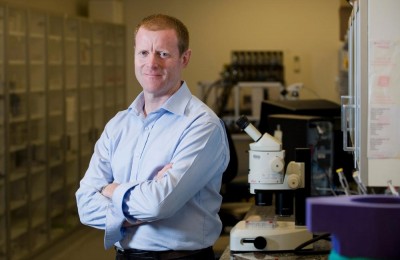
Professor Jamie Rossjohn.

(Medical Xpress) -- A team of Melbourne scientists has discovered a new type of cell in the immune system. Their findings could ultimately lead to the development of novel drugs that strengthen the immune response against particular types of infectious organisms.

The discovery, published today in the international journal , is a fundamental advance in understanding the different components of the immune system and how this system casts a net wide enough to catch all kinds of different .

It may also be significant for many other important diseases, including allergies, cancer and .

The research team includes Dr. Onisha Patel and Professor Jamie Rossjohn from Monash University, Dr. Adam Uldrich and Professor Dale Godfrey from the University of Melbourne, and Professor Mark Smyth from the Peter MacCallum Cancer Center.

Together, they have identified a new type of cell in the immune system that can specifically target lipids, or fats, found in the cell walls of bacteria, including Mycobacteria.

The new cell type, a kind of white blood cell, belongs to a family of T-cells that play a critical role in protection against infectious disease.

Typically, when the body is threatened with bacterial or viral infection, molecules called T-cell receptors interact with (called peptides) from the bacterium or virus, triggering the immune response. This process has been widely studied and leads to the killing of microbes and protection against severe infection.

While the immune system is known to focus on proteins from , some T-cells in the immune system (known as NKT cells) can recognise lipid-based molecules. As such, there is great enthusiasm for the potential of these lipid-sensing T-cells in the development of novel vaccines.

Using the Australian Synchrotron, the team produced a molecular image of precisely how the new cell type’s T-cell receptor recognizes lipid-based molecules.

“The use of the Australian synchrotron was essential for us to undertake our study,” Dr. Patel said

“We still have so much to learn about the immune system and its various components, and the identification of a new cell type paves the way for many new studies into the unique function of these cells and how they might be harnessed for the development of new types of vaccines,” Professor Godfrey said.

Provided by Monash University search and more info website

4.7 /5 (3 votes)  

Rank 4.7 /5 (3 votes)
Relevant PhysicsForums posts

More news stories

Baby's life saved with groundbreaking 3-D printed device that restored his breathing

Every day, their baby stopped breathing, his collapsed bronchus blocking the crucial flow of air to his lungs. April and Bryan Gionfriddo watched helplessly, just praying that somehow the dire predictions ...

Medical research created 11 hours ago | popularity 5 / 5 (2) | comments 0

Research shows how immune system peacefully co-exists with 'good' bacteria

The human gut is loaded with commensal bacteria – "good" microbes that, among other functions, help the body digest food. The gastrointestinal tract contains literally trillions of such cells, and yet the ...

Medical research created 15 hours ago | popularity 5 / 5 (3) | comments 0 | with audio podcast

Slowing the aging process—only with antibiotics

Swiss scientists reveal the mechanism responsible for aging hidden deep within mitochondria—and dramatically slow it down in worms by administering antibiotics to the young.

Medical research created 15 hours ago | popularity 4.9 / 5 (7) | comments 0 | with audio podcast

How healthy are you for your age?

On May 22, JoVE will publish details of a technique to measure the health of human genetic material in relation to a patient's age. The method is demonstrated by the laboratory of Dr. Gil Atzmon at New York's Albert Einste ...

Medical research created 19 hours ago | popularity not rated yet | comments 0

A molecular explanation for age-related fertility decline in women

(Medical Xpress)—Scientists supported by the National Institutes of Health have a new theory as to why a woman's fertility declines after her mid-30s. They also suggest an approach that might help slow ...

Medical research created 20 hours ago | popularity not rated yet | comments 0 | with audio podcast


Researchers complete largest genetic sequencing study of human disease

Researchers from Queen Mary, University of London have led the largest sequencing study of human disease to date, investigating the genetic basis of six autoimmune diseases.

Brain can be trained in compassion, study shows

Until now, little was scientifically known about the human potential to cultivate compassion—the emotional state of caring for people who are suffering in a way that motivates altruistic behavior.

Rate of bicycle-related fatalities significantly lower in states with helmet laws

Existing research shows that bicyclists who wear helmets have an 88 percent lower risk of brain injury, but researchers at Boston Children's Hospital found that simply having bicycle helmet laws in place showed a 20 percent ...

Having both migraines, depression may mean smaller brain

(HealthDay)—Migraines and depression can each cause a great deal of suffering, but new research indicates the combination of the two may be linked to something else entirely—a smaller brain.

Novel approach for influenza vaccination shows promise in early animal testing

A new approach for immunizing against influenza elicited a more potent immune response and broader protection than the currently licensed seasonal influenza vaccines when tested in mice and ferrets. The vaccine ...

Enzyme-activating antibodies revealed as marker for most severe form of rheumatoid arthritis

In a series of lab experiments designed to unravel the workings of a key enzyme widely considered a possible trigger of rheumatoid arthritis, researchers at Johns Hopkins have found that in the most severe ...