Aids

Novel study reports marijuana users have better blood sugar control

Regular marijuana use is associated with favorable indices related to diabetic control, say investigators. They found that current marijuana users had significantly lower fasting insulin and were less likely to be insulin ...

Health created May 15, 2013 | popularity 5 / 5 (2) | comments 1

Trying to be happier works when listening to upbeat music

The song, "Get Happy," famously performed by Judy Garland, has encouraged people to improve their mood for decades. Recent research at the University of Missouri discovered that an individual can indeed successfully try to ...

Psychology & Psychiatry created May 14, 2013 | popularity not rated yet | comments 0

New drug enhances radiation treatment for brain cancer in preclinical studies

A novel drug may help increase the effectiveness of radiation therapy for the most deadly form of brain cancer, report scientists at Virginia Commonwealth University Massey Cancer Center. In mouse models of human glioblastoma ...

Cancer created May 14, 2013 | popularity 5 / 5 (2) | comments 0

One in 10 South Africans HIV positive

One in ten South Africans is HIV positive but AIDS-related deaths are falling as ramped-up treatment begins to have an impact, the country's official statistics agency said Tuesday.

HIV & AIDS created May 14, 2013 | popularity 5 / 5 (1) | comments 0

First analysis of dental therapists finds increase in access for children, low-income adults

A new report assessing the economic viability of services provided by practicing midlevel dental providers in the U.S. shows that they are expanding preventive dental care to people who need it most: children and those who ...

Dentistry created May 14, 2013 | popularity not rated yet | comments 0

Fish oil may stall effects of junk food on brain

Data from more than 180 research papers suggests fish oils could minimise the effects that junk food can have on the brain, a review by researchers at the University of Liverpool has shown.

Health created May 14, 2013 | popularity 5 / 5 (2) | comments 0

EU court finds Swiss assisted-suicide laws vague (Update)

An elderly Swiss woman who would rather end her life now than decline further in health found sympathy Tuesday from the European Court of Human Rights, which called on the Swiss to clarify their laws on so-called passive ...

Other created May 14, 2013 | popularity not rated yet | comments 0

Vermont House passes aid-in-dying bill

The Vermont House has approved a measure that would allow doctors to provide lethal medication to terminally ill patients seeking to end their own lives.

Health created May 14, 2013 | popularity not rated yet | comments 0

How can advanced imaging studies enhance diabetes management?

New approaches to applying noninvasive imaging tests such as computed tomography (CT), magnetic resonance (MR), and positron emission tomography (PET) may play a bigger role in evaluating and managing patients ...

Diabetes created May 13, 2013 | popularity not rated yet | comments 0

Reversing paralysis with restorative gel: Researchers develop implant to regenerate nerves

(Medical Xpress)—Some parts of the body, like the liver, can regenerate themselves after damage. But others, such as our nervous system, are considered either irreparable or slow to recover, leaving thousands ...

Neuroscience created May 13, 2013 | popularity 5 / 5 (8) | comments 1 | with audio podcast

Lyme disease vaccine shows promise in clinical trial

(Medical Xpress)—The results of a phase 1/2 clinical trial in Europe of an investigational Lyme disease vaccine co-developed by researchers at Stony Brook University, Brookhaven National Laboratory, and at Baxter International ...

Medications created May 13, 2013 | popularity not rated yet | comments 0 | with audio podcast

Smartphone app helps fight obesity, study says

Using a simple smartphone application to photograph one's meals is a useful slimming aid for the overweight, according to an experiment reported on Sunday.

Overweight and Obesity created May 12, 2013 | popularity 5 / 5 (1) | comments 0

Discovery pinpoints cause of two types of leukemia, providing insights into new treatment approach

(Medical Xpress)—Patients with two forms of leukemia, who currently have no viable treatment options, may benefit from existing drugs developed for different types of cancer, according to a study conducted by researchers ...

Cancer created May 10, 2013 | popularity 5 / 5 (1) | comments 0 | with audio podcast

Study finds gaps in 'decision aids' designed to help determine right cancer screening option

When it comes to a cancer diagnosis, timing can be everything – the sooner it's found, the more treatable it is. But when and how often should someone get screened?

Cancer created May 10, 2013 | popularity not rated yet | comments 0

Modified formula aims to prevent death in premature infants

Necrotizing Entercolitis, an infection and inflammation that causes destruction of the intestine,affects about 10,000 babies a year in the country, and mortality rates are roughly 40 percent.

Medical research created May 10, 2013 | popularity not rated yet | comments 0


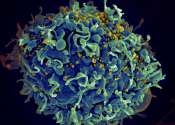
Acquired immune deficiency syndrome or acquired immunodeficiency syndrome (AIDS) is a disease of the human immune system caused by the human immunodeficiency virus (HIV). The illness interferes with the immune system making people with AIDS much more likely to get infections, including opportunistic infections and tumors that do not affect people with working immune systems. This susceptibility gets worse as the disease continues.

HIV is transmitted in many ways, such as anal, vaginal or oral sex, blood transfusion, contaminated hypodermic needles, exchange between mother and baby during pregnancy, childbirth, and breastfeeding. It can be transmitted by any contact of a mucous membrane or the bloodstream with a bodily fluid that has the virus in it, such as the blood, semen, vaginal fluid, preseminal fluid, or breast milk from an infected person.

The virus and disease are often referred to together as HIV/AIDS. The disease is a major health problem in many parts of the world, and is considered a pandemic, a disease outbreak that is not only present over a large area but is actively spreading. In 2009, the World Health Organization (WHO) estimated that there are 33.4 million people worldwide living with HIV/AIDS, with 2.7 million new HIV infections per year and 2.0 million annual deaths due to AIDS. In 2007, UNAIDS estimated: 33.2 million people worldwide were HIV positive; AIDS killed 2.1 million people in the course of that year, including 330,000 children, and 76% of those deaths occurred in sub-Saharan Africa. According to UNAIDS 2009 report, worldwide some 60 million people have been infected since the start of the pandemic, with some 25 million deaths, and 14 million orphaned children in southern Africa alone.

Genetic research indicates that HIV originated in west-central Africa during the late nineteenth or early twentieth century. AIDS was first recognized by the U. S. Centers for Disease Control and Prevention in 1981 and its cause, HIV, identified in the early 1980s.

Although treatments for HIV/AIDS can slow the course of the disease, there is no known cure or HIV vaccine. Antiretroviral treatment reduces both the deaths and new infections from HIV/AIDS, but these drugs are expensive and the medications are not available in all countries. Due to the difficulty in treating HIV infection, preventing infection is a key aim in controlling the AIDS pandemic, with health organizations promoting safe sex and needle-exchange programmes in attempts to slow the spread of the virus.

This text uses material from Wikipedia and is available under the GNU Free Documentation License.

Latest Spotlight News

Slowing the aging process—only with antibiotics

Swiss scientists reveal the mechanism responsible for aging hidden deep within mitochondria—and dramatically slow it down in worms by administering antibiotics to the young.

Researchers complete largest genetic sequencing study of human disease

Researchers from Queen Mary, University of London have led the largest sequencing study of human disease to date, investigating the genetic basis of six autoimmune diseases.

Brain can be trained in compassion, study shows

Until now, little was scientifically known about the human potential to cultivate compassion—the emotional state of caring for people who are suffering in a way that motivates altruistic behavior.

Having both migraines, depression may mean smaller brain

(HealthDay)—Migraines and depression can each cause a great deal of suffering, but new research indicates the combination of the two may be linked to something else entirely—a smaller brain.

Novel approach for influenza vaccination shows promise in early animal testing

A new approach for immunizing against influenza elicited a more potent immune response and broader protection than the currently licensed seasonal influenza vaccines when tested in mice and ferrets. The vaccine ...

Enzyme-activating antibodies revealed as marker for most severe form of rheumatoid arthritis

In a series of lab experiments designed to unravel the workings of a key enzyme widely considered a possible trigger of rheumatoid arthritis, researchers at Johns Hopkins have found that in the most severe ...

Research offers promising new approach to treatment of lung cancer

Researchers have developed a new drug delivery system that allows inhalation of chemotherapeutic drugs to help treat lung cancer, and in laboratory and animal tests it appears to reduce the systemic damage ...

Study details genes that control whether tumors adapt or die when faced with p53 activating drugs

When turned on, the gene p53 turns off cancer. However, when existing drugs boost p53, only a few tumors die – the rest resist the challenge. A study published in the journal Cell Reports shows how: tumors that live even i ...

Overeating learned in infancy, study suggests

In the long run, encouraging a baby to finish the last ounce in their bottle might be doing more harm than good.

Researchers analyse hunting behaviour of fish larvae in virtual reality

Moving objects attract greater attention – a fact exploited by video screens in public spaces and animated advertising banners on the Internet. For most animal species, moving objects also play a major ...